Showing posts with label Classic Albums. Show all posts

Monday, December 1, 2025

Super Classic Album: The Clash - The Clash (1977)

The blog’s resident Clash expert Craig Stephen goes way back to ground zero …

London, 1976. It was just one year in one city but the British capital was about to explode in a frenzy of snotty, sneering and obnoxious punk bands that would shake up the music scene for the next decade and more.

Three bands led the revolution: The Sex Pistols, formed in a pub in 1975 and the first to gig, The Damned, the jokers in the pack but the first to release a single, ‘New Rose’, in November 1976, and The Clash, formed in July of that year and fronted by the formerly known John Mellor, hitherto the singer/guitarist of a second tier pub rock band called The 101ers.

 The Clash’s route to becoming the finest of the punk bands, and for that matter one of the greatest rock bands of all time, can be pinpointed to April 1977, just nine months after forming, when their fiery debut was unleashed. While they were beaten in the British punk album race by The Damned by two months, they were still well ahead of the daddies of the scene, the Sex Pistols, whose Never Mind the Bollocks didn’t see the light of day until September.

 If The Clash, the album, sounds rushed and a little incoherent that’s understandable given it was written, demoed and recorded in a few weeks. Albums done in such a manner are often critically lambasted but that’s usually because the band is being hurried by their record label to follow-up a successful album. But The Clash had nothing to follow-up to.

The rushed environment clearly had little bearing on this 14-track incendiary piece of vinyl. It’s a glorious snapshot of three creative forces – Joe Strummer, Mick Jones and Paul Simonon – gelling quickly. These were men of different backgrounds who found remarkable common ground in a disgust of 1970s Britain.

Strummer possessed a yobbish bark while Jones sang in a more measured, lovers rock tone. Lyrically, Strummer was more forceful as exposed by his changing of Jones’s ‘I’m So Bored With You’ to the deliberately confrontational ‘I’m So Bored With The USA’ of which the opening line is: “Yankee soldier/He wanna shoot some skag/He met it in Cambodia/But now he can't afford a bag.”

Eschewing rock’s traditional themes of love, lust and other menial emotions, The Clash was about boring jobs with horrible bosses (‘Career Opportunities’) in a city aching with apathy and tedium (‘London’s Burning’) where “Everybody's sittin' round watching television”. It’s an England where the hippy manifesto of peace and love has been replaced by Hate and War.

It's an album containing several brief adrenaline bursts like ‘48 Hours’ (1.34), ‘What’s My Name’ (1.40) and ‘Protex Blue’ (1.42) - a throwaway ode to a condom brand with typically lurid lyrics.

The album closer, ‘Garageland’ is a witty riposte to music reviewer Charles Shaar Murray’s infamous line that The Clash were a garage band “who should be left in the garage with the engine running”. But it isn’t full of loathing for the writer, instead it’s a celebration of being a start-up group which is so loud the neighbours call the council to complain.

As much as it veers into comedic youthful angst, there are a couple of tracks that piloted them as a conscious activist band. One was the single ‘White Riot’ - an unfortunate title in an era when the fascist National Front were scooping up disillusioned working-class votes (what’s new, different name and shirt, same racist politics) - but it is important to note that it is a rousing call to arms for the white working class to follow black people’s lead in fighting back against oppression. “All the power in the hands/Of the people rich enough to buy it/While we walk the streets/Too chicken to even try it”.

Meanwhile, the cover of Junior Murvin’s reggae anthem ‘Police and Thieves’ slows the frantic pace right down. Murvin’s original was released in the UK in July 1976, a month before the Notting Hill Carnival riot and became the de facto anthem for disgruntled black youth.

Murvin and his producer Lee ‘Scratch’ Perry both denounced it, but attitudes among the reggae community dissipated with Bob Marley and the Wailers inspired enough to write ‘Punky Reggae Party’ in 1977 and Perry later worked with The Clash.

On its release, punk commentator Tony Parsons wrote in the New Musical Express that: “Jones and Strummer write with graphic perception about contemporary Great British urban reality as though it’s suffocating them,” while Mark Perry declared in his own fanzine, Sniffin’ Glue: “The Clash album is like a mirror. It reflects all the shit. It shows us the truth. To me, it is the most important album ever released.”

Elsewhere, reviews were encouraging to the point of gushing that this was the most exciting record in years. It’s hard to disagree with some of that to be honest.  The Clash was the most exciting record since The Stooges’ debut in 1969, and few if any albums released since 1977 can match its raw power, anger, angst and disillusionment. Once that punk energy dissipated, The Clash would find new styles to explore and write socially aware songs that resonate to this day.

Sunday, June 1, 2025

Classic Album Review: Public Image Ltd - First Issue (1978)

Craig Stephen on a game-changing post-punk classic ... 

Most commentators head straight to Metal Box for the definitive PiL album. But I’ve always had a sweet spot for their coruscating and brilliant debut. Few contemporary bands ever matched it, and the Gang of Four are likely their only rivals for any post-punk accolades.

 The remarkable thing about First Issue is that its release in December of 1978 came just under a year after the infamous implosion of the Sex Pistols at the Wonderland in San Francisco. That chaotic gig was swiftly followed by acrimony and the band splitting up. Bassist Sid Vicious went on his own tragic path, drummer Paul Cook and guitarist Steve Jones went in search of notorious crook Ronnie Biggs and singer Johnny Rotten renamed himself John Lydon and did a startling volte face to ditch the screaming volatility of punk for what would become the thoughtful confrontation of post-punk.

He recruited childhood friend Jah Wobble on bass, Keith Levene, the short-lived ex-guitarist of The Clash, and Canadian drummer Jim Walker. They would experiment in dub music, African rhythms and the avant garde. This would not be Sex Pistols MK II or another punk band.

First Issue begins with a statement of intent in the shape of the nine-minute ‘Theme’. The now John Lydon is laughing. Yes, laughing as he sings “Now I understand” to Walker’s incessant drum bashing and Jah Wobble’s insane basslines. Lydon’s vocal style is unmistakable but it’s not at the forefront, in fact you have to stretch your eardrum’s capabilities to capture his words amid the glorious din.

‘Religion’ comes in two parts, initially with Lydon on his own in spoken word format followed by the abrasive and much longer band version. The lyrics are the same, the approaches are very different. It was written on the Sex Pistols’ fateful tour of America where the then Rotten saw how much religion was embedded into the national culture. The other band members and manager Malcolm McLaren didn’t want a bar of it even after having a pop at that venerable institution, the British monarchy in the Pistols’ crowning moment ‘God Save the Queen’.

These lyrics made them look the other way: “This is religion and Jesus Christ/This is religion, cheaply priced/This is bibles full of libel/This is sin in eternal hymn/This is what they've done/This is your religion.”

The final track on the first side, ‘Annalisa’, is equally joyless and another prod at religion, based as it is on a real life story of a misguided exorcism in Germany that went tragically wrong.

The very name Public Image is Lydon’s riposte to his perceived ill-treatment at the hands of Sex Pistols manager Malcolm McLaren and the other band members, and in particular how he felt they viewed him as the image-maker, not the songwriter or the artist.

The eponymous debut single, which came out three months ahead of the album, reads like a bitter break-up letter: “What you wanted was never made clear/Behind the image was ignorance and fear/You hide behind this public machine/Still follow the same old scheme.”

It's actually the most accessible track on the album and sold enough to warrant a place in the British top 10.

After it comes ‘Low Life’, which could be another attack on McLaren though various other names have also been banded around. And it’s possible that Lydon has more than one character in mind when he wrote it.  This “bourgeois anarchist” is an “ego-maniac traitor … ignorant selfish”.

This is as good as it gets for First Issue … ‘Attack’ is three-minutes of infantile critiques of his former band members (“All our deals confiscated/Legaling with magistrate”) while ‘Fodderstompf’ is so moronic and pointless that Lydon was moved to dismiss it. It sounds like it was a studio joke lasting seven minutes and 40 seconds that somehow ended up concluding the album, presumably with nothing else in the can to use.

First Issue wasn’t to everyone’s taste – some reviewers panned it, a court in Malta ordered it be removed from stores because of the lyrics to ‘Religion’, and it was considered too uncommercial for release in the United States.

When it was reissued, a bonus disk included the B-side to Public Image, ‘Cowboy Song’, and an unedited 56-minute radio interview Lydon did with the BBC in 1978 which was never aired because of his less than idolatry attitude towards certain stars. One of those was BBC TV’s own Jimmy Savile – outed after his death as a paedophile, and Lydon hinted that he knew about Savile’s sick tendencies.

Monday, October 14, 2024

(Another forgotten) Classic Album Review: Five Thirty – Bed (1991)

Craig Stephen digs deep to come up with another should-have-been but never-quite-got-there classic album from the vast vaults of the early 1990s shoegaze scene …

In the days when British television made music shows that mattered, there was a one-off series that stood out because it unveiled some emerging and exciting acts.

I had long forgotten the programme’s title, but Mr Google informs me it was called the Yamaha Band Explosion, and that it was filmed at the Marquee Club in London.

The nauseating yet enthusiastic DJ Gary Crowley introduced a variety of shoegazing bands who looked aloof and immersed themselves in wah-wah effects. This contrasted with a very young and electrifying Manic Street Preachers and an act that, sadly, has disappeared off the historical radar, 5:30 (also written as Five Thirty).

Timing was cruel to 5:30 who were in the right place, at the wrong time. In 1991, the world had a choice between the Madchester / indie-dance bands, shoegazers, techno geeks and the grunge noiseniks from America. It was impossible to market a band decked in shirts from Carnaby Street, and possessed a sound that didn’t really fit into any of the above scenes.

 Their sole album, Bed, which was released a week before Nevermind, is a classic of the era, and I was delighted when 3 Loop Music re-released it a few eclipses ago with a welter of extra tracks. Indeed, there were two discs of B-sides, a John Peel session, and demos of songs that would have made up the second album.

It includes ‘Supernova’, the burning pop single with heavy tremolo-effected guitars that should have gone higher in the charts, while ‘13th Disciple’ was tuneful, assertive and owed a small debt to the Stone Roses. ‘Junk Male’ used some clever guitar techniques with a stunning opening stanza: “If God were to ever come my way, I’d spit into his face. Then calmly walk away.”

‘Songs and Paintings’ was about how creativity couldn’t change the world: “Songs and paintings never brought a regime down. It cannot be fair.”

Bed was surprisingly diverse, ranging from funk-infused numbers to slow burners to guitar-driven belters, sometimes beefed up with the use of wah-wah pedals.

While their recording output was tragically brief, the band was in existence for seven years, forming in 1985 in Oxford while Tara Milton and Paul Bassett were still at school. Despite their youth, they released a cracking EP (as 5:30!) that same year. It was headed by ‘Catcher in The Rye’, which was brimming with youthful cockiness and possessed the headstrong maturity of a more seasoned group.

What happened thereafter is somewhat mysterious as they disappeared for four years. They then reappeared in 1989 in London - having dropped the exclamation mark - and had been joined by Phil Hopper on drums. Soon after they signed to East West, in the days when real talent could get you noticed by big to middling labels.

The following year came the long-awaited second single, ‘Abstain’, which sounded like late-period Jam and The Clash rolled into one. Later, in the year of ‘Fool’s Gold’, ‘Step On’ and ‘Sit Down’, came the edgy guitar-driven ‘Air-Conditioned Nightmare’. Not quite as good perhaps as ‘Abstain’ but still way ahead of many other, more successful but more limited, British bands. Neither single was deemed suitable for Bed.

These singles set them up for a big 1991 and they were on fire during the year. ‘13th Disciple’ was released as a single in May, ‘Supernova’ in July, Bed in September, and the You EP in November. Every single was a stunner, and the album was packed full of them. However, the singles reached No.67, 75, and 72 respectively in the UK. Not surprisingly with such low sales numbers, Bed never stood a chance. The radio DJs, the music journalists and the TV producers were nowhere to be seen when they were needed most.

The almost vilified Northside had more success FFS.

Alas, 5:30 split up in 1992, a second album not progressing beyond the demo stage. Hindsight might proffer that, had they been more aware of how the tide surges and subsides, they could’ve been contenders. But you can understand why they packed it in. Pop music is a fickle industry indeed.

Tara Milton subsequently formed The Nubiles which had one decent album, the slightly left-field Mindbender, and later had a solo career. Paul Bassett was part of Orange Deluxe which released a string of albums, while Phil Hopper left the music industry altogether.

My vinyl copy of Bed is much played, and the triple disc version of Bed is getting its turn when the time allows. I only wish many more people and their pets could say the same thing.

Monday, May 27, 2024

Classic Album Review: 1990s - Cookies (2007)

Craig Stephen revisits a lost noughties classic (well, sort of … just go with it) from Glasgow …

If Glasgow indie band Yummy Fur were to reform today they’d be heralded as a supergroup.

Despite making as much presence on the music scene in their several years of existence as a provincial election in Guinea-Bissau makes on global politics, the band gave the world Alex Kapranos and Paul Thomson of Franz Ferdinand, and Jackie McKeown of the band known simply as 1990s. Not a bad record then, even if their own ones weren’t much cop.

After Yummy Fur, McKeown eventually formed 1990s (no The) in the 2000s alongside Michael McGaughrin and Jamie McMorrow – who was also a founding member of Yummy Fur. It was a good time to be a Glasgow band, Bis were in their heyday, Franz Ferdinand were stratospheric and, erm there were The Delgados too. The city was far enough from the feeding frenzy of London to do things its own way.

 Sizzling with glam-rock guitar hooks and a touch of the Britpop swagger, 1990s released a couple of singles in 2006 before pumping the Bernard Butler-produced Cookies out into the world.

The band’s debut single ‘You Made Me Like It’ opens the album and what better way to introduce yourselves. It’s a preening 70s jigabout rekindling memories of Mott the Hoople and early Supergrass.

One of the verses is somewhat esoteric: “T.B Sheets, Irma T, money back guarantee/ Lady drum, Lady Di/ How'd you make your baby cry/ FTQ, FTP, Bobby D's in Mozambique/ Me, I'm on Decatur Street .”

Google is your friend here, but if I hear that last line correctly, we’re in New Orleans.

The second single was ‘You’re Supposed To Be My Friend’ which appears to be about those people who say they’re your their mate, but reality tells a different story.

Friendship and lovers are something the band keep coming back to. While most tracks could be centred in Any Town, ‘Pollokshields’ is a reference to the ‘garden suburb’ of southern Glasgow. It’s more appealing than New York: “Chelsea Hotel, did it ring my bell?/ I'd rather be … in Pollokshields .”

‘Cult Status’ is one of those risqué tracks that could still have been acceptable in 2007 but you wouldn’t try that trick now. As with most of the tracks on Cookies, the drums are simple and the guitar chords not too overbearing. While McKeown sounds positively perverted. "Strange faces ... not too clean / Wrong side of 16".

‘Arcade Precinct’ celebrates the humdrum banality of being young and walking the streets of your own town. Teenage girls who are “just getting away from their dads/ Busy tea-leafing, grabbing things for free,” while hanging around arcade precincts and foodhalls as they embark on their tentative steps into the big bad world of adulthood.

Sometimes the songs aren’t about much at all, like ‘Enjoying Myself’, which is a rather humdrum tale of partying. Like, that’s never been done before, right? But the basslines, the working class life manifestos, the cocksure attitude and the spirit of the west coast of Scotland make Cookies a vital and musically faultless album. It’s the sound of Britain in the 1970s updated for the 2000s by a band called 1990s.

A couple of years later 1990s delivered another excellent album in Kicks, which was again produced by Bernard Butler, and which I’ll review later this year. In 2011 the band appeared set for a third long-playing release with a single preceding it, ‘My Baby’s Double Espresso’, but the LP sadly and strangely never appeared. It wasn’t until 2022 that Nude Restaurant was released on limited edition green vinyl. Needless to say it was excellent.

Saturday, February 24, 2024

Album Review: Riot 111 - 1981! (1981/2023)

Craig Stephen on a recent Leather Jacket Records compilation / retrospective …

Riot 111 were a band created by politics, discord and violence. Their origins lay in the protests and brutality of the anti-Springbok tour movement of 1981 which divided the country in two.

The quartet left the meagre sum of two singles, as well as an appearance on a compilation album of Wellington bands. All of these records have been virtually impossible to find over the past few years, and punters have had to stump up ludicrous sums to opportunistic sellers to get their hands on that vinyl.

And yet, they left a legacy as one of the very few politically dedicated bands that have come out of New Zealand – Herbs are probably the only other I can think of but in a very different style and method. Kiwi musicians notoriously avoid any whiff of confrontation.

(Blogger’s note: I strongly disagree with this. Herbs and Riot 111 were the mere tip of a rather large political iceberg, and I may feel triggered enough to write a detailed response to Craig’s assertion at some point) …   

Thankfully, right before Christmas a collection, simply titled 1981, was issued in a limited run. It rounded up Riot 111’s entire recorded output, using newly-discovered master tapes.

There was no end of inspiration when they formed – the Springbok rugby tour occurred at a time when South Africa was isolated in sporting circles due to the apartheid system. The tour exposed the ugly, racist, redneck upper belly of New Zealand. On one side were those who wanted the tour halted in solidarity with Nelson Mandela and the ANC; on the other side those who naively believed that politics and sport never should mix – or who just didn’t want to know.

 Two of the 16 games were cancelled due to crowd interventions, another was flour-bombed by a plane (but went ahead) and there were protests at all the others.

Into this heated environment came Riot 111 to stir the pot a bit more. Were they even a musical group? Not according to “singer” Void who declared: “We’re not a band, we’re a terrorist organisation.”

So, he penned ‘1981’, released as a single with an anarcho-punk collage cover that would have infuriated those the band wanted to infuriate: Hitler kicked a rugby ball as Prime Minister Robert Muldoon applauded and the All Blacks did an unchoreographed haka. This also forms the cover of the album without any obvious tweaks, while the back of that 7” - featuring police in riot gear - is replicated on the album’s rear.

The single is an (ahem) riotous agit-punk blend of aggressive lyrics, ruthless guitar playing and tribal drumming based around the famous ‘ka mate’ haka, and fused with the South African freedom chant Amandla. It is incendiary and provocative in the context of the winter of discontent that the sporting tour wrought on the country.

The 90-second B-side ‘Go Riot’ is hilarious. There’s no actual music, just a Germanic, hectoring voice ordering a cackling Muldoon to proceed with the contentious tour, and afterwards, distract the population with a royal tour. It then cuts into some mimicking of rugby-loving redneck boofheads.

1982 was an eventful year for Riot 111. They began by supporting The Fall, and at an anti-nuclear gig in Wellington they only managed to play one song as the “move move move” chant on ‘Move To Riot’, which replicates that of the police at protests, literally moved the crowd to riot with Void forced to dodge beer bottles launched at the stage.

The text accompanying the album tells of a stoush between the band and TVNZ which refused to air the video for ‘Writing On The Wall’ from the second single and reproduces the letter from the head of entertainment in full. In it, Tom Parkinson wrote that he thought the song was poor, the musicianship below standard and “the clip is very passe, poorly made and has little merit”. Not only that but he objected to the inference of police violence. So much for freedom of speech.  

Riot 111 comprised vocalist John Void (later just Void), drummer Roger Riot (formerly Roger Allen, a mild-mannered public servant from Wellington’s northern suburbs), guitarist Nick Swan and Mark Crawford on bass. Allen describes Void as having an immense stage presence in his plastic riot helmet, actual police baton and leather trousers or kilt.

‘Move To Riot’ is the most musical of all the tracks and returns to the theme of police repression with Void shouting through a tannoy imitating a police officer breaking up a demonstration. “I am the law, I am order, you have no rights, scum!” Other “officers” abuse and mock the protesters, ie “Did you fucking swear at me?”. As Void speeds up the “move move move” order the atmosphere becomes ugly. Void as “chief officer” says: “I have a gun in the car and I’d love to blow you away” and the song ends in women screaming, glass smashing and people being bashed.

Some tracks don’t have quite the same impact, eg, ‘Escape Or Prison’ is largely an over-played drone lasting an excessive seven-and-a-half minutes. Perhaps with studio time and an empathetic producer behind them Riot 111 could have unleashed a colossal debut album that would have left an indelible mark on the New Zealand music scene.

While all eight tracks released under the band’s name are included on 1981!, I feel an opportunity has been lost. Surely, those master tapes also included alternative takes and demos of songs that were played at gigs but not actually formally released?

By 1984 Riot 111 were no more. Right-wing skinheads were gatecrashing the gigs and causing violence driving many fans away. Void became an actor in Australia.  

Their existence was brief and output meagre but they left a legacy that has never been matched in this country.

Sunday, February 18, 2024

Classic Album Review: The Associates - Sulk (1982)

Craig Stephen on a Scottish indie masterclass …

In 1981 The Associates were an eclectic taste, a semi-experimental group known only to a select clique.

But by 1982 the Scottish act had become commercial property, with top 10 hits, magazine covers and appearances on Top of the Pops.

The reason for this incredible turnaround in fortunes was the album Sulk, which remains to this reviewer’s ears the best Scottish album of all time (yes, even better than the Bay City Rollers’ debut) if not one of the finest albums with geographical limitations removed.

It was adventurous, brazen, brilliantly written and musically magnificent while retaining the independent streak of the immense talents of Billy MacKenzie and Alan Rankine. The duo were The Associates although at the time it was officially a four-piece. Sulk was glamorous enough to pique the interest of the New Romantics and DJs on Radio Happy, and dark and esoteric enough for those with more eclectic tastes.

It included the poignant and emotionally charged ‘Party Fears Two’, which was good enough for the British top 10 and the spur for the success that was Sulk. It was written some years before its release and was apparently inspired by the sight of a couple of obnoxious teenage girls at a party, hence the title. It could explain the line: “The alcohol loves you while turning you blue.”

 MacKenzie, who hailed from Dundee, and Rankine, of Edinburgh, met in 1976, just as punk was about to kick off. They formed two proto bands before landing at The Associates. Their initial foray into the world was an under-produced and unauthorised version of Bowie’s ‘Boys Keep Swinging’, which certainly got them noticed. The Affectionate Punch (1980) and the semi-compilation Fourth Drawer Down (1981) followed on independent labels. They were warmly welcomed in the music press but just a little too esoteric for the general listener.

Through a complex “big brother” hierarchical record label system, The Associates found themselves a deal with Warner Brothers, and a large advance, some of which was used to house MacKenzie’s beloved whippet dogs in their own hotel room and feed them smoked salmon.

Nevertheless, they recorded in what has been described as a “drab, workmanlike space” in a grey, industrial location. Still, they were able to utilise what they had and this resulted in densely layered keyboards, echo effects and expansive reverbs. Listen closely and you’ll hear sheet metal shaking, canisters being rolled, and other studio tricks. Over the years compilations have been released containing demo versions of some of the songs that appeared on the album, and you can see what monied production techniques and ambition can do to transform tracks from raw and unpolished to soaring, epochal cacophonies.

As well as MacKenzie and Rankine, this line-up consisted of Michael Dempsey and John Murphy on bass and drums respectively. Both had been with the band for around two years, but were generally kept at the back of the bus as the duo hogged all the photo and interview opportunities that came their way. Canadian Martha Ladly, of new wave act Martha and the Muffins, was a prominent guest, supplying vocals and keyboards and her photogenic appearance ensured she shared some of the publicity.

The curious recording style extended to the track listing: ‘Party Fears Two’ and the other hit single ‘Club Country’ were kept to the second side. Listeners began their aural adventure with the three-minute instrumental ‘Arrogance Gave Him Up’. It ends with an instrumental too, which would become the single ‘18 Carat Love Affair’. These two instrumentals seem somewhat peculiar as it’s MacKenzie’s magnificent voice that is the money shot.

MacKenzie possessed a vocal range that defied description, ranging from deep to the soaring high-pitched tenor that was very individualistic. It was beguiling, enthralling and beautiful. Later, MacKenzie would develop his vocal talents, and bested Shirley Bassey when both sang ‘The Rhythm Divine’ for Yello in separate versions. Songs such as ‘Bap De La Bap’ and ‘Skipping’ are created around MacKenzie, whose ambiguous and oblique lyrics gave them a neo-gothic feel. Bravely, the band tackled ‘Gloomy Sunday’, a song with Hungarian roots and considered to contain a hex over those who sang it. That didn’t deter Billie Holiday, nor did it put off MacKenzie who gave it his own unique sound.

Several tracks engage the listener before we reach ‘Party Fears Two’, one of the most perfect songs ever, and ‘Club Country’ which seemingly condemns elitist structures if the chorus is to be read correctly: “Alive and kicking at the Country Club/ We're always sickening at the Country Club/ A drive from nowhere leaves you in the cold/ Refrigeration keeps you young I'm told.”  

They had their moment in the sun, and Sulk should’ve led to regular appearances on television and stadium gigs. But it all turned to custard rather quickly. Even before the year was out Rankine was gone, frustrated beyond belief that MacKenzie wouldn’t tour the album.

Rankine went out on his own, MacKenzie carried The Associates flag with Perhaps released in 1985. While it has some magnificent moments such as ‘Waiting For the Love Boat’ and ‘Those First Impressions’, it lacks Rankine’s instrumental genius and is for all intents and purposes a MacKenzie solo album.

Sulk, meanwhile, has been reissued several times over the years. As I write this I’m listening to the blue-coloured vinyl version. In 2016 an additional seven tracks were added to the CD version which included ‘18 Carat Love Affair’ and The Supremes’ ‘Love Hangover’ which combined became a medium-level hit in the UK and elsewhere. Most recently there was a special deluxe format with outtakes, Peel sessions, a live gig and even a disk containing five different versions of ‘Party Fears Two’. As The Associates rarely put a foot wrong, there is nothing here that is weak or profligate.

Sunday, December 10, 2023

Classic Album Review: Kraftwerk - Soest Live (2020)

Craig Stephen’s been on a Kraftwerk trip, discovering a hugely significant but largely unlistenable gem from deep within the German band’s archives. Soest Live was a long celebrated YouTube clip, but in 2020, 50 years after the fact, the rudimentary recording got the full vinyl treatment …

Following Kraftwerk’s stunning gig in Wellington late last month – which you can read about here – it seems apt to delve into a live album recorded more than half a century ago.

It’s only relatively recently that the show has been rediscovered showing the band at a primitive point in their existence.

A Kraftwerk show in 2023 is of four men performing behind synthesizers with computer-generated images and videos being shown on large screens behind them. Other than sole survivor Ralf Hutter the performers have changed often over the decades.

In November 1970, however, it was a vastly different Kraftwerk that performed at a cramped venue in the town of Soest in Germany’s northern industrial heartland as part of the local Winter Festival. The band’s line-up consisted of Hutter, Florian Schneider-Esleban (as he was then known), and Klaus Dinger, who would later form Neu! Hutter played organ and tubon, Dinger the drums and Schneider-Esleban flute, violin and vibraphone. Everything then was radically different from what the band would evolve into within a few years.

 Kraftwerk had only formed that year and had released their eponymous album a few months before this gig. All four tracks from that album were played this evening, and no other tracks made it onto the setlist.

As it was part of a festival, the performance was captured on camera and shown on regional TV station WDR-TV. It is worth investigating on YouTube especially to see the somewhat unusual layout of the venue (clip below). The band was crammed into a corner as the almost entirely student/youth audience sat awkwardly or stood passively facing the stage. A large screen is to the right of the band and in front of that two old-style (ie. massive) standing cameras pan in on the audience. 

The gig begins with ‘Vom Himmel Hoch’ which starts slowly and seems to be an attempt to replicate the sound of VW car trying to start up on a cold winter’s morning while a swarm of bees fight to get out. Eventually, the car starts and after eight minutes faces in the crowd that were showing bemusement and confusion suddenly become interested. Some even clap along to the rhythm of the beat. Someone in the crowd pulls out a whistle and blows it incessantly. English pop and Californian rock this is not.

After 16 minutes of this, they flow into ‘Ruckzuck’ which sees Schneider-Esleban let loose with his flute a la hippie rock band Jethro Tull. Dinger, who was positively restrained for much of the opening track, is now in his element, doing his finest Keith Moon impression.

‘Stratovarius’ is rockier, a little like one of the proto-metal bands that had surfaced a couple of years earlier. It is purely experimental, lacking in any melody at all, basically an amalgam of unsynchronised sounds. A few minutes in, it begins to truly get weird with Florian playing his violin in a manner that would have given a music teacher a cardiac arrest.

The final track, ‘Megahertz’, is most akin to what Kraftwerk would become a few years later with Hutter’s organ-playing and Florian’s violin combining to create that renowned esoteric and magical sound.

This performance is a period piece that provides little insight into the band that would release albums such as Autobahn and Trans Europe Express. But it certainly also parades the immense talents and creative minds of Hutter and Schneider-Esleban. Once they became a quartet with Karl Bartos and Wolfgang Flur, they became a notable exponent of electro-pop that influenced multitudes of artists such as Bowie, Soft Cell and Depeche Mode.

Neither Kraftwerk nor Kraftwerk II (1972) have been officially re-issued and, if truth be told, if they were they wouldn’t captivate the current audience due to their raw and experimental nature. They would be of curious value only.

Nevertheless, Soest Live merits listening (and viewing) to see the massive developments the band would make in a relatively short time.


Monday, October 30, 2023

Classic Album Review: Half Man Half Biscuit - Back Again in the DHSS (1987)

Craig Stephen’s route to Biscuits fandom wasn’t through the seminal debut album, Back in The DHSS (which Craig reviews here), but through its bastard sequel which was released after the band had split up due to “musical similarities” …

Back Again in the DHSS is a compilation of sorts … in the sense that it contains mostly new songs and some previously released singles tracks.

The unreleased tracks are all taken from three sessions for the John Peel Radio One show recorded and aired between November 1985 and September 1986. Peel was a huge fan and gave the band an audience that could never be attained through droll mainstream daytime radio. It was crucial that these tracks were given a release as every one of them is a gem.

Take ‘Rod Hull is Alive … Why?’ for example. A death has occurred (of a “doyen of topiary”) and the grieving relative/friend/acquaintance asks why someone else couldn’t have died instead … such as Rod Hull, the man famous in the 1970s and 80s for a double act involving a toy emu. It would require a long and tedious explanation of the strange workings of the British comedy system to elucidate why he/they were so popular.

Singer Nigel Blackwell manages to also incorporate Jacques Laffite, The Wrekin, Helen Keller and the birch in one song. Again, and as ever with the Biscuits, Google is your friend here.

From that same Peel Session recorded in the British autumn of 1986 came ‘I Was A Teenage Armchair Honved Fan’, to which my naïve friend asked at the time what was a teenage armchair honved, as if it was some sort of new appliance or sexual position only tried by S&M “enthusiasts”. The answer was rather mundane, as Honved were a Hungarian football team.

Eastern European football was also acknowledged on ‘All I Want for Christmas is a Dukla Prague Away Kit’. This is a particular favourite for its references to Scalextric and the issues setting it up: “But it always took about 15 billion hours to set the track up/ And even when you did/ The thing never seemed to work”, and table-top football game Subbuteo.

Surely, this is greatest song about sport toys ever. Another reference to European football of the 1970s is a magnificent merger of the longest song title ever, and the most ridiculous club name: “Supercalifragilisticborussiamönchengladbach”.

The Biscuits were never a singles band per se, but ‘Dickie Davies Eyes’, released in 1986 and almost a chart hit, of all things, was an exception, and is included as are its two B-sides – ‘The Bastard Son of Dean Friedman’ and … ‘Dukla Prague’.

The A-side is a play on Kim Carnes’ ‘Bette Davis Eyes’, and is a familiar trick of the band – ‘Reasons to be Miserable (part 10)’ is a tweak on Ian Dury and the Blockheads’ ‘Reasons To Be Cheerful (Part 3)’, while ‘Arthur’s Farm’ is a play on George Orwell’s Animal Farm novel.

As well as referencing football - strictly a no-no at the time - ‘I Was A Teenage Armchair Honved Fan’ excels primarily for the segue into a section ruminating on where the song should go: “Is this the bit where we're supposed to make guitars collide, and / Is this the bit where we release all that raw energy, and / Is this the bit where we go crashing through those barriers / Like what they do in music mags?!”

Elsewhere we have references to Siamese cats, a kitchen appliance manufacturer, spa towns, a disbanded English football trophy, double glazing adverts, Turkish Delight, Roger Dean posters, Arthur Askey and dozens more.

Back Again in the DHSS, like all HMHB albums, mimics those institutions almost sacred to the English: B-list television stars and their gimmicky shows, small-town life, sport outside the top leagues, life in cul-de-sacs, and working-class eccentricities.

And to think that these songs were hidden away on Peel Sessions, played late at night, with only insomniacs and students listening in. Releasing it in 1987 as I reached out to the Jesus and Mary Chain and Echo & The Bunnymen was perfect timing.

Most of this album was released two years later with a host of live tracks as ACD.

Thursday, October 19, 2023

Classic Album Review: Guy Chadwick - Lazy, Soft & Slow (1998)

Craig Stephen looks at House of Love frontman Guy Chadwick’s all too easily overlooked solo debut …   

“Is it today I’m going crazy, come and help me lose my mind, who knows what we might find, maybe ourselves.”

So begins Lazy Soft and Slow, and with it the start of Guy Chadwick’s solo career, a project that promised so much but petered out rather abruptly and would ultimately be a one-album adventure.

The story up to this point is this: the House of Love fizzled out following the underwhelming Audience With the Mind in 1993, and Guy attempted new projects in The Madonnas and then Eye Dream, neither of which managed to take off. However, The Madonnas’ gigs had featured a number of new songs, which would later find a new lease of life on the solo album, notably ‘Crystal Love Song’ and ‘One of These Days’.

The logical next move for Chadwick was to establish himself as a solo artist. Could he become a Julian Cope who’s post Teardrop Explodes career was startlingly successful for a decade-and-a-half, or would the project go the way of Ian McCulloch’s?

Just getting to this stage had taken a considerable effort with Keith Cullen of Setanta Records instrumental in prompting the evidently reticent frontman to record an album.

So, over four years after the band split, Chadwick was ready and motivated to do his own thing. Country music and Leonard Cohen were on the speakers in the house at the time and inevitably rubbed off during the writing and recording sessions.

Suitably, an acoustic guitar was used for the demo sessions. The intention was to go back to a more mellow, softer sound - as the title testifies. 

Robin Guthrie of the Cocteau Twins was roped in as Chadwick’s producer and mixer, with Giles Hall the engineer. Guthrie was the perfect choice: Chadwick didn’t want to make a House of Love record, while Guthrie didn’t want to make a Cocteau Twins record. Two birds, one stone, as it were. Guthrie would also play bass on the new album.

The first fruits of Lazy, Soft & Slow was the single ‘This Strength’, released in November 1997, backed by ‘Wasted In Song’ and ‘Faraway’. The latter B-side also featured on the album, re-recorded and slightly shorter.

A few months passed, bypassing the traditional compilation and big star albums for Christmas and the January fallow period. Then, in February 1998, Lazy Soft & Slow was piled onto record store shelves. Since this was a period when CD was king, there was no LP version. Sadly, that remains the case.

It is not an album that jumps out of the speakers on first listen, or even the second. It’s for those moments when you don’t want robust vocals, or amped-up guitars. It requires the kind of mood as you would be in for a Nick Drake album. ‘Close Your Eyes’ and ‘One of These Days’ fit very much into the aura of the album; languid and beautifully written songs with final track ‘Close Your Eyes’ taking the listener into a hypnotic state.

There are, however, some more athletic tracks, notably ‘You’ve Really Got a Hold of Me’, which celebrates a strong relationship as Chadwick paints a picture of that special someone. “I’m a passenger on a ship of dreams, on a course of love, I think I’m going down.”

There’s a surprise version of Iggy Pop’s ‘Fall In Love With Me’ which first appeared on 1977’s Lust For Life. The original is upbeat, captures the essence of 1970s decadent west Berlin, and has the magical Bowie touch – he co-wrote it after all. Chadwick strips it back by a more than two minutes (gasp!), and turns it into a campfire and toasted marshmallows type of song.

With such ravishing words throughout Lazy, Soft & Slow, Chadwick was reminding the world that he was one of the most talented writers of the era. Of any era, in fact. The entire album displays his knack for lyricism, and despite perhaps not having the dry humour of Morrissey, Chadwick matches the moody, and sadly now conspiracy theorist extraordinaire Mancunian, for captivating vernacularism.

If I’m honest, Lazy, Soft & Slow is an album I have jumped into less regularly than the House of Love albums. Partly due to it needing a certain state of mind, but also because vinyl is now played more commonly to my cat and child.

This is something that needs to be rectified. Many CD-only releases of the 1990s and noughties have been given the vinyl treatment. So should LSS.

Yes, it’s an odd one and it may not be to everyone’s taste, but with it being out of print since 1998, surely someone in the world of music can give it another airing, complete with outtakes, B-sides and what-have-yous. It deserves nothing less.     

Monday, October 16, 2023

Classic Album Review: Transglobal Underground - Psychic Karaoke (1996)

Craig Stephen revisits a lost classic …

It’s the mid-90s, and the British and international media are all over the phenomenon that has been labelled Britpop. Oasis and Blur have battled for the number one spot, Pulp are unlikely glam stars, and any band with a guitar and a love of The Beatles are being played ad nauseum on mainstream radio.

What chance has a band like Transglobal Underground got?

Playing diverse sounds from South London to South Asia in a variety of languages, they can’t be dubbed “retro opportunists”. That may have been too much of a challenge for the music critics of the time.

In the midst of this Britpop banality, Psychic Karaoke was released and was easily one of the albums of its year. It shouted at the Britpop bands and their media lackeys: “this is the future”.

I picked up the album on sale in Auckland and played it a little in the City of Sails before heading to Fiji. On a relatively remote island group it was on a regular spin cycle as it served as the perfect soundtrack to a country full of culture, friendly people, pristine beaches and palm trees. 

Psychic Karaoke, TGU’s fourth album, released on Nation Records and entirely self-produced, evokes visions of the Middle East and India with electronic rhythms and atmospherics.

It serves up cinematic textures and global grooves, mixing dance-friendly exotica, that utilised tablas, dhols, ouds, and djembe as well as guitar, violin/viola and cello. It features the magnificent voice of Egyptian-Belgian superstar Natacha Atlas and British-Asian singer Nawazish Ali Khan.

Hip-hop, dub, electronica, pop, and art rock are all here - and more.

The seven-minute ‘Chariot’ is the entry point to Psychic Karaoke. It’s a magnificent, meandering track featuring Middle Eastern percussion, a string section and breakbeats. It’s not until the three minute mark that Atlas comes in, working in tandem with an English language pseudo rap. It sounds like there’s far too much going on here, but it works and the instruments add an extra exotic element.

Atlas performs on half of the 12 tracks, a favourable number as she had released her debut solo album Diaspora the year before and her solo projects have significantly diminished her ability to record with TGU, and the various other artists she has collaborated with.

One of the tracks she doesn’t appear on is ‘Scully’ towards the end of the album. Instead, TGU’s Neil Sparkes takes on vocal duties and has a style similar to Barry Adamson, which is uncanny as part of one line is “Something wicked this way comes”, which happens to be the title of a track from Adamson’s Oedipus Schmoedipus album released the year before. It may well be a homage to the Mancunian singer, but they are very different songs.

Transglobal Underground have released many albums since 1996, all exploring different musical elements, cultures and genres. Some have worked and some haven’t but respect is due to a band that works outside the box.

Thursday, December 22, 2022

Classic Album Revisited: The Clash - The People’s Hall (1982/2022)

Craig Stephen on the bonus album released when Combat Rock gained its obligatory 40th anniversary deluxe spurs in 2022:

Here at everythingsgonegreen we really need no excuse to review a Clash album … even when we’ve done it before. So, yes, I have reviewed Combat Rock, the last great Clash album, and you can read that here.

But the album’s re-release comes with an additional collection, The People’s Hall, recorded around the same time, but has been kept under wraps until now.

People’s Hall has been dubbed a cash-in and a luxury item for collectors. I’d say otherwise. Having played this several times I’d say it is a collection that stands on its own. Yes, it is a mixed bag and the snapshots of chitter chatter from the crowd outside a gig (‘Outside Bonds’) could really have been ditched, but that’s the exception to the rule. This is well worth buying even if you have Combat Rock already. 

Here's the condensed backstory: in December 1980 The Clash released the beguiling and beautiful triple album Sandinista! and in May and June of the following year played what would become a 17-show residency at New York’s Bond’s Casino to promote it. Those shows have gone down in musical history.

Before a tour of Asia, the band rehearsed and recorded at The People’s Hall in London, from where 11 of the tracks were recorded (the exception being ‘Outside Bonds’, obviously). It’s the bridging period between Sandinista! and Combat Rock, and you can discern the development going on. Some of the tracks were re-recorded for Combat Rock or ended up on B-sides; some were taken no further.

‘This Is Radio Clash’ was released as a single at the end of 1981. This version, which effectively opens People’s Hall, contains slightly different lyrics. Apart from that it doesn’t differ greatly from the single version. But the original version of ‘Know Your Rights’ veers greatly from the Combat Rock take. While all the crucial elements are there Strummer sings the lyrics straight, but on the finished version he sounds more mocking, and the guitars are edgier. I’d say they tidied it up pretty neatly for the version that the world knows now and gave it a new interpretation.

 Among the highlights is an extended and looser version of ‘Sean Flynn’ (Errol Flynn’s son who disappeared in south-east Asia while working as a photojournalist). As I listen to this particular track I feel I am being transported to the rail tracks and fields in rural Thailand where the photo session for the Combat Rock cover was taken. It’s magnificent, it feels as if The Doors are in Saigon having a jam session and letting it all out. 

‘Futura 2000’ draws from sessions with New York’s graffiti artist of the same name, revealing some raw and ready proto hip hop and contains one straight bassline played endlessly to great effect. ‘Radio One’ allows reggae great Mikey Dread to do his own, inimitable thing, ‘Midnight To Stevens’ is a tribute to bonkers producer Guy Stevens, and there’s tracks like ‘Long Time Jerk’ and ‘First Night Back In London’ that were relegated to B-sides when they deserved much better. Add in the instrumental ‘He Who Dares or Is Tired’ and you have something of a party punch. That was never served up to revellers.

At the same time The Clash worked with The Beat’s resident toaster Ranking Roger for versions of ‘Rock the Casbah’ and ‘Red Angel Dragnet’, both of which were omitted from People’s Hall and issued as a stand-alone single to fleece more money out of Clash fans.

People’s Hall was a working project for a new album but Combat Rock was the second life of a rolling project, with Mick Jones’ intention to have the band’s fifth album stretch to over an hour and be called Rat Patrol from Fort Bragg. The Clash were always drawn to different sounds and their love of reggae is renowned but this album would have been expanded to soak in Jones’ love for New York funk and hip-hop, and dub. 

The band and its mercurial/autocratic manager Bernie Rhodes instantly dismissed it. Jones was gutted and barely attended the remix sessions, which is understandable as he would be witnessing another producer, Glyn Johns, slash and burn his cherished work to create what we have now as Combat Rock. Rat Patrol has since been bootlegged to hell and back but it still needs to be given a full and official release. Why it hasn’t is a mystery given so much unreleased Clash material has already been resurrected.

Nevertheless, while you wait, indulge in this intriguing bonus album which, despite what some critics might say, offers another side of The Clash and takes the listener to another time and world, to the emerging hip-hop scene, to post-war Vietnam, and to … well, wherever you want to be.

Sunday, October 16, 2022

Classic Album (and boxset) Review: The Redskins - Neither Washington Nor Moscow (1986/2022 reissue)

The Redskins’ one and only album is a soul-punk classic burning with passion, hope and socialism. It was nothing like any other album of its time, but it’s message resonates in a difficult and troubled time now as much as it did on its initial release.

As depressing as Thatcher’s Britain was in the high unemployment and devastated industrial communities of the 1980s, there was an alternative. In music it began with The Beat’s ‘Stand Down Margaret’ and continued throughout the dirty decade from the likes of the Style Council, The Smiths, Linton Kwesi Johnson and Billy Bragg. The Redskins were at the forefront of the alternative to big hair, spandex trousers and me-first attitudes. They were about solidarity, peace, and anti-racism. This Yorkshire-born three-piece were opinionated, committed and musically brilliant who, in terms of cutting edge polemic and absolute confidence in their beliefs, have rarely if ever been bettered.

 The skinhead three-piece was fronted by Chris Dean, a sometime NME scribe who was inspired by Joe Strummer, who was accompanied by drummer Nick King, and bassist Martin Hewes. Changing their name from No Swastikas to Redskins in 1982, they moved to London and released their debut single in July of that year.

Their emergence was timed perfectly. In 1979 Margaret Thatcher’s Conservative Party won a parliamentary majority and soon began the dismantling of heavy industry, resulting in huge job losses and devastated communities. Most of this occurred in the north, in places like Yorkshire where The Redskins were formed. Fascism and far-right activity was lurking around and the band hated that lot too.

In the early days, The Redskins were more punk than soul. ‘Peasant Army’ contained an inflammatory, angry chorus and was a rousing anthem of optimism. It was as good as, if not better than, the a-side, ‘Lev Bronstein’, who was otherwise known as revolutionary leader Leon Trotsky. Another single was released on CNT in 1983, ‘Lean On Me!’ / ‘Unionize!’ (they loved punctuality), and again the b-side was as good as it’s supposed superior. CNT was an independent label that released early singles for the likes of Sisters of Mercy and The Mekons, and took its name from the confederation of anarcho-syndicalist unions in Spain.

‘Lean On Me’, was a paean to working-class solidarity (“together we’ve a world to win”), and was described by the NME as a “modern soul classic”; Then came further singles ‘Keep On Keepin’ On!’, ‘Bring it Down! (This Insane Thing)’ - a minor chart hit no less, and ‘Kick Over the Statues’. 

‘Keep On Keepin’ On!’ was released at the height of the miner’s strike, with the band at their most prolific, playing benefit gigs around the country and beyond in support of the men and their families who were baton charged, jailed, harassed and ostracised just for defending their jobs. The a-side solemnly noted “Can’t remember such a bitter time/ The boss says jump, the workers fall in line/ They whip us into line with the threat of the dole.”

A raft of singles had been issued over four years but where was the album? That curious anomaly was finally rectified in 1986 when Neither Washington Nor Moscow was issued on Decca. It was something of a greatest hits collection with several of the singles included with just a handful of new tracks.

The album title came from the masthead of the Socialist Worker newspaper, the organ of the SWP which the band were devoted members of. Their support for this small Trotskyist party was unwavering: a speech by Tony Cliff, its de facto leader, was used on one track. Neither Washington Nor Moscow is pretty much the perfect record – 12 tracks, not a single filler, it’s the sound of Detroit meeting Leeds. It rolled The Specials, The Jam, The Impressions, Dexy’s Midnight Runners, and The Supremes into one, and it worked a treat. The anger was channelled magnificently and ‘Kick Over the Statues’ has proved to be prophetic. “Kick over the statues/ And the tyrants die/ Wave bye bye with a hammer/ To their heroes.”

Similarily, the lyrics to ‘It Can Be Done’ could have been written anytime in the past ten years or so: “Hunger of the 30s/ Hunger of the 30s back again/ And the rich still rich/ And the poor still the same as they ever were/ And it seems to me/ We're still not learning from our history.”

Listening to the album in its entirety it seems the answers are so simple … solidarity, unions, strikes, demonstrations, and not backing down. Voting for Neil Kinnock’s Labour Party just wasn’t an option. But, of course, the world isn’t as straightforward as that, and if it was we’d probably be living in a very different society just now.

And as bolshy as it is, it also seems Redskins are just trying too hard. Too hard in telling us the world’s problems which we can all figure out; too hard telling us go on the demo on Saturday, to buy the Socialist Worker newspaper and to persuade all our friends to join us. 

A few months after the album was released the band broke up, not through arguments about the musical direction they should take, but the political stance they should or shouldn’t pursue. Dean’s desire was to write love songs, which was highly ironic given his political outlook. Hewes was less enthusiastic about the idea and believed there was still a battle to fight with Thatcher still in power.

Dean disappeared from the music scene completely and apparently was living a near-hermit existence in Paris and then in York. Releases during the following three decades were limited to a live album, a re-release of the studio album, and a compilation of rarities on a hardcore punk label based in Canada.

 Recently, a four-disk boxset of Neither Washington Nor Moscow was issued by Cherry Red records. At last Redskins’ soul-funk n punk classic was given the royal, expanded treatment. It pretty much contains everything the band did – the album, b-sides, BBC session tracks, extended and alternative versions, live gigs, rarities, demos and bootleg material including some by the first incarnation of the band, No Swastikas. It had the bloody lot and more, and if you wanted to hear the “break mix” of ‘Unionize!’ then you could. The b-sides are all excellent, including ‘You Want It? They’ve Got It!’ which must have been a contender for inclusion on the studio album. All the early singles are here too, and what a joy it is to hear again the likes of ‘Lev Bronstein’ and ‘Unionize!’ …

Their split was timely, perhaps. Given that Neither Washington Nor Moscow contained only a few new tracks and was full of previously-released singles, they may have been struggling for motivation by 1986. They wouldn’t have been spoilt for inspiration had they continued. Thatcher continued her divide and rule tactics, and the Poll Tax, which meant people on the dole paid the same on their council house as a millionaire on his mansion, would have provided a jolt in the arm at the end of the 1980s.

Redskins left on a high, with a wonderful legacy of a back catalogue full of spiky, punk-soul classics that made an impression on, maybe a small amount of people, but people who generally took on their ideals, of using art in politics and of not allowing the bastards you grind you down. Keep on keeping on indeed.

Sunday, May 29, 2022

The Heartland of The The

Craig Stephen offers a part-album review, part career overview of Matt Johnson’s extraordinary The The:

In 1986 the airwaves were blasting out an aural pollution of chart-friendly guff by the likes of Whitney Houston, Chris de Burgh, Berlin, Sinitta and Level 42. Australian soap opera actors, Page Three models and soft rock acts all added to the agony. It was safe, bland and apolitical.

Into this quagmire of mediocrity came a song by a band that stated that Britain was a territorial outpost of the United States and that Thatcherism was evil. “This is the 51st state of the Yooo Esss Ayyy,” sang Matt Johnson, the frontman and writer of the band magnificently monikered The The.

While only a minor hit in the UK, the single had an immense effect on the likes of myself and others crying out for something different. Lyrics like this were just so far out of the mainstream loop, offering an alternative view of the supposed “greed is good” manifesto punted to a country riven by class division, the deliberate destruction of traditional industries, and the huge increases in levels of unemployment.

“This is the place, where pensioners are raped/ And the hearts are being cut from the welfare state/ Let the poor drink the milk while the rich eat the honey/ Let the bums count their blessings while they count the money,” went one verse and it was hard to disagree with any of it.

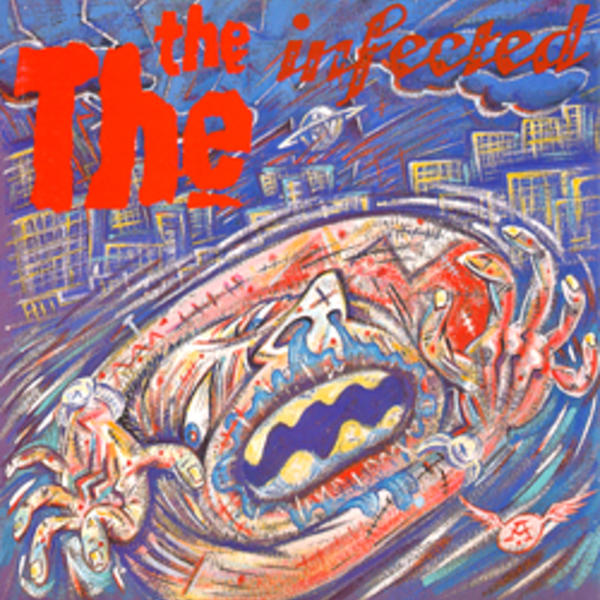
‘Heartland’ was the teaser single from The The’s third album, Infected, released in the same year to massive acclaim. Infected only contained eight songs but every single one was a thing of beauty. No fillers on this baby.

On ‘Sweet Bird of Truth’, another single, albeit not a chart botherer, Johnson took on the troubles of the Middle East and specifically America’s military encroachment there. It begins with a mock radio conversation between a pilot and radio control in which the use of napalm is requested and approved.

The album took Johnson to another level. He’d released two early albums, one resolutely experimental and in his name alone; the other, Soul Mining, a classic of the early 80s, containing two exceptional singles, ‘This Is The Day’ and ‘Uncertain Smile’. Soul Mining was an odd collection for the time, rooted in post-punk but featuring synthesisers - the weapon of choice of the New Romantics - and contained touches of the nascent New York club scene. It was critically acclaimed for its uniqueness but sold little, however subsequent reissues have sold well, a testament to its timeless qualities.

 On Infected, Johnson was frustrated with the way the world was swinging behind neoliberalism and the betrayal of the working class, especially in the track ‘Angels of Deception’.

“Jesus Wept, Jesus Christ/ I can't see for the tear gas and the dollar signs in my eyes/ Well, what's a man got left to fight for/ When he's bought his freedom/ By the look of this human jungle/ It ain't just the poor who'll be bleeding …”

Matt Johnson was the centre point for the band and the album, and drummer Dave Palmer was the only other regular musician to be part of the team. There are cameo appearances for Neneh Cherry (pre-‘Buffalo Stance’), Orange Juice’s Zeke Manyika, the Astarti String Orchestra, and arrangers Andrew Poppy and Anne Dudley. It also featured Louis Jardine on percussion, and there’s credits for all sorts of people such as producer Warne Livesey and various engineers, but Johnson’s name is all over this.

To promote Infected, Johnson made a video for each track which cost about £350,000, a then unheard of amount for an act that hadn’t been active for over three years, had a cult following and were on an indie label, Some Bizarre. The film followed the track listing so it began with ‘Heartland’ which was shot at Greenwich Power Station in London. A chunk of the cost was due to the crew going into the Peruvian jungle to film, Johnson clearly not wanting to do things by halves. The indigenous people that the crew used as guides introduced Johnson and co to the hallucinogenic concoctions used in their tribal rituals, with predictable results. Johnson admitted that while he was completely out of it for the filming he was bitten by a monkey, cut a stranger with a knife in a bizarre blood brother ritual, and grappled with a snake. The opening scene of the title track has Johnson strapped to a chair on board a boat sailing down a river in the jungle.

‘Out of the Blue’ was partly shot in a New York brothel with police protecting the crew from the dealers inhabiting a neighbouring crack house. During the filming of ‘Twilight of a Champion’, Johnson placed a gun with live bullets in his mouth. Just for the hell of it.

Infected: The Movie was given a bona fide premiere, in London, and was aired twice on Channel 4 and later on MTV. A video was issued at the time but it is yet to be released on DVD. Both the album and the film received rave reviews from the then influential music press, with Melody Maker’s reviewer stating: “Kicking concepts of democratic creativity in the kidneys, Johnson has justifiably come out with a one-man vision of terrifying proportions” while the glossy Q magazine described the album as "grim stuff, with the lyrical tension well-matched by the music”, and picturing it as a collision between Soft Cell and Tom Waits. Which is uncanny as there is a strong Waits influence on Infected – particularly the vocal technique on ‘Sweet Bird of Truth’ – and Waits was touted and approached to be the record’s producer. 

The weekly Record Mirror felt that “What becomes clear, however, is that we are dealing with something special ... Infected might not be a particularly optimistic record, but it is rather a good one.”

As well as numerous appearances in the end-of-year album lists, Infected made Q’s 100 Greatest British Albums, 14 years after its release. The CD version accompanying the LP included three 12-inch remixes, but the 2002 remastered reissue didn’t even bother including those. It’s probably overdue a deluxe super special eight-edition release with free postcards.

The effect of such an ambitious project as Infected took its toll on the protagonist and he took a couple of years off. When he returned to the studio it was with a band, and the line-up included former Smiths guitarist Johnny Marr, James Eller from Julian Cope’s backing band and Palmer. This was certainly a marked deviation from the previous album. Less fancy instrumentation, more back-to-basics rock and pop. And again, eight tracks all stretching as far as Johnson could spin them in terms of the clock. Even the artwork was more in line with the move toward minimalism, a generally white cover with Johnson’s face jutting out. Could’ve been a Pet Shop Boys album if you didn’t look closely enough.

 Mind Bomb was still an excellent work and the title wasn’t too far off the mark. It was at times slow and required patience, but that fortitude would bear great fruit for the listener. ‘The Beat(en) Generation’ was a full-on pop song that made the Top 20 in Britain. Not that it was ever a radio-friendly fluffy DJ pleaser as the lyrics of the first few lines will attest.

“When you cast your eyes upon the skylines/ Of this once proud nation/ Can you sense the fear and the hatred/ Growing in the hearts of its population/ And youth, oh youth, are being seduced/ By the greedy hands of politics and half truths.”

It may have been released in 1989 but those lyrics apply now in a country bitterly divided economically, socially and geographically.

While it wasn’t as loved by the critics as its predecessor, Mind Bomb remains one of the finest albums to carry The The’s name, with one writer observing that it was: "slow, expansive, looming into inexorable life with a rage that smouldered rather than flamed.”

Four years later The The were back, for the album Dusk, with the same line-up of Johnson, Marr, Eller and Palmer with various guest appearances, though no one with the profile of Sinead O’Connor who guested on one track from Mind Bomb.

It was something of a retreat in terms of Johnson’s usual ambitions; the lyrics were more apolitical and the arrangements more restrained. The singer sounded less heretical, shifting from the politics of the world to the politics of the individual, for example on ‘Lonely Planet’s chorus: “If you can't change the world, change yourself.”

There’s a sexual element to the album, and it’s hardly concealed: the single ‘Dogs of Lust’ hardly needs much explaining, but here’s a teaser: “When you're lustful/ When you're lonely/ And the heat is rising slowly.”

There’s love and desire all over the album but also a snippet of the subject matters so beloved of albums of yore. Back we go to ‘Lonely Planet’ and the closing line of the extended second chorus which, after numerous intonations of that call to change yourself, turns around to state: “And if you can't change yourself then change your world.”

The band was ditched for 1995’s Hanky Panky, a nod to the artist providing all 11 tracks – Hank Williams, writer of country and western standards such as ‘Your Cheatin’ Heart’, ‘I Saw The Light’ and ‘Honky Tonkin’, all of which are covered by Johnson and his backing band of people with names like Reverend Brian McLeod and Gentleman Jim Fitting. That it was better received in the United States than the UK reveals the nature of the songs. But it was one for the devoted only. 

In the time since, The The has barely been heard. There’ve been occasional releases, such as the low-key bluesy Naked Self album from 2000 and a pair of new tracks for a compilation album 45 RPM: The Singles of The The. Then, for 14 long years, barely a peep, nothing much more than obscure soundtracks, download-only singles and a couple of one-off singles for Record Store Day. Late last year came The Comeback Special: Live at the Royal Albert Hall.

Whether the “comeback” is another one-off or a tangible return to the album-tour-acoustic radio session circuit remains to be seen. The brilliant ‘We Can’t Stop What’s Coming’ for Record Store Day 2017 suggests The The are still very capable of writing and recording excellent songs. But if there’s no new material I can still wallow in four fine albums of individuality and class.