Showing posts with label Ramones. Show all posts

Tuesday, June 3, 2025

Top 10: Songs about sex workers

Who doesn’t love a bit of filth with their harmonies? How can anyone resist the temptations of sexual suggestion and lurid details of carnal activities? Well, Craig Stephen loves a bit of how’s your father, especially if it involves a strumpet or a gigolo. He’s back with another top 10, specifically looking at songs about sex workers. And just to prove he’s still alive, the site’s lazy-arse editor can’t resist adding an 11th in the form of a genuine red light Kiwi ska-punk classic:

Tubeway Army - Are ‘Friends’ Electric? (1979)

Number one in the UK for weeks, and yet few people would have sussed out what it was actually about, so here’s Gary Numan, the Tory-loving pilot, telling all to a journalist … “the lyrics came from short stories I'd written about what London would be like in 30 years. These machines - "friends" - come to the door. They supply services of various kinds, but your neighbours never know what they really are since they look human. The one in the song is a prostitute, hence the inverted commas. It was released in May 1979 and sold a million copies. I had a No 1 single with a song about a robot prostitute and no one knew.”

Cole Porter - Love For Sale (1930)

In the very conservative context of 1930s America, a white singer singing about her life as a prostitute was too much for many. After all, 1930 was the year Hollywood introduced the Hays Code which forbade the use of profanity and obscenity. ‘Love For Sale’ was labelled as "in bad taste" by one newspaper and radio stations kept a wide berth. So, to try to defuse the moral outrage, singer Kathryn Crawford was replaced by Elizabeth Welch, an African-American singer. It was later covered by Shirley Bassey, Boney M, Elvis Costello, and Lady Gaga & Tony Bennett for a duet.

Blondie - Call Me (1980)

The theme song from the film American Gigolo starring Richard Gere is presented from the point of view of a male escort, despite being sung by Debbie Harry. The Blondie star suggestively purrs for the listener to call her anytime and issues an invitation to call "day or night" because "I'll never get enough". ‘Call Me’ was composed by Italian disco producer Giorgio Moroder and contained more than a tinge of electronica. Given Blondie’s huge popularity at the time as they successfully bridged punk, new wave and pop, it was inevitably a worldwide hit and was named in Rolling Stone's 500 Greatest Songs of All Time.

 Ramones - 53rd & 3rd (1977)

A gay hustler stands alone on a street corner in New York unsuccessfully trying to earn some cash by turning tricks. When a macho man Vietnam Green Beret challenges him, the hustler slips out his weapon and does the dirty deed. “Then I took out my razor blade/Then I did what God forbade/Now the cops are after me/But I proved that I'm no sissy.” The song references what was once a popular hangout for male prostitution, and where Dee Dee Ramone tried to do business before joining the band. It appears on their much-hailed debut album Ramones.

Queen - Killer Queen (1974)

Queen’s first worldwide hit was about a woman who we learn in the first verse likes the luxuries of life: “She keeps Moët et Chandon/In her pretty cabinet/ ‘Let them eat cake’, she says/Just like Marie Antoinette.” Listening further, you can deduce that the lady in question serves pleasure to the men in high places. “Drop of a hat, she's as willing as/Playful as a pussycat.” 

Sharon O’Neill - Maxine (1983)

It probably said something of New Zealand of the time that there were two versions of the video: one for Kiwi eyes, one for Australians. The New Zealand video is tame and lame, focusing on O’Neill with her Bonnie Tyler-style hair singing along to the song. The one for the Aussie audiences is far more gritty, beginning with ‘Maxine’ out on the streets looking for business. We then see O’Neill pleading with her friend to give it all up, but it’s all in vain. Yes, MOR pop can sometimes tell a good story.

Morrissey - Piccadilly Palare (1990)

He’d later turn to boxing and other working class pursuits but in 1990 Morrissey was singing about male prostitution. “On the rack I was/Easy meat, and a reasonably good buy.” The title is a play on the slang term polari which was first used by male prostitutes in the 19th century and then taken up in the 1960s to disguise activities which were illegal in the UK until 1967. Apparently, Morrissey didn’t particularly like the song and reviewers weren’t entirely sure either. It was the fifth of five singles that were released outside of a studio album, and with ‘November Spawned a Monster’, also issued in 1990, it seemed that a studio album then would’ve been a cruel trick played on his fans.

 The Clash - Janie Jones (1977)

Despite the title, this track from The Clash’s incendiary eponymous debut album is more about an office worker who, having had a gutsful of his tedious job, jumps in his car and heads off to a brothel. Which is where Ms Jones comes in. Janie Jones was a one-time singer, who in the 60s had a minor hit with 'Witches Brew', became infamous for hosting sex parties at her home during the 1970s, and was jailed for ‘controlling prostitutes’.

Goodbye Mr MacKenzie - The Rattler (1989)

I don’t regret giving away records that I felt I didn’t need any more except for one - Good Deeds And Dirty Rags, the debut album by this Edinburgh band. Admittedly it was a mixed bag but it is still worth having for the likes of ‘The Rattler’ and ‘Goodwill City’. The former was released as a single in 1986. It didn’t go anywhere and was reissued three years later. However, it was rarely played on radio then due to it being about a male prostitute and description of what is euphemistically dubbed a sex act.

The Police - Roxanne (1978)

Sting was inspired to write this after seeing working girls operate outside of his hotel room in Paris while on tour. It revolves around a man who falls in love with the eponymous street worker. The narrator attempts to persuade her to give up her work, hence the lyrics: “Roxanne, you don't have to put on the red light/Those days are over/You don't have to sell your body to the night.”

Editor’s Choice: Instigators - Hope She’s Alright (1982)

Not to be confused with the 1980s English anarcho-punk band of the same name, these Instigators won Auckland’s ‘battle of the bands’ title in 1981 before hitting the road and going on to enthrall local pub audiences for the best part of the next two years. Along the way, amongst other great tunes, they released a fine ska cover of ‘The Israelites’, followed by this brilliant slice of urgent punk rock. Released on Ripper Records, ‘Hope She’s Alright’ tells the story of a missing prostitute … check it out here:



Saturday, August 15, 2020

The Year That Was ... 1976

Craig Stephen steps back in time to present a Top 10 (plus one) of all things 1976 …

There’s something about 1976. Above all, it was a pivotal year in music: reggae was its peak and punk was an obscure art school sub-genre about to be turned into a commercial anti-art dogma. While punk flared up on the streets of London, Manchester, and New York, Jamaica’s capital Kingston was literally on fire, with uncontrolled violence and gang warfare. 1976 was also about many more things and while this article focuses mainly on the albums released in the 12 months, I have broadened it out, as you shall see. 

Max Romeo: War Ina Babylon 

Diatribes on poverty and inequality, corruption of the clergy and a call for politicians to take the road to righteousness litter the magnificent War Ina Babylon. The cover reflects the music: a distraught woman holding her head in her hands with a handkerchief to cry into. Roots reggae opener ‘One Step Forward’ urges politicians to take the “narrow” road to righteousness. Then we’re into ‘Chase the Devil’ with its famous opening “Lucifer son of the morning, I'm gonna chase you out of earth”, the frightening title track and ‘Uptown Babies’, a dissection of the class divide.

Ramones: Ramones 

Sounding a little dated now, perhaps, but incendiary then, Ramones was latched on to by anyone who mattered in 1976 and became THE must-have item of that long hot northern hemisphere summer. To many, it’s considered to be the first true punk rock album, and still inspires to this day. It’s 14 tracks, among them ‘Beat on the Brat’ and ‘Blitzkrieg Bop’, last all of 29 minutes. Nowadays, T-shirt City is bustling with Ramones tops but do those snotty teens wearing them even have a copy of the album that set them to a career of trademark buzzsaw guitars and short songs?


David Bowie: Station to Station / Nic Roeg: The Man Who Fell To Earth 

Changing tack once more, the album’s opener, the 10-minute title track began with the sound of an approaching train, more than three full minutes pass on a slow, hypnotic instrumental march before Bowie finally sings. It then erupts into a celebratory groove, leading into a lengthy, wild outro. It’s almost two songs welded into one. Kraftwerk were also an influence for Bowie and he would continue the musical adventure on the so-called “Berlin trilogy”. The cover used a still from the film The Man Who Fell to Earth in which Bowie took the lead role as a stranded alien. Released months after the album, it is a monumental sci-fi flick that bemuses and bedazzles in equal measures. 

100 Club Punk Special 

You could pin punk’s rise to the very first Sex Pistols gig, to the Screen on the green Midnight Special in late August, or even the Pistols’ foul-mouthed tirade at Bill Grundy on prime-time television that sparked tabloid front-page headlines. But this mini festival was the moment that seemed to propel the burgeoning movement into something more tangible and publically-consumable. It featured the Sex Pistols, Buzzcocks, The Damned, and The Clash, as well as Siouxise and the Banshees which had only just formed and pretty much played on the hoof. Whatever happened to the Stinky Toys? 

Can: Flow Motion 

I had to force myself to like Can but it was worth the pain. They are very much an acquired taste. By 1976 the German avant-garde prog-jazz-punkers found themselves on Top of the Pops with the electro-beat heavy ‘I Want More’ which features here. Flow Motion might be more accessible and it plays with disco rhythms, but it remained very much a Can album with a ten-minute track to close that continues a fine tradition of freeform recording.


All the President’s Men 

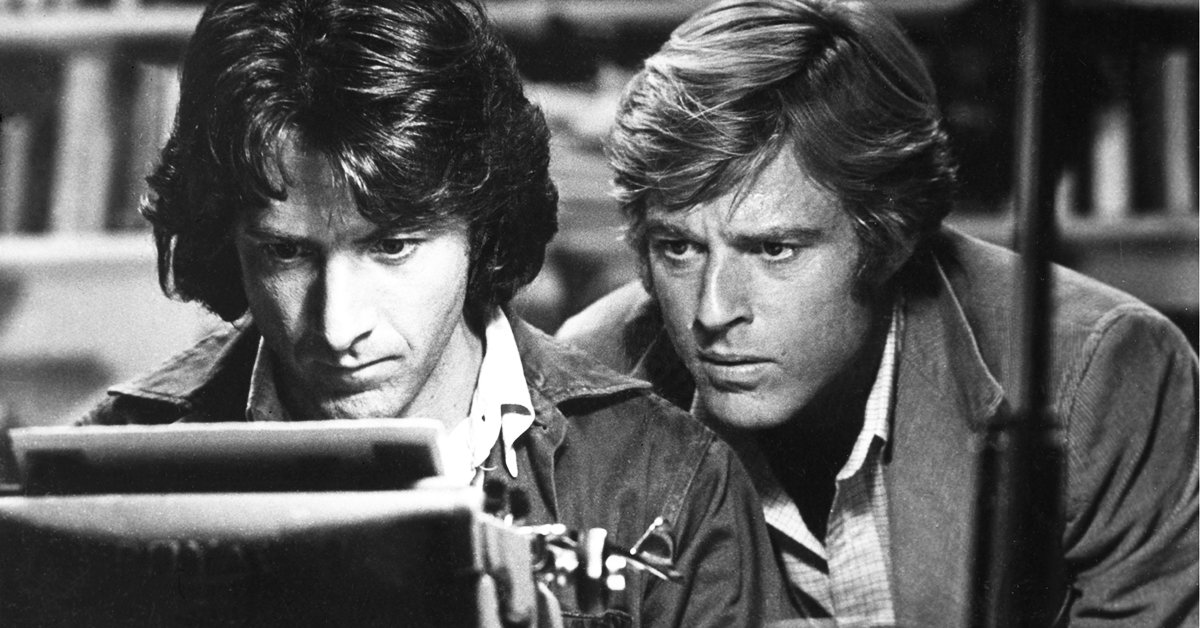
The film of the book of the event. Watergate was still raw in America, and in journalism around the world. The revelations of reporters Woodward and Bernstein in the Washington Post (and by other reporters) were like a Molotov Cocktail thrown at the established political processes. This was Dirty Politics before it became part of the culture. Dustin Hoffman and Robert Redford play the said reporters braving obstacles at every turn to get the story. And there were many of them, but their doggedness culminates in the president resigning. A film can’t truly encapsulate years of chasing or a 336-page book but it covers whatever it is able to do with fantastic dramatic effect. 

Debris: Static Disposal 

From Chickasha, Oklahoma, Debris formed in 1975 and self-released this solitary LP. A Dada/punk/psych masterpiece recorded in just under seven hours. It was a mindblowing album coming with a provocative, bondage-themed sleeve. Like The Saints’ debut, they were a band oblivious to the coming punk explosion yet this also sounds like a punk masterpiece. Debris came from the same harvest as Captain Beefheart, the Stooges, early Roxy Music and other pre-punk mainstays of the time. After this, they disappeared.


Godzilla vs Megalon 

Nuclear testing unleashes mayhem on the undersea kingdom of Seatopia, causing a series of environmental disasters that nearly wipes out Rokuro, the schoolboy protagonist at the centre of this film. Then ... fighting … a flying robot … napalm bombs … the world in danger … Tokyo smashed. In other words, exactly what all the original Godzilla films do best. (Although the film was released in 1973 in Japan, it didn't receive a full theatrical release in the US, and more generally "the west", until the balmy summer of 1976 - Ed)

The Damned: New Rose 

It might be lauded as the first British punk single, but ‘New Rose’ was a classic three-minute pop song. The famous spoken intro – “Is she really going out with him?” – is from the Shangri-La’s ‘Leader of the Pack’ for fox sake. Fuelled by amphetamine sulphate and cider, ‘New Rose’ laid a marker for all other punk bands to follow. Only a few ever did. 

Lee ‘Scratch’ Perry: Super Ape 

Genius at the controls. Take a breath, open your mind and listen to this masterpiece of roots music. A must have for all Perry lovers and for the new generations interested in reggae music. Super Ape might not be the best reggae album of the 70s nor even Perry’s finest but it set a trend; reggae and dub meets, well, all sorts of sounds and influences. Various reissues and re-shaping has occurred in the past 44 years but the original still stands strong. 

Scotland 2, England 1, Hampden Park, 15 May 

This game would become a skeleton in goalkeeper Ray Clemence's cupboard after allowing a saveable Kenny Dalglish shot to roll through his legs for Scotland's winning goal. Mick Channon had given England an early lead but there was only ever going to be one winner. Bruce Rioch equalised just six minutes later. Clemence would later say he had Dalglish’s shot covered, but it bobbled and the next thing he knew it went through his legs and into the net. Scots fans didn’t care, they’ve never let the keeper forget it to this day.