Showing posts with label 2018 Album Reviews. Show all posts

Tuesday, December 18, 2018

Albums of 2018

It’s that time again. Time to revisit some of the albums that made the biggest impression on everythingsgonegreen across 2018. The obligatory year-end “best of”, or in the case of this blog, those albums that got the most ear-time on my pod throughout the year. There’ll have been better albums released in 2018 than the ones listed below, for sure, no doubt, but if they didn’t make their way into my collection then they won’t have made the cut here. These are simply the “new” albums I own copies of and listened to the most, no more, no less: 

10. Cat Power - Wanderer 

I’ve endured an on-again off-again relationship with Chan Marshall’s music over the years, so I couldn’t really call myself anything other than a fair weather fan. But I thought Wanderer was a welcome return to form for an artist who hasn’t had her problems to seek over the past decade or so. It was certainly one of the more unexpected additions to my collection, and an album that kept growing in stature with each and every listen. Wanderer felt like a very deliberate return to the basics which served Marshall so well when she first emerged a couple of decades ago: strong songwriting, subtle hooks, simple structure and arrangements ... all geared to place emphasis firmly back on that sultry, seductive vocal. It was a very consistent set, with no real stand-out tracks, apart from the Lana Del Rey collaboration on ‘Woman’, which might just be something close to a career highpoint. A mature piece of work that possibly flew under the radar of all but her most committed fans. It didn’t get a full review on the blog but the above should suffice.

9. Darren Watson - Too Many Millionaires 

I can’t pretend to be all that knowledgeable about the blues, but I know enough to appreciate the fact that Wellington’s own Darren Watson is a serious talent. Too Many Millionaires is merely the latest in a long line of releases to prove that point. My review can be found here. 

8. Dub Syndicate - Displaced Masters 

I try to grab at least one release from the On-U Sound catalogue every year. I’m a man of routine and habit, and some 30-year-old habits can be hard to shake. Plus, I know what I like, and I like what I know. This one is a late 2017 release, of sorts, but as I was quite late getting to it, I’ll include it here regardless. Great for On-U devotees, but it won’t be everyone’s cup of tea. My review can be found here. 

7. The Breeders - All Nerve 

I wasn’t too impressed with All Nerve after my first couple of listens. In fact, I recall messaging a friend much earlier this year to say “the new Breeders is just like the old Breeders, but not in a good way” ... as though I was expecting some kind of revelatory experience. Labouring with the belief that somehow the band would show signs of progression, or somehow offer something different from the tried and trusted MO used on EVERY other Breeders album. But with false expectation being the mother of all disappointment, I then decided to just relax and enjoy the album for what it was. And it turned out to be another genuine grower. Familiarity became anything but contempt, just feelings of warmth, comfort, and a much fuller appreciation of a damned fine rock n roll album. An uncomplicated rock n roll album. A stop-start fast-slow hybrid of fuzz, surf, and power pop guitar. Everything I could realistically expect from the return of the band’s Last Splash-era peak line-up. So yes, not a lot different from the old Breeders, but still a bloody good album. Another one that didn’t get a full review on the blog.

6. Marlon Williams - Make Way For Love 

It wasn’t so much a breakthrough year for Marlon Williams because he’d already achieved that much, but he did win best solo artist and album of the year at the NZ Music Awards, plus a highly coveted Silver Scroll. My review for Make Way For Love is here. 

5. The Cure - Torn Down 

Another year drifts by without any new music from the still active and touring Robert Smith. But there was this, Torn Down, a Record Store Day special. A fresh set of Smith remixes of old material, and a belated sister release for 1990’s Mixed Up. That will have to do. Truth be told, I loved it, and my review is here. A review, incidentally, that was the blog’s most read/hit “new” post of 2018. 

4. Thievery Corporation - Treasures From The Temple 

From all accounts - not least the word from the duo itself - Treasures From The Temple is supposed to be a “companion” release to last year’s largely overlooked Thievery Corporation album, Temple of I and I. Mostly because it’s a collection of remixes and leftover work from the same recording sessions. But it’s also a whole lot more than that rather underwhelming description would suggest. It’s an immaculately produced, eclectic mix of reggae, dub, hip hop, synthpop, and electronica that defies any real definitive genre categorisation. You could argue that the music of Rob Garza and Eric Hilton (plus assorted associates) hasn’t really evolved much since the release of the duo’s 1996 downtempo classic (debut) Sounds From The Thievery Hi-Fi, yet the formula applied back then still works today. The best of the plethora of guest vocalists who feature include rapper Mr Lif, reggae dude Notch, and the divine Racquel Jones. One small reservation: the glossy production and sheen on a couple of roots reggae tracks somewhat detracts from the authenticity of those vibes. It may have worked better if they’d left some grit or dirt in there. No full review on the blog for this one either.

3. Moby - Everything is Beautiful and Nothing Hurt 

This one is a bit deep and cynical in places and I’m not really sure why I’ve grown to love it as much as I have. Is it because of those traits, or in spite of them? Whatever, if it wasn’t exactly a comeback album for Moby (who remains prolific), it certainly heralded the return of his music to my own cynical and frequently insular world. Reviewed here. 

2. The Beths - Future Me Hates Me 

2018 could hardly have gone better for The Beths; extensive touring, a well received debut album, and massive amounts of barely anticipated global exposure. My review of the superb Future Me Hates Me is here. 

1. Antipole - Perspectives 

Perspectives tapped into my often suppressed love of all things dark and dramatic. It’s an album of remixes, drawing its source material from Antipole’s late 2017 release, Northern Flux (reviewed here). I didn’t manage to give Perspectives a review on the blog because it arrived in early November and I’ve spent the past six weeks or so fully absorbing it. Fully immersing myself in it. I think my familiarity with Northern Flux - which is effectively a stripped back version - only enhanced my enjoyment of Perspectives, with the remix album adding depth and texture to a set of tunes I had already fallen in love with. There’s a fair amount of additional percussion and synth thrown into the mix on a lot of these tracks, layers of the stuff even. And more generally, there’s an extra edge to the production not always evident on the original album. Although Northern Flux comes with its own standalone charms, of course. Perspectives includes remix work from the likes of Ash Code, Delphine Coma, Kill Shelter, Warsaw Pact, and Reconverb, to name just a few. I knew nothing of Antipole at the start of 2018, but discovering the band, and then digging further into the Unknown Pleasures label - and associated acts - opened up a whole new world. And yes, I realise it’s probably a little unusual to have a remix release as my album of the year, but I make up my own rules as I go along here in the padded cell that doubles as the everythingsgonegreen office. 

Close but no funny cigar: 

Through the first half of the year Rhye’s Blood got a fair old workout, but ultimately the chilled out take on soft-core disco was perhaps a little too lightweight to stay the distance. 

Suede’s The Blue Hour was yet another solid effort from one of my favourite bands of the past 25 years. Suede rarely falter, and this album was yet another quality addition to the band’s extensive discography. 

First Aid Kit’s Ruins held some appeal, before I decided it was all a little too similar to Stay Gold, the band’s last full-length release from 2014. I remain a big fan of the Söderberg sisters and their sweet border-defying harmonies. 

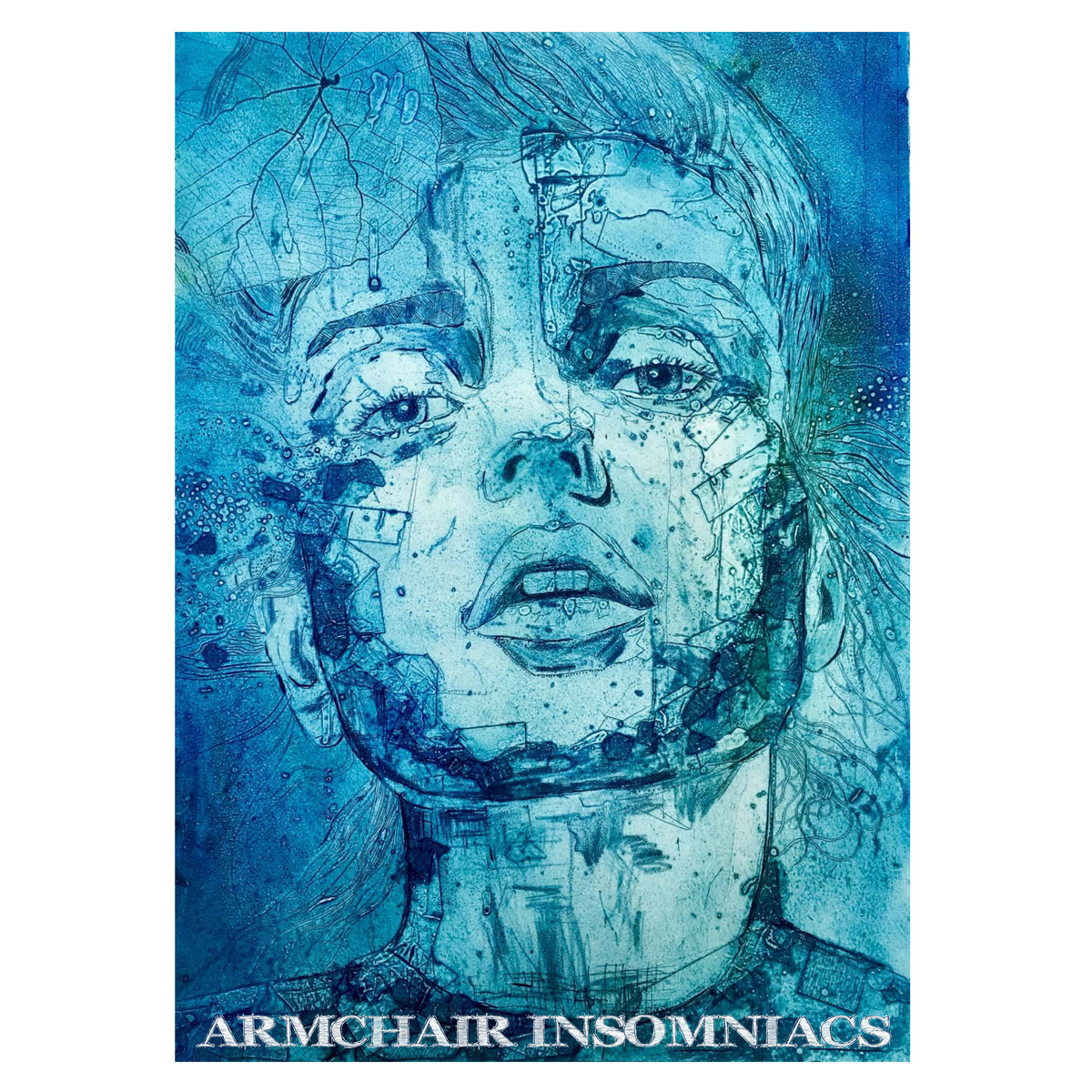
Local band Armchair Insomniacs caught me by surprise with their eclectic self-titled debut, which was highly polished and crammed full of great hooks. Where the hell have they been hiding? (Reviewed here) 

Also flying a little under the radar - for all but committed club fiends - was the globetrotting, sometime Auckland-based DJ Frank Booker, who raided his own archives to digitally release two disco-drenched mini-albums, Sleazy Beats and the Untracked Collection. Both on Bandcamp, both superb. Sleazy Beats qualifies as my short album or EP of the year.

There were plenty of reissues, retrospectives, and deluxe releases to catch my eye (and ear) across 2018, my own favourite addition being a toss up between Yazoo’s box set Four Pieces (the duo’s two albums plus demos and remixes), and Bronski Beat’s Age of Consent deluxe. The Yazoo release probably edges it on account of the volume and variety it offered. 

Compilation of the year - the inspired and long overdue late 2017 collection of New Zealand disco-era classics and not-so-classics, Heed The Call, reviewed here. 

Gig of the year? I didn’t get along to as many gigs as usual this year, but with a focus on quality over quantity I can’t really say I missed anything - or anyone - I really wanted to see. For my money, for the night, the vibe, and the company, it’s hard to go past Pitch Black’s sonic dub-driven extravaganza at San Fran in Wellington in mid-March. Reviewed here. 

In terms of cinema-going experiences, unlike last year, I can’t really hand-on-heart say there were any music-related films that held much appeal for me in 2018. And I include Bohemian Rhapsody and A Star Is Born in that assessment. But of the films I did see and enjoy, Martin McDonagh’s Three Billboards Outside Ebbing Missouri was probably the pick of an otherwise quite limited bunch. And although it was a late 2017 release, and I didn’t catch it in a theatre, I thought Paul McGuigan’s Film Stars Don’t Die In Liverpool had easily the best soundtrack of all the films I viewed during the year. 

Right. That’s that, annual stocktake completed. Happy festive things and thanks for reading in 2018 …

Thursday, November 22, 2018

Album Review: Dub Syndicate - Displaced Masters (2017)

The On-U Sound vaults are vast and deep. We already know this. Over the years we’ve seen dozens upon dozens of examples of those vaults being explored and excavated, be it to remaster or reissue past work, or to exhume unheard or previously shelved material in the name of a brand new album. Adrian Sherwood and his team are masters in the art of digging deep into the label’s archives in order to access the good stuff. And there’s an awful lot of good stuff. The sort of work that many other labels would have been only too happy to release in its original form years ago.


In the case of Dub Syndicate’s Displaced Masters - released at the tail end of 2017 - it’s a case of returning to the master tapes and out-takes of some of that collective’s best known work. Releasing it here in all of its stripped, raw, and unfussy glory. And of all the artists to grace On-U Sound across the decades, Dub Syndicate are/were perhaps the most prolific, so if you’re a fan of the label, you’ll likely have heard the enhanced (previously released) versions of most of this album’s material before. What we get here are the alternate dubs and tunes from the first four Dub Syndicate albums in their naked and purest forms. 

Tunes like ‘Haunted Ground’ which became ‘Haunting Ground’ upon its eventual release. Featuring, of course, the late great Bim Sherman. Or ‘All Other Roads Are Shut Off’, which morphed into ‘No Alternative (But To Fight)’, featuring Dr Pablo (and Maggie Thatcher). Indeed, check out Dr Pablo’s ‘Red Sea Dub’, the stripped back slice of melodica heaven which closes proceedings here - the finished product having featured on his acclaimed 1984 collaborative effort with Dub Syndicate, North of the River Thames. 

Displaced Masters won’t appeal to all. It’s fascinating for fans of the label to hear these tracks in their most rudimentary forms, great for fans of Dub Syndicate, and Sherwood completists, but it will, by definition, hold less appeal for non converts. That’s the nature of a beast like this. Some might even call it the dreaded (no pun) acquired taste, given that most of it showcases Sherwood’s production at its most experimental, and right at the very start of a steep learning trajectory. 

Personally, I’m a real sucker for this stuff, and Displaced Masters is yet another worthy addition to my already rather extensive On-U Sound collection. 

Monday, November 12, 2018

Album Review: Moby - Everything Was Beautiful and Nothing Hurt (2018)

A few years back, I couldn’t have cared less if I never heard another Moby album, ever. The uber producer’s 1999 effort, Play, pretty much destroyed any ongoing interest I had in the artist. Thanks mainly to the ridiculous level of exposure it received. For a few years around the turn of the millennium, Play was everywhere, and I became heartily sick of hearing it, or snippets of it even, especially as the musical backdrop for copious amounts of corporate advertising (in particular, see ‘Porcelain’). 

I’d been a fan of Moby’s early Nineties output, with club bangers like ‘Go’ and ‘Move’ being my introduction to his work. But Play took Moby into another stratosphere entirely with its crossover mix of ambient pop and cod-blues. And since Play, I’ve somehow managed to avoid everything else Moby has subsequently released. Until a few months back, that is, when in a moment of apparent weakness, I found myself downloading a gratis copy of his new album, Everything Was Beautiful and Nothing Hurt.


Of all the spontaneous decisions I’ve made in 2018 - mostly questionable ones - that has been one of my better choices, because Everything Was Beautiful and Nothing Hurt turned out to be a genuine revelation. It’s a long way removed from Play, and almost 20 years on, I can’t help but wonder what I might have missed in the interim. After all, Play was studio album number five, while Everything Was Beautiful and Nothing Hurt checks in as album number 15. That’s a whole lot of potential artistic development, right there. I’m also aware that post-Play albums like 18 (2002), and Hotel (2005), were massive sellers, so they can’t really have been all that bad. But only if you embrace the notion that units sold is an accurate representation of the quality on offer, which isn’t always a straightforward given. 

It could be that I just needed a lengthy break from Moby in order to appreciate his work again. Everything Was Beautiful and Nothing Hurt has made my return far more painless than I initially thought it might be. 

The album is refreshing in ways I never expected it would be: fragile, melancholic, haunting, and dripping with the existential angst we’re all bound to experience at some point along this journey. It’s jammed full of self-deprecation and insecurity. It feels a bit personal, like we’re privy to a “confession” in places … particularly when confronted by Moby’s own voice, be it spoken word or singing, as opposed to the multitude of guest vocalists who also feature (see Mindy Jones, Apollo Jane, Julie Mintz, plus others). 

It examines the state of the world through the eyes/voice of a middle-aged man who really isn’t all that happy with what he’s seeing in 2018 (or more accurately, 2016 and 2017 when the album was conceived). But there’s also some acceptance there. A resignation that we’ve little choice but to live with, and absorb or consume, the fear and disillusionment our infinite information/communication networks lumber us with every minute of every day. 

So, the lyrics are designed to provoke and challenge, but they’re cushioned, for the most part, by an almost unfashionable electronica backdrop, something of a throwback to trip hop’s best days. Moby’s own production is superb - it was recorded at home - and I think the word “lush” probably best describes the wider feel of the album, which clocks in at just under an hour. 

Highlights: ‘Mere Anarchy’, ‘Welcome To Hard Times’, ‘The Middle Is Gone’, and saving the best until last, ‘A Dark Cloud Is Coming’. 

Thursday, November 1, 2018

Album Review: Antipole - Northern Flux (2017)

If there’s one thing I enjoy almost as much as I enjoy post-punk of a distinctly 1980s flavour, it’s post-punk of a distinctly 1980s flavour being performed by current day artists. Modern-day takes on a genre that simply refuses to go away quietly. The late 2017 Antipole album, Northern Flux, is just one recent example to capture my attention (and my affections).


I really don’t know very much about Antipole. Other than the fact that it’s the handle used by Norwegian Karl Morten Dahl (and friends) to spread the gospel according to the genre we call darkwave. Or goth, as it might once have been known. Even that feels like a rather cheap throwaway label to apply to Antipole’s art, but in truth, all of the album’s most obvious reference points stem directly from the dark post-punk minimalism of a bygone era. 

Northern Flux was on high rotation on my pod throughout the first half of 2018, after I stumbled across it on Bandcamp earlier this year. Each time I listened to it, I heard something new, yet also something from the past, and it really is a terrific example of an artist - or band, if you account for Dahl’s accomplices Paris Alexander and Eirene - successfully mining a formula from yester-year before adding a shiny new sheen. 

It’s a fairly simple formula. Well-worn and tested. Melodic guitar pop blended with icy synths to create music infused with atmosphere, texture, and layers of tension. See Joy Division and early Cure for the most obvious examples. But applying a formula, and doing it this well, are not always the same thing. 

There’s always the danger that any sequence of tunes which rely so heavily on the use of repetition - in this case, chord structure and a similarly hypnotic rhythm throughout - will ultimately result in an album which winds up being somewhat less than the full sum of its parts. There’s a risk that tracks tend to blend together as one, each fresh track being indecipherable from the previous one, and whilst Northern Flux occasionally skirts around the periphery of such peril, it is, for the most part, a hugely intoxicating and thoroughly absorbing listening experience. 

Highlights: ‘October Novel’, ‘Shadow Lover’, ‘All Alone’, ‘Narcissus’ (clip below), and the Joy Division cover ‘Insight’, which closes the album. 

Released on the Franco-Spanish Unknown Pleasures Records label, with 14 tracks clocking in at 64 minutes, Northern Flux is recommended for anyone who enjoys retro-styled pop music at the darker end of the spectrum. And without looking at anyone in particular (*hides mirror*), miserable but dedicated old post-punkers hell-bent on not letting go any of their long-since-departed youth. 

Postscript: This month (November) sees the release of an Antipole/Northern Flux remix project called Perspectives, which features work from the contemporary likes of Ash Code, Delphine Coma, Agent Side Grinder, Kill Shelter, Warsaw Pact, and others. You can grab a copy of that release from Antipole's Bandcamp page here.


Sunday, October 28, 2018

Album Review: Darren Watson - Too Many Millionaires (2018)

A few months back, Wellington bluesman Darren Watson made an honest and heartfelt social media confession about how mentally and physically exhausted he felt in the wake of his most recent New Zealand tour. 2018 has been a big year for Watson. A new album, Too Many Millionaires, recorded and duly self-released, followed by the obligatory promotional treadmill, capped off by a series of gigs hot-footing it around the country. To paraphrase Watson, there wasn’t much left in the tank. Which is perfectly understandable. It’s the musician’s equivalent of a sportsman fronting a post-match interview with the requisite “I left everything out there on the pitch” … 


As is so often the way for blues artists of a certain vintage, Watson just keeps getting better with age. Even if Watson himself is unlikely to buy into that type of lazy cliche or stereotype. After all, he’s been breaking through barriers for the 30-plus years he’s been doing this stuff. As a passionate student of the genre, living at the bottom of the world, plying his trade thousands of miles beyond the heart of the Mississippi delta, forging a career playing a brand of music that many would claim to be the sole preserve of black America. 

Which of course it isn’t. Watson proves that. As have others. But it can sometimes feel that way. Particularly for anyone craving any amount of authenticity beyond the barely palatable blues-rock crossover fare which frequented mainstream radio in the Seventies and Eighties. 

In terms of the album itself, critics far more knowledgeable than myself - especially when it comes to blues music - have been swift to label Too Many Millionaires as Watson’s best work yet. And from all accounts it rates as his most commercially successful album to date. 

It’s certainly one of the more stripped back and less complicated albums he’s ever released. Something that not only serves to highlight the quality of the lyrics on offer, it also brings the work of Watson’s band into sharp focus. In particular, the tight rhythm section, and Terry Casey’s artistry on the harmonica. 

As with past work, Watson is not shy about mining New Zealand’s rich - yet mostly unheralded - blues heritage, breathing fresh life back into a Bill Lake number on the title track, and paying tribute to local legend Rick Bryant on ‘That Guy Could Sing!’

On ‘National Guy’, Watson unrepentantly explores similar themes to one that got him into some hot water with the electoral commission a few years back … 

“If you wanna share some of mine, well, get to the back of the line” … 

Opener, ‘Hallelujah (Rich Man’s War)’, and ‘Un-Love Me’, appeal as the best of the rest, and but you’ll not find a dud track anywhere on Too Many Millionaires. 

The only reservation for me, is that after the closing strut of ‘Past Tense’, I’m still left wanting more, and at just eight tracks, running its full course at a few ticks over 32 minutes, the album is perhaps a little too short. 

Monday, October 15, 2018

Terrorball's Cluster Funk

This blog’s favourite Hamiltonian, Terrorball, returns with more electro-funk goodness in the form of an album called Cluster Funk. Once again it is available as a name-your-price download on the Bandcamp platform. For this listener, the highlights come near the end, with ‘Lagoon’ and ‘2 Bit’ hitting all the right spots. The rest of it is not too bad either …

Sunday, October 14, 2018

Album Review: Death and The Maiden - Wisteria (2018)

Wisteria is the second full-length outing for Dunedin three-piece Death and the Maiden, and it propels the band along the same dark melodic-pop path first explored on the self-titled debut of 2015 ...


Only this time out there’s a level of self-assurance not immediately obvious on the debut, and it feels as though there might be a little more polish on offer. Perhaps that’s merely a natural progression for a band now more comfortable in its own skin, but it might also be the result of extra gloss added by Danny Brady and Bevan Smith during the production and mastering processes.

Whatever the case, there’s an additional sprinkling of fairy dust on this one, and a sense that subtle changes made to a core formula have worked well on Wisteria. Crisp, pulsing, synths, bounce off and push hard up against dense, intoxicating guitars, to produce a heady blend of post-punk and trip-hoppy electronica. 

Nine tracks of the stuff, each one evidently keen to carefully exploit the delicate art of repetition, and all of them fair dripping with requisite levels of melodrama.

If there’s a small reservation to be had, it’s that the vocal delivery is occasionally a little too thin, or maybe just buried too deeply in the mix.

But that’s a minor complaint, all things considered, and Wisteria is another worthy addition to an ever-expanding list of top notch releases from the deep south’s Fishrider Records.

Saturday, September 29, 2018

Album Review: Armchair Insomniacs - Armchair Insomniacs (2018)

If your only exposure to Auckland band Armchair Insomniacs has been the popular tune 'Wide Awake In Wonderland', featuring local rapper Leva, you’d be forgiven for thinking that the band’s primary modus operandi was one of hard-hitting socially conscious hip-hop. 


That tune – and its supporting video – has been widely shared on various social media platforms in recent months. Yet, as good as it undoubtedly is, that specific track isn’t really all that representative of the band, or indeed the rest of the material found on its eclectic self-titled debut album. 

If anything, Armchair Insomniacs appeal more as an unlikely post-millennium throwback to the delights and glory days of the Seventies yacht rock era. A feeling immediately heightened by the immaculate production wizardry on offer right across the album’s nine-track, 40-minute duration. Something that results in a smooth space rock vibe, with the most obvious local reference point from that bygone era being a band like Golden Harvest, say. 

All achieved with the fixtures and fittings of modern day technology, which naturally helps to give the music a next level sheen well beyond anything that was even possible back then. 

It’s a little bit like getting the best of both worlds; the past duly excavated, before being dressed up and presented with a very contemporary spin. 

Throw in a little bit of prog, a few guitar solos, bountiful hooks, and song titles like 'Sun', 'Free Love', and 'Stoned' – the latter being a real highlight – and it becomes almost impossible to argue that Armchair Insomniacs are anything other than staunch students of pop music history with serious talent to burn, man.

(An expanded/edited version of this review can also be found here at NZ Musician)

Thursday, September 13, 2018

Album Review: The Beths - Future Me Hates Me (2018)

I wasn’t sure what to expect when I picked up a copy of The Beths’ debut album, Future Me Hates Me. I reviewed the band’s opening gambit, the Warm Blood EP, for NZ Musician a few years ago, and I’d heard a couple of advance releases, ‘Great No One’ and ‘Happy Unhappy’. 

Yet cynical-old-me remained a touch suspicious that the glowing reviews appearing in Rolling Stone and on Pitchfork were merely a case of hyperbolic bandwagon-jumping. Mainly in relation to the generic and frequently-used “jangly guitar bands from New Zealand” angle. Not to mention indie pop’s seemingly relentless need to always come up with a new “next big thing”.

In a local context, at least, that was the weighty label worn very impressively last year by the similarly-geared Fazerdaze. This year, it looks as though The Beths have been tasked with filling that often extremely onerous vacancy. As the latest buzz-band according to those who supposedly know a thing or two about this stuff. It rather depends on how much credence you give Rolling Stone and/or Pitchfork, of course, but not all bands are well equipped enough to cope with such a burden. Many a talented bunch have just as quickly fallen off the radar after failing to meet unrealistic media-driven expectations.


So, having said all of that, I suspect The Beths have got the words “stay well-grounded” emblazoned boldly across the front page of the band’s constitution, and the only truly important question right now is – does Future Me Hates Me actually live up to any of that early hype?   

Short answer: Yes, I think it might just make the cut.

Long answer: the album is packed full of clever pop music, with great songcraft, and an abundance of hooks. Lyrically, there’s a nice balance, a good blend of the light and the dark; some weighty stuff mixed in with morsels of humour and a level of self-awareness not often found in a band with this youthful age demographic. As much as I usually cringe at throwing such blanket generalisations out there.

But perhaps the key element to the wider appeal of Future Me Hates Me is the sense that producer – and guitarist – Jonathan Pearce knew exactly how much dirt to leave in the mix when it came to adding spit and polish. There’s a raw edge to many of the tunes on the album. It’s post-punk indie 101. Girl-fronted guitar pop that’s a little bit frayed around the periphery. Universal, yet slightly bent, and even a touch subversive. 

The band keeps things focused and mostly tight throughout, underpinning the girl-next-door vocal nuances of the generally excellent Elizabeth Stokes, and there’s no question that The Beths have taken giant strides forward since the release of Warm Blood back in 2016. As good as that EP was, this feels like a much more mature piece of work. The sort of thing that usually happens when a band hones its craft in a live setting as often as this lot has over the past few years.

The album includes the popular live favourite ‘Whatever’ (originally found on Warm Blood), while other highlights include the title track itself, ‘Great No One’, and ‘Little Death’ … and more generally, you can expect to see Future Me Hates Me featuring regularly on those ubiquitous best-of-the-year album lists come November and December. In New Zealand, and elsewhere. I’m pretty sure it’s going to be on mine. 

Clear some space on the bandwagon, I’m climbing aboard.


Tuesday, August 28, 2018

Album Review: Jack White - Boarding House Reach (2018)

It happens at least once a week in my house. That one meal time when all of the leftover food from the previous few days is cobbled together to create a makeshift dinner. Usually on a Sunday, but there’s no set night really. We call it “hodge podge” night. And those words - hodge podge - are all I can think of when I listen to Jack White’s latest solo album, Boarding House Reach.


In the past, I’ve been a staunch defender of White and his ability to excavate elements of the past to produce something new, but even I’m left scratching my head with this one. Critics argue that White is now simply going through the motions, trading on the phenomenal success of the first couple of White Stripes albums. With Boarding House Reach being the faux-experimental mish-mash it undoubtedly is, Jack White appears determined to merely add weight to that criticism.

Of course, there’s an obvious attempt to present a facade of progression and creativity, and sure there’s the odd glimpse of White doing what he used to do so well, but beyond the album opener, ‘Connected By Love’, there’s not much here to get excited about. And I use the word “excited” liberally, with all the generosity I can muster. You know you’re in trouble when you cite one of the most thoroughly mediocre curtain-raisers of White's entire career as the album’s solitary highlight.

The rest is just noise. Literally. Muffled noise, even. Half formed ideas - see ‘Abulia and Akrasia’ and the shambolic ‘Hypermisophoniac’ for the worst examples - that don’t really go anywhere. Bits and bobs that White in his pomp, or in any other guise other than that of “solo artist”, would surely have been forced to shelf. 

It all feels very self-indulgent, highly complacent, and it lacks any of the spark, energy, or grunt - as copyist or derivative as it may have been - that once made Jack White’s music such a vital proposition in the first place. 

I remain a fan of his earlier work, naturally, as a paid up member of the Jack White fan club, but Boarding House Reach really is a monumental disappointment to these ears. Even within the context of the steadily diminishing returns White’s solo career has offered up over the past few years. 

Boarding House Reach is the musical equivalent of hodge podge night, and when you’ve got house full of notoriously picky eaters, woe behold the chef who serves up anything as half baked as this. Pass the gravy.

Wednesday, August 22, 2018

Porky Post … Album Review: Half Man Half Biscuit - No-One Cares About Your Creative Hub So Get Your Fuckin' Hedge Cut (2018)

Porky’s back, looking for laughs, so he sought out the new work by the incomparable Half Man Half Biscuit:


It’s impossible to tire of Half Man Half Biscuit, regardless of the unfortunate fact that bands trading on wit and sardonicism tend to have a short shelf life. The Biscuits, however, are made of sterner ingredients.

After a break of four years, following 2014’s eight-out-of-ten Urge For Offal, they’re back in action for their 13th studio album for which I am expecting exceptionally good things. 

Usually the song titles alone are an indicator of the content and in tracks such as Alehouse Futsal, Mod. Diff. Vdiff. Hard Severe, and Swerving the Checkatrade, it’s obvious that the Wirral four-piece has lost none of its panache and love for the minutiae of life.

The archetypal Nigel Blackwell cynicism about life’s characters is cranked up to 11 for a track that has its heart (and nose) in South America:

“You went from Magaluf to Stalingrad/ On altogether more different snow” which leads to Blackwell stating the bleedin’ obvious: “What made Colombia famous/ Has made a prick out of you.” 

Knobheads on Quiz Shows is, rather disappointingly, given its title, one of the weaker tracks, but the scathing lyrics pretty much make up for the limp bog-standard indie. Village idiots on television is par for the course, and they’re an easy target – which is why they are hauled up by the producers in the first place. But the Biscuits make it into an acidulous crusade anyway: 

“I don’t watch films in black and white/ The trees and flowers and birds have passed me by/ I’ll just guess and hope I’m right/ The first man into space was Captain Bligh.”

Its caustic content makes it the natural successor to Bad Losers on Yahoo Chess (from the band’s 2008 album CSI: Ambleside).

Renfield’s Afoot is equally caustic, with Blackwell beginning with his observation of a notification about a bat walk which recommends taking along warm waterproof clothing and a flask, and a time to meet. To which the Biscuits go all punk rock guitar and our hero has a go at the well-meaning organiser, informing them that he knows the place like the back of his hand and won’t be following the party line … 

“So don’t go trying to organise my bat walks/ I’ll be going on any-time-I-like walks” …

The outdoor life, you sense, is one that Blackwell adores but has an intense dislike for those who partake in such pleasures. Such as the man who got a Boardman bike off a Cycle to Work scheme and now goes out every Sunday in a “full Sky replica kit.” 

Football mentions are alas brief, nothing in the line of All I Want for Christmas is A Dukla Prague Away Kit. 

There’s namechecks for Dorothy Perkins, Battenberg cake, the Hadron Collider and Throbbing Gristle – and that’s just on Harsh Times in Umberstone Covert.

On realising that perhaps he is being a little too obscure, and for the assistance of his listeners in Crieff and Kinross, Blackwell whispers after a chorus in Bladderwrack Allowance mentioning Robert of Blaby, that Blaby is in Leicestershire.

Here’s some more lyrics: 

“Somebody’s mumbling Galatians/ Somewhere a wolf-print fleece needs 90 degrees/ Pushchair-related confrontations/ Pastoral conceits, Italian fancies, comic glees.” (Terminus) 

“I don’t think I’ve encountered a man so irate/ You’re a better man than I if you get past his gate/ He treats hawkers and Mormons with equal disdain/ Jesus I feel won’t be coming back again.” 
(Man of Constant Sorrow (With a Garage in Constant Use))

I think you get the picture, but the wit and obscure references are more than matched by a band on fire and making a sound that is ensuring this album is gaining more attention that the past few.

Oh, and the insert includes a crossword. I don’t imagine any Cliff Richard albums had one of those.


Sunday, August 19, 2018

More Miloux ...

I wrote a little bit about the music of Auckland-based electronic artist Miloux back in 2016 (here) when she released her debut EP, the aptly titled EP1. Miloux – Rebecca Melrose to her parents – then disappeared off the radar with no recorded output of note until July of this year, when a digital single, ‘Paris’, popped up on Bandcamp. It turns out that release was merely a precursor to a more expansive EP hitting the same platform earlier in this month, titled, you guessed it, EP2. ‘Paris’ features as the centrepiece among the five tracks on the release, all of which explore similar themes, and employ the same synthpop MO, to those found on the debut. If you liked that one, you’ll probably enjoy this one. As with the first release, Miloux generously offers it up as a name-your-price download ...

Wednesday, August 15, 2018

Restless Electric

I’ve been quite impressed with this self-titled EP release from the Auckland-based four-piece Restless Electric. There’s five tracks on the release, three of them sit at the more mellow end of the indie rock spectrum, bookended by opening and closing tracks which veer heavily into the realm of psychedelia. It was released on Bandcamp earlier this month as a name-your-price download … grab some:

Saturday, August 11, 2018

Frank Booker's Sleazy Beats

I saw Frank Booker perform live at Leroy’s Bar in Wellington back in November last year, but it wasn’t a set I’ll recall with any great fondness, and I doubt he will either, thanks mainly to the sparseness of the crowd and a rather flat atmosphere on the night. It wasn’t so much that Booker was off form, far from it … more the fact that DJ performances tend to rely heavily on crowd response. There’s only so much the artist can do if they’re playing to a partially empty room. Quite why it turned out like that, given Booker’s wider profile within global dance music circles, remains a mystery. That said, Booker has played a fair bit around Wellington over the years, and anecdotally it would appear that the poorly attended Leroy’s gig was an exception, rather than the rule.

Anyway, Booker has just created a Bandcamp account, to showcase and release a collection of tunes previously issued by Sleazy Beats on vinyl only, and it’s well worth checking out. Nine tracks of pure state-of-the-art disco, crossing over into deep house. I really love Booker's use of the bassline from Shriekback's 'My Spine Is The Bassline' on the closing track 'Roady', which makes it one of the stand-out tracks on the release. But they're all pretty good. Here’s the blurb from the man himself:

“A collection of the three releases from the wonderful Sleazy Beats Recordings camp. These were strictly limited pressing, vinyl only, and have never been available as digital downloads. After seeing some of the prices being paid on discogs, I contacted Guy & Kris to see if they were ok with making these available for digital heads, and this release comes with their blessing…” 

Friday, July 20, 2018

Terrorball’s Dizgo Edits ...

Something old, new, borrowed, and glittery from Hamilton-based electro/funk producer Terrorball - an album of remixes, or dizgo edits, as they’re occasionally called in the Tron. Eight of the shiny little beasties, none of them especially formulaic or particularly obvious, which makes this release all the more precious, I guess. Includes more Sylvester than most can handle in one sitting. Name your price ...

Thursday, June 14, 2018

Album Review: This Pale Fire - Alchemy (2017)

Another review I had published in the May/June 2018 issue of NZ Musician magazine:
It feels like an age since Auckland’s Corban Koschak announced his arrival as a young songwriter of depth and eloquence on This Pale Fire’s debut EP, Dusk (2014). The intervening years have seen Koschak hone his craft and build a solid reputation on the local live circuit, prior to the release of this full-length debut, Alchemy, in late 2017. Alchemy resumes where Dusk left off, with a 12-track set full of gentle, emotive, acoustic gems of understated beauty, which mostly deal with love, loss, and all manner of existential angst. Throughout, Koschak, working closely with frequent collaborator and album producer Levi Patel, demonstrates an innate understanding of songcraft and arrangement. Each tune is given ample room to breathe, build, and develop a life of its own. From pastoral opener 'Northern Lights' through to dreamy closer 'Outro', nothing feels out of place or rushed. Each track benefits from rare attention to detail, whether it’s the range of instrumentation on offer – acoustic and electric guitars, keys, and strings, most notably, cello – or whether it’s the sumptuous production gloss provided by Patel. If there’s a slight concern, it’s that some of This Pale Fire’s work can tend to come across as being a little one dimensional in places. Much of this stuff is dark, intimate, and haunting, to the point where, depending on your constitution, you may feel like tuning out, or looking the other way, to avoid (what feels like) an element of rubber-necking on Koschak’s heartfelt personal pain. Or perhaps it’s simply the case that being able to draw you in so close in the first place works as the album’s greatest strength? Whatever the case, Alchemy is a dreampop masterclass, and a terrific debut from an artist surely destined for much greater things.

Tuesday, June 12, 2018

Album Review: Stef Animal - Top Gear (2018)

I had this review published in the May/June 2018 edition of NZ Musician magazine:

Dunedin’s Fishrider Records has a long history of raising a pointy middle finger in the general direction of all things orthodox, and the debut solo release of Stef Animal (Golden Awesome), the aptly titled Top Gear, is certainly no exception. Upon my first sighting of Top Gear, in immaculately packaged CD form, with the relevant equipment credits listed beside each track on the back cover, I wondered if it was a sampler release meant for an antique music shop, or for a sound tech, or at the very least, someone eminently more qualified (to review) than myself. It turns out I was wrong, it’s a fully legit album in its own right. More than that, it’s a superbly executed concept album with strictly adhered to rules and parameters in place. Not content with being fascinated by old keyboards and vintage synth equipment, Stef Animal is an unashamed collector, and on Top Gear she puts fifteen of the decadent old beasts, or variations thereof, to very good use. With one piece of equipment used for each track on the album (rule one), and each composition being written and recorded in one sitting (rule two), it quickly becomes an exercise in not only wanton nostalgia, but life-affirming wonderment. Sounds produced by the pre-loved likes of the Casio SK-1, the Casiotone MT-800, the Commodore Amiga 500, and the Atari 2600 do tend to have that effect. And while Yamahas and Rolands of various vintages will have you either wistfully reminiscing about the days of yore, or simply wondering what all the fuss is about, Top Gear’s coup de grace arrives relatively early, on a track called ‘Ducks’, which features something called the Cass Creek Electronic Waterfowl Call. Yes, it’s an electronic duck caller, no less. Experimentation, ambition, talent, and life in general, are indeed wonderful things. Sometimes it takes something as seemingly inauspicious as Stef Animal’s solo debut to remind you of that.    

Saturday, June 9, 2018

Album Review: The Cure - Torn Down (2018)


My good buddy Ron is probably the biggest Cure fan I know. Ron queued on Record Store Day just to pick up a copy of the band’s RSD special, Torn Down/Mixed Up Extras, on picture disc vinyl. Ron’s also something of a vinyl purist. To the extent that the download code he received as part of his purchase meant very little to him. I’m not nearly as fussy, and naturally I was more than happy to put it to good use when he offered it to me.

Therefore, this review takes no account of the album’s packaging or overall presentation, just the music as found on the Torn Down portion of the release, not the wider expanded RSD reissue of Mixed Up. The download itself offers 16 tracks of old Cure, revisited and remixed by Robert Smith himself.

Of course, it’s a full decade since we last had any noteworthy or new Cure material. Which means the band - in its touring incarnation - is now starting to resemble a nostalgia act, and is in grave danger of losing any relevance it once enjoyed. However harsh that assessment will seem to fans of The Cure. I’m certain Ron, for one, would dispute and condemn such blatant blasphemy.

All of that said, this release is a timely reminder of just what it was that made the band so special in the first place. Keen fans will note that Smith is nothing if not pedantic, or very deliberate, with his track selection - each of the band’s 13 studio albums contribute one track each, with the remaining three makeover choices being culled from three compilations (Japanese Whispers, Mixed Up, and the Greatest Hits package of 2001). This means we get a terrific overview and a career-spanning set of remixes, with no single era of Cure music finding favour over any other.

It’s seldom the most obvious choice of track either - who knew, for example, that Faith’s gloomy album cut, ‘Drowning Man’, could be given an entirely new lease of life thanks largely to the addition of several layers of glistening synth. That remix - the Bright Birds Mix - is certainly one of my own favourites from the album.

There’s all-electric takes on ‘Three Imaginary Boys’ and ‘M’, which strip away the acoustic elements of the original album versions, as each track veers into a most unlikely trip hoppy realm.

‘A Strange Day’, ‘Just One Kiss’, and ‘Shake Dog Shake’ all stay relatively faithful to the originals, before an injection of additional sax on ‘A Night Like This’ (the Hello Goodbye Mix), turns it into a strange blend of yacht rock and acid jazz, with trademark levels of angst thrown in for good measure.

The Edge of the World Mix of Disintegration’s ‘Plainsong’ is another highlight, with just the right amount of gloss added by Smith, enough to allow it to remain true to the original, while also benefitting from the additional spit and polish applied.

‘Never Enough’ is the only Mixed Up contribution to get a makeover on Torn Down, and it comes in the form of the Time to Kill Mix, which, truth be told, is perhaps a little less compelling than that original take.

At this point, I should admit, my knowledge of latter period Cure is quite limited. I’m a big fan of most work up to and including Disintegration (1989), but most of the 90s is a void, or a big black hole for me in terms of Cure releases. The epic Bloodflowers (2000) temporarily pulled me back into the fold, but after that - post-millennium - I start to struggle again when it comes to recall and recognition.

Which basically means there’s a fair amount of stuff on Torn Down that I’m less familiar with - tracks like ‘Want’, ‘Cut Here’, ‘Lost’, and the closer, ‘It’s Over’. This probably doesn’t matter too much, as each of these tracks hold some appeal, but the danger is, over time, across repeat listens, the Torn Down remixes will tend to become something akin to definitive versions for me. For what that’s worth, as it’ll be different for each listener.

It also means that the second half of Torn Down feels a little more like new Cure, for all that I lamented earlier the lack of actual genuinely new Cure material. Which, I suppose, must be a good thing, right?

Torn Down is a worthy addition to the band’s extensive discography, not least for the wide scope of the project, and for the superb attention to detail on offer. And as a nice sequel, or sister release to the hugely popular Mixed Up. Thanks Ron.

Saturday, May 5, 2018

Album Review: Disjecta Membra - Achromaticia (1997/2017 20th Anniversary Edition)

When Michel Rowland of Disjecta Membra revealed late last year that the band’s debut album from 1997, Achromaticia, was about to benefit from a twentieth anniversary makeover, I knew immediately that I needed to pick up a copy. Despite already having a copy of the album in digital form, I pre-ordered the expanded triple CD set online and waited some months for its arrival. There were delays, mostly due to the fact that Rowland is a staunch perfectionist who wanted to get every last detail of the release exactly right, but late last month the CD(s) finally turned up in my letterbox. It’s fair to say, it was well worth the wait.

The release is made up of the original album on one CD, plus two further CDs containing demos, live tracks, covers, and excerpts from a Contact FM radio interview recorded while the band was still in its infancy. My purchase included a fourth element in the form of an additional digital download, which features more odds and ends of that ilk. The whole thing presents a fascinating, comprehensive, grassroots-level overview of one of Aotearoa’s most unique bands.

In fact, it wouldn’t be a stretch to describe the Hamilton-born, now Wellington-based Disjecta Membra as this country’s leading darkwave or goth rock band. Rowland – as founder (in late 1993), vocalist, and principal songwriter – has always been at the heart of all things Disjecta Membra, with various band members coming and going over the course of the past two decades. The album’s inlay and liner notes acknowledge the other key individuals involved, and to some extent those notes work as a potted history of the band. That booklet, and the packaging in general (photos, artwork, notes), is a lovely bonus.

The music on the core album itself is typically dark and cinematic. It opens with the dramatic ‘Cathedral’ and builds in intensity from there. ‘Cathedral’ finds Rowland channelling the not-quite-yet ghost of Andrew Eldritch and that track pops up again later in the form of a Deus ex Machina remix. For me, it is the heavier tunes within the 14-track set, such as ‘Rats’, ‘Cauldron of Cerridwen’, and ‘The Sleep’ which hold the most appeal. But there’s a good mix of stuff – from shorter tracks like the dreamy spoken word wonderment of ‘Malcolm’, and the one-minute interlude of ‘Androgyne Waltz’, to the theatrical-almost-epic qualities of the 11-minute-plus closer ‘Danse Macabre’, which never quite lets you breathe out. In short, the album covers a great deal of ground.

Probably not quite as much ground as the three bonus sets (two discs, one download) however, which offer huge insight into how the band evolved. It has to be said, some of the earliest demos, the basement and garage recordings, are a hard listen, simply because of the poor audio quality. As you’d expect from material of that description, and vintage. Similarly, a lot of the live stuff sounds a little worse for wear. Yet, for all of those flaws, there’s real energy there, and a genuine sense of the post-punk spirit which clearly drove the band in its fledgling form. Most captivating, for me, are the various covers on offer, with work by some of my own favourites – The Cure, Sisters of Mercy, Bauhaus, and Siouxsie – all getting at least one box ticked.

Overall, the triple CD/four-set release is a wonderful snapshot of early Disjecta Membra. It’s one of those time-and-place things. If you weren’t there – and I wasn’t – it doesn’t really matter, you can catch up now with this massive collection of archive material. Probably more Disjecta Membra than you’ll ever really need, but well worth the indulgence all the same. Terrific stuff.

Read more about Disjecta Membra here, here, and here.

Disjecta Membra's website

And you can read more about Michel Rowland’s “other” project here.

Here's Cathedral ...