
They sometimes require gold coins to be placed on top for them in order to play; they’re flimsy and easily lost, and have been used for selling things like sugar-laden cereals or big macs. But there’s a certain charm about flexi-disks, a format that was used from the mighty to the obscure of pop music for more than a decade.
My own modest collection of flexis contains wonderfully rare material by bands of the British indie scene of the mid to late 80s, and early 90s, from bands that did little to nothing else, to bands that became involved in the various ‘scenes’ of the time.

It was a split single-sided disk with a band called The Laurens, very much the yang to the Manics’ ying, who contributed the pleasantly melodic ‘I Don’t Know What the Trouble Is’. It’s fair to say that the Laurens’ effort hasn’t led to the disk being sold online for what can only be described as ludicrous amounts.
I also have a flexi by The Cult: ‘Wild Flower’ new mix, which came free in 1987 with the now defunct Record Mirror, a publication that regularly gave away impressive 7-inch singles. The back of this flexi contains suggestions of what you cannot do with it: “Get BBC2 on it”; “Use it as a makeshift shoehorn”; and “Pass it off as a £50 note”. But it does suggest you could use it to “make two into a pair of emergency binoculars”, and “use several to design a fancy dress outfit entitled “liquorice allsort” … thankfully, I ignored all such valid advice and still have it today.

A history lesson (of sorts)
The first flexis or “talking postcards” were intended to be personal. The user recorded a message onto phonograph grooves imprinted in resin-covered postcard then mail it to a friend to play on a turntable.
In the early 20th century the flexi became an alternative to the heavy and brittle 78. In the 1930s, the Durium company used their acetate in creating popular cardboard records - the ‘Hit of the Week’ series - that sold for only a few nickels at American newsstands.
When the post-World War II boom lead to a recording boom, flexis entered into a second golden age, with the focus more on promotion.
The most renowned use was on cereal boxes – the first known use of this was on the side of a Wheaties cereal box in the 1950s and these continued to be produced through the 1980s in the US. They were made using a special laminate that could be secured to cereal cartons. It’s a mass, captive market, after all.
The peak of the flexi was when The Beatles sent out hundreds of thousands of special Christmas disks to their fan clubs.
In 1973, the NME gave away an exclusive Alice Cooper track, a take on Elvis Presley’s ‘Slick Black Limousine’. On the flip side were four snippets from his forthcoming Billion Dollar Babies album, so not surprisingly this soon became a prized item amongst Cooper fans.
ABBA were also prone to the odd exclusive freebie; their ABBA/Live 77 was a one-sided gold-coloured flexi that featured clips from that year's Australian tour. It was intended to be only available as a gift for kids selling books, papers, and magazines door-to-door at Christmas for the Jultidningsförlaget publishing corporation.
Perhaps the biggest flexi-disk giveaway was when McDonalds’s had 80 million flexis done featuring a version of the chain’s ‘menu song’. Only one record had the song in its entirety, and whoever got that won US$1 million.

So far, so Western capitalism, but in the Soviet Union, until it’s break-up, the flexi-disk played an unlikely role in subterfuge. During the 70s and 80s, when much Western rock was still banned, bootleggers and fans illegally pressed pirated tracks on to hospital X-ray film. Eventually the authorities twigged that excuses used by teenagers that the sheets were for "my uncle’s knee X-ray" were nonsense.
Revival?
As with vinyl in the 1990s and 2000s, flexi-disks suffered from the move to CDs, and pretty much became obsolete.
But does that mean that flexi-disks are piggy-backing on the current love of vinyl? If there is it’s not something I’ve noticed.
The California-based Pirates Press, which specialises mainly in punk and Oi! began producing flexi-disks in 2010 and claims to be the only producer in the world. Jack White’s Third Man Records hired them to produce 1,000 postcard records …“playable full colour postcards with grooves stamped in the glossy finish”.
For Record Store Day in 2019, second wave punk band Crass re-released ‘Do They Owe Us A Living?’ (a 1977 live version and another live version from 30 years later) on the format.
There are more examples of flexi-disk releases, either on their own, or given away with albums, from the past five years, particularly on Record Store Day, but not enough to suggest some form of revival.
And back to the box in the spare room

This was part of a release of twee flexis by the same Glasgow label (Sha-La-La) that included The Clouds’ ‘Jenny Nowhere’ backed by Mighty Mighty’s ‘Throwaway’ (Throwaway version), both of which were fine examples of mid-80s jangly pop.
Delving deeper into tweedom was a three-track flexi that came with the Shoot the Tulips fanzine and was led by the Pale Saints, whose track ‘Children Break’ was the first thing they ever did, and a world away from the shoegazing sound that they developed and became renowned for.
The Savlons and the folky Kerry Fiddles were also involved in this, the one and only contribution to music both acts ever gave the world.
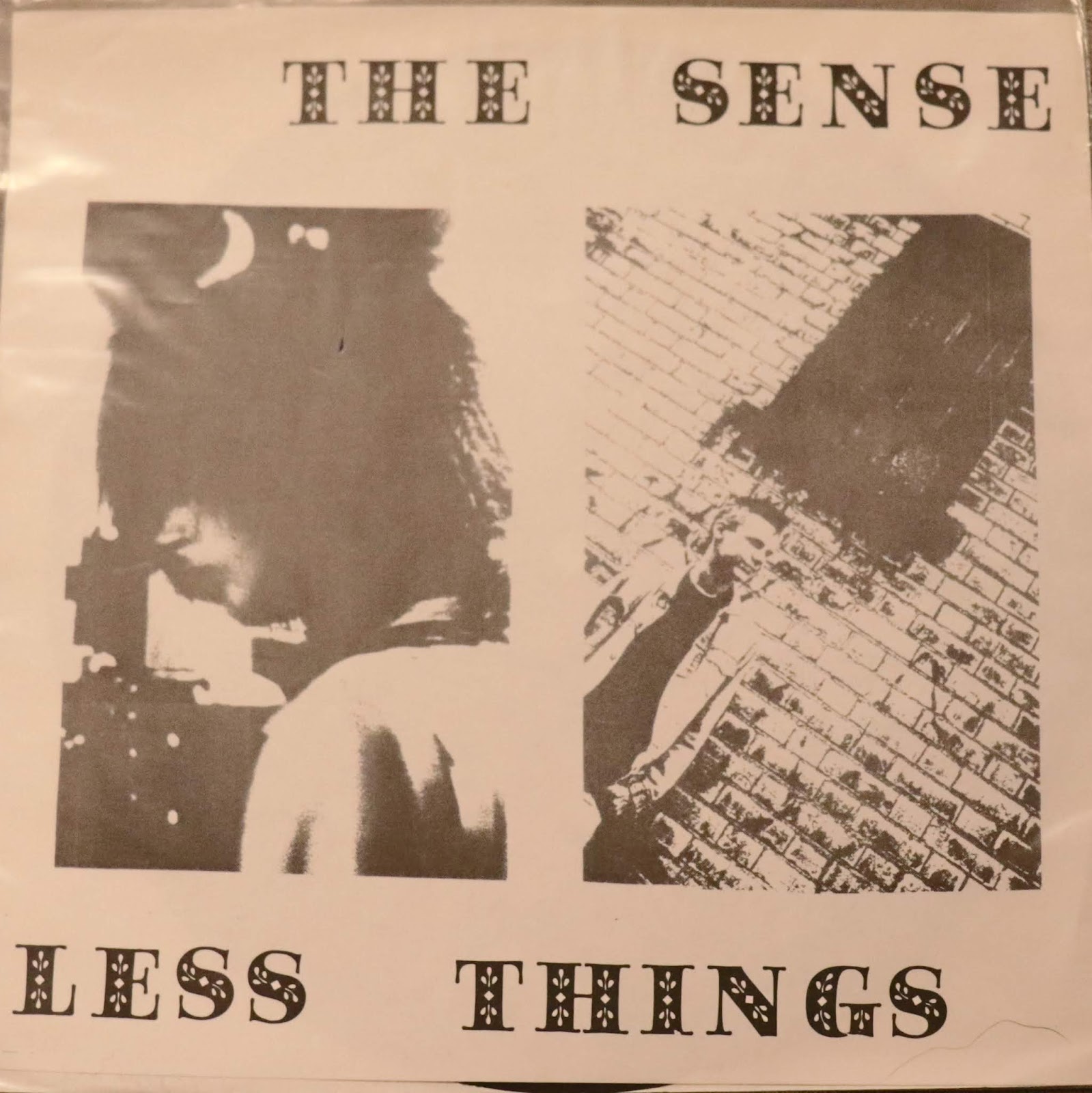
The Senseless Things contributed three tracks to one flexi-disk, at the time having had only one single behind them with far more to come over the next decade.
Spacemen 3, meanwhile, contributed ‘I Love You’ and ‘Sometimes’, also on two separate flexi-disks which came free with The Catalogue monthly magazine in February 1991.
The Barmy Army released at least two football-related flexis, one called ‘Leroy’s Boots’ and the other called ‘Billy Bonds MBE’, both of which were released by On-U Sound. Neither were cut so are square disks. The latter contains commentary, including when Bonds collected the FA Cup with West Ham Utd, and fan chants set to a wonderful dub anthem … I am sure the gaffer of this site will heartily concur.
(Indeed he does! … and I’ll also note that the popular 80s US alt-pop magazine Trouser Press was relatively prolific when it came to including flexis with copies of the magazine … acts like Altered Images, Berlin, Buggles, Japan, Joan Jett, OMD, REM, and XTC all featuring on flexis at various points during the magazine's relatively short-lived but much celebrated existence – Anorak-wearing Ed).


