20 years ago this week, local electro-dub duo Pitch Black released Electronomicon, a follow-up album to the landmark Futureproof release of a few years earlier. To celebrate the anniversary, Pitch Black have released live versions of six tracks featuring on the album, issuing the set as a name-your-price download on Bandcamp. Here’s the blurb:
Just under 20 years ago, on the 7th September 2000 to be precise, our second album "Electronomicon" was released by Kog Transmissions in New Zealand.
To celebrate this milestone we dug deep into our archives to find recordings of our live shows from the time. After listening to hours and hours and hours and hours of DAT tapes, we've selected a live version of each of the tracks from the album and are happy to present "Electronomicon Live" for your listening pleasure.
Very sadly we couldn't find anything from the release tour with Shapeshifter, Salmonella Dub Soundsystem and DJ Automatic, which is a shame as it was one of our most enjoyable live experiences, being the first time that we had full creative control of the whole look and feel of each show.
As we think the audio quality of the recordings we did find doesn't quite match up to those we found for "Futureproof Live", we've decided to make this collection available on a pay as you want basis.
Later this month we'll be releasing "Electronomicon" on vinyl for the first time.
Sunday, September 6, 2020
Saturday, August 15, 2020
The Year That Was ... 1976
Craig Stephen steps back in time to present a Top 10 (plus one) of all
things 1976 …
There’s something about 1976. Above all, it was a pivotal year in music: reggae was its peak and punk was an obscure art school sub-genre about to be turned into a commercial anti-art dogma. While punk flared up on the streets of London, Manchester, and New York, Jamaica’s capital Kingston was literally on fire, with uncontrolled violence and gang warfare. 1976 was also about many more things and while this article focuses mainly on the albums released in the 12 months, I have broadened it out, as you shall see.
Max Romeo: War Ina Babylon
Diatribes on poverty and inequality, corruption of the clergy and a call for politicians to take the road to righteousness litter the magnificent War Ina Babylon. The cover reflects the music: a distraught woman holding her head in her hands with a handkerchief to cry into. Roots reggae opener ‘One Step Forward’ urges politicians to take the “narrow” road to righteousness. Then we’re into ‘Chase the Devil’ with its famous opening “Lucifer son of the morning, I'm gonna chase you out of earth”, the frightening title track and ‘Uptown Babies’, a dissection of the class divide.
Ramones: Ramones
Sounding a little dated now, perhaps, but incendiary then, Ramones was latched on to by anyone who mattered in 1976 and became THE must-have item of that long hot northern hemisphere summer. To many, it’s considered to be the first true punk rock album, and still inspires to this day. It’s 14 tracks, among them ‘Beat on the Brat’ and ‘Blitzkrieg Bop’, last all of 29 minutes. Nowadays, T-shirt City is bustling with Ramones tops but do those snotty teens wearing them even have a copy of the album that set them to a career of trademark buzzsaw guitars and short songs?
David Bowie: Station to Station / Nic Roeg: The Man Who Fell To Earth
Changing tack once more, the album’s opener, the 10-minute title track began with the sound of an approaching train, more than three full minutes pass on a slow, hypnotic instrumental march before Bowie finally sings. It then erupts into a celebratory groove, leading into a lengthy, wild outro. It’s almost two songs welded into one. Kraftwerk were also an influence for Bowie and he would continue the musical adventure on the so-called “Berlin trilogy”. The cover used a still from the film The Man Who Fell to Earth in which Bowie took the lead role as a stranded alien. Released months after the album, it is a monumental sci-fi flick that bemuses and bedazzles in equal measures.
100 Club Punk Special
You could pin punk’s rise to the very first Sex Pistols gig, to the Screen on the green Midnight Special in late August, or even the Pistols’ foul-mouthed tirade at Bill Grundy on prime-time television that sparked tabloid front-page headlines. But this mini festival was the moment that seemed to propel the burgeoning movement into something more tangible and publically-consumable. It featured the Sex Pistols, Buzzcocks, The Damned, and The Clash, as well as Siouxise and the Banshees which had only just formed and pretty much played on the hoof. Whatever happened to the Stinky Toys?
Can: Flow Motion
I had to force myself to like Can but it was worth the pain. They are very much an acquired taste. By 1976 the German avant-garde prog-jazz-punkers found themselves on Top of the Pops with the electro-beat heavy ‘I Want More’ which features here. Flow Motion might be more accessible and it plays with disco rhythms, but it remained very much a Can album with a ten-minute track to close that continues a fine tradition of freeform recording.
All the President’s Men
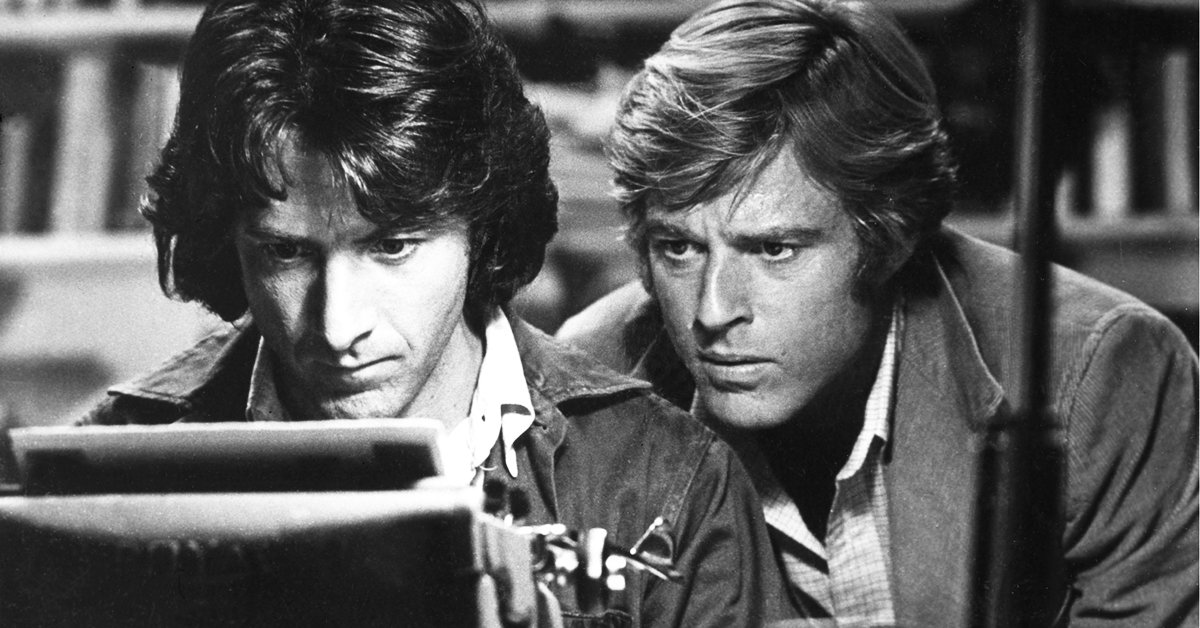
The film of the book of the event. Watergate was still raw in America, and in journalism around the world. The revelations of reporters Woodward and Bernstein in the Washington Post (and by other reporters) were like a Molotov Cocktail thrown at the established political processes. This was Dirty Politics before it became part of the culture. Dustin Hoffman and Robert Redford play the said reporters braving obstacles at every turn to get the story. And there were many of them, but their doggedness culminates in the president resigning. A film can’t truly encapsulate years of chasing or a 336-page book but it covers whatever it is able to do with fantastic dramatic effect.
Debris: Static Disposal
From Chickasha, Oklahoma, Debris formed in 1975 and self-released this solitary LP. A Dada/punk/psych masterpiece recorded in just under seven hours. It was a mindblowing album coming with a provocative, bondage-themed sleeve. Like The Saints’ debut, they were a band oblivious to the coming punk explosion yet this also sounds like a punk masterpiece. Debris came from the same harvest as Captain Beefheart, the Stooges, early Roxy Music and other pre-punk mainstays of the time. After this, they disappeared.
Godzilla vs Megalon
Nuclear testing unleashes mayhem on the undersea kingdom of Seatopia, causing a series of environmental disasters that nearly wipes out Rokuro, the schoolboy protagonist at the centre of this film. Then ... fighting … a flying robot … napalm bombs … the world in danger … Tokyo smashed. In other words, exactly what all the original Godzilla films do best. (Although the film was released in 1973 in Japan, it didn't receive a full theatrical release in the US, and more generally "the west", until the balmy summer of 1976 - Ed)
The Damned: New Rose
It might be lauded as the first British punk single, but ‘New Rose’ was a classic three-minute pop song. The famous spoken intro – “Is she really going out with him?” – is from the Shangri-La’s ‘Leader of the Pack’ for fox sake. Fuelled by amphetamine sulphate and cider, ‘New Rose’ laid a marker for all other punk bands to follow. Only a few ever did.
Lee ‘Scratch’ Perry: Super Ape
Genius at the controls. Take a breath, open your mind and listen to this masterpiece of roots music. A must have for all Perry lovers and for the new generations interested in reggae music. Super Ape might not be the best reggae album of the 70s nor even Perry’s finest but it set a trend; reggae and dub meets, well, all sorts of sounds and influences. Various reissues and re-shaping has occurred in the past 44 years but the original still stands strong.
Scotland 2, England 1, Hampden Park, 15 May
This game would become a skeleton in goalkeeper Ray Clemence's cupboard after allowing a saveable Kenny Dalglish shot to roll through his legs for Scotland's winning goal. Mick Channon had given England an early lead but there was only ever going to be one winner. Bruce Rioch equalised just six minutes later. Clemence would later say he had Dalglish’s shot covered, but it bobbled and the next thing he knew it went through his legs and into the net. Scots fans didn’t care, they’ve never let the keeper forget it to this day.
Tuesday, August 11, 2020
EP Review: Dub Empire - Beyond High (2020)
Dub Empire’s Beyond High is yet another great release from the Original Dub Gathering digital platform - a browsing destination which has become something of a “go to” for me when seeking out fresh dub flavours. It’s a five track EP from a Belgian production duo I otherwise know very little about, but it's the sort of impressive sampler that has convinced me to dig deeper and explore further. Not to be confused with Dub Empire Sound, which from all accounts is an entirely different production outfit, despite possessing a very similar MO.
Beyond High is a bassy excursion into state-of-the-art electro dub, drenched with higher-bpm techno sensibilities and Eastern/world music vibes. The title track is absolutely the jewel here and we get two versions - the original mix which opens proceedings, and the UZUL acid-fried remix which closes out the EP. They're the bookends, but everything sandwiched in the middle is not too shabby either.
Grab a copy of the album from Original Dub Gathering (here) or stream below.
Sunday, August 9, 2020
When Did Things Become So So-So?
Joe Sampson is best known for his work with Salad Boys, T54, and the Dance Asthmatics, but he’s also not shy about venturing solo when the occasion demands.
One such recent occasion being the enforced Covid-19 lockdown period, when Sampson was left to his own devices, or in this case, a device better known as the ever trusty MicroKorg XL, which he used to compose and produce an album of quirky retro-fuelled instrumental tracks. Ten of them, collectively spanning less than 25 minutes, most with cryptic long-winded titles, the best of which is the infectious opener ‘This Has Been An Issue For As Long As I Can Remember’.
But they’ve all got something about them, and I’ve been really enjoying this barely noticed gem of a release.
Buy the cassette (yes, cassette), stream, or download (name your price) from the link below.
Saturday, August 8, 2020
Album Review: The Beths - Jump Rope Gazers (2020)
According to the
opening gambit on Jump Rope Gazers, Elizabeth Stokes and her band are not getting
excited. But perhaps they should be. Since the release of their debut EP, Warm Blood back in 2016, it’s been one high watermark after another for The
Beths.
That release was followed by a well-received full-length debut outing, sold out national tours, international touring and supports (pre-lockdown), and, um, a Christmas single. All arriving with rave reviews from the heavyweight likes of Rolling Stone, Pitchfork, and a raft of other publications. Plenty there to be getting excited about, surely.
Having said that, the formula applied on Jump Rope Gazers is not vastly different to that found on those earlier releases, which, depending on your starting point, is either a very good thing, or a defiant act of gross negligence. A poke in the eye to those critics who believe pop artists are duty bound to offer some sign of real, perceived, or mythical “progression” on each and every release.
Me? ... I’m not so fussed about any of that. The Beths have stuck with what they know, what they do best, what works, and the important thing is, they’ve done it very well. It turns out that “difficult second album” was not so difficult after all.
So that means we get a procession of fuzzy power pop tunes, and the sense that the band are still having fun together, despite all of the challenges and pressures that invariably come with life on the road (pre-Covid). It’s a super strong set, and very consistent, with no one single track standing out above any of the others. Which is always a good sign for the longer-term durability of any release.
There are a few tunes here that will doubtlessly shine much brighter in a live setting; the title track appeals as an ideal live singalong, and I can already see cuts like ‘Do You Want Me Now’ and ‘Don’t Go Away’, in particular, going down a storm when I catch the band on stage in my neighbourhood next month, at the first of three sold-out gigs at Wellington’s San Fran.
All of that said, I feel compelled to leave you with the words of another local reviewer, Alex Behan, who reviewed Jump Rope Gazers immediately upon its release a few weeks ago. Without wishing to detract from the key roles played by the rest of the band, especially that of guitarist Jonathan Pearce, I thought Behan nailed the band’s nerdy appeal with these words:
“The Beths’ not so secret weapon stands shyly centre stage. Elizabeth Stokes harnesses insecurity and doubt, turns it into witty, self-deprecating poetry, then wraps it up in uplifting, positively exuberant guitar pop.”
Almost perfect.
Sunday, July 26, 2020
The Top 14 and a half best albums from Wales
Having previously given
us extensive lists on Scottish post-punk bands who saved the world, Australian bands who didn't stink like a decomposing wallaby, and of course 10 Irish Bands who didn’t want to be U2, The Corrs, Boyzone, Westlife et al, our resident
jetsetter Craig Stephen now heads deep into the dark valleys of
Wales to turn his attention to the best albums from artists in that part of the
world:
***
Ah, Wales: Shirley and Tom and Bryn and Katherine, magnificent voices born of choirs and coal mining.
There’s a certain charm about the Welsh language on record, and though the bulk of albums recorded in Cardiff, Swansea et al have been in English, we have enough examples in the list to keep Max Boyce happy.
Alas, there’s no Bonnie Tyler.
Super Furry Animals: Radiator (1997)
The Furries had a gift for catchy yet complex melodic hooks and in the 1990s they were both part of an accessible indie sound, and yet remained detached from the populist post-Britpop scene. The occasional Welsh-language song, the devotion to drug crim Howard Marks, a languid vocal style and clear influences of prog, punk and even the use of techno - this band was clearly on the outer.
Radiator is an impressive kaleidoscope of sounds, with songs reeking of melody: they borrow from 60s pop but that’s just a fraction of the story. ‘The International Language of Screaming’ and ‘Hermann Loves Pauline’ were loud, fast and eccentric. They shouted the band’s intentions, and I was listening intently.
Manic Street Preachers: Gold Against the Soul (1993)
For this writer the choice of Manics’ album wasn’t the confrontational bombast of the debut Generation Terrorists, nor the subsequent million-sellers Everything Must Go and This Is My Truth Tell Me Yours.
While those have everything the band were good at, Gold Against the Soul was the step forward the Manics needed to make to become the band that they became. Pretending to be both The Clash and Guns’N Roses was never going to sustain a career, after all.
Gold contains by far their most rockist singles – ‘From Despair To Where’, ‘La Tristesse Durera’ and ‘Life Becoming A Landslide’. It signalled a move away from bristling teenage arrogance to a bleaker outlook.
Tom Jones: Talk of the Town (1967)
You want a superstar? Here’s Cymru’s own. When I obtained this in an op shop in the 90s in Hull, Jones was a faded and jaded legend, so this record was cheap and cheerful and in great condition. And it was brilliant.
Jones is a live great, and the stage brings out his best as he does inimitable takes on ‘What’s New Pussycat?’, ‘Thunderball’ and ‘It’s Not Unusual’. From the sound of the crowd’s respectful but enthralled reaction (at what was/is The Hippodrome) I’d guess there wasn’t too much underwear landing on stage.
Gwenno: Y Dydd Olaf (2015)
Taking its title and subject from a 1950s Welsh language sci-fi novel by Owain Owain, Gwenno uses that book’s themes of working class oppression to mirror the flaws of contemporary society, as well as the plight of her mother tongue.
On its initial, limited release a year earlier, Y Dydd Olaf barely raised an eyebrow. Perhaps few people could believe that a member of what was essentially a girl pop band, The Pipettes, could record an entire album in a Celtic language (with one track being in Cornish for added credibility) and with such grace and ingenuity.
Anhrefn: Soft Lights and Loud Guitars (1989)
This is the half album, a split record with English punk band Last Rough Cause on the other side.
Anhrefn’s six contributions include an eccentric and excellent version of the Ruts’ ‘Staring at the Rude Boys’, retitled ‘Edrych Ar Y Rude Boys’ and translated into Welsh, and the manic ‘Bach Dy Ben’ (Rock Against The Rich). The Welsh-language punk act were part of Joe Strummer’s infamous Rock Against the Rich tour in 1988 which has previously been covered in detail on this site.
John Cale: Fear (1974)
Despite his role in the very American underground act, the Velvet Underground, John Davies Cale was born in the Amman Valley to a coal miner and a Welsh language school teacher.
Post-Velvets Cale released three albums during 1974 and 1975, this being the middle, and strongest, of that trilogy. Fear, which features Brian Eno and Phil Manzanera, was a dense and jagged rock album that pointed the way towards punk.
‘Fear Is A Man's Best Friend’, and the eight-minute ‘Gun’ were among the go-to tracks but few would have resisted a snigger at a track entitled ‘The Man Who Couldn’t Afford to Orgy’. Fear brought Cale back to being a British artist. And an influential one too.
Gruff Rhys: Hotel Shampoo (2011)
It’s not easy picking a single Rhys solo album, so I’m going to select this on the basis that it features a series of small hotel shampoo bottles the singer pilfered from his room.
We have slow jazz and funk on ‘Patterns Of Power’, and the Beatles at the beach in ‘Honey All Over’, and a series of glorious hooks that take the Super Furry Animals to a Brazilian carnival.
Gorky’s Zygotic Mynci: Spanish Dance Troupe (1999)
Gorky's sixth album fused psychedelia, country, and 70s pop, revealing how detached they were from the 1990s mainstream music scene. Yes, even more so than the Super Furry Animals. But that was also the case with acts like Topper and Big Leaves. None of these acts cared about Catatonia.
The wistful instruments on tracks like ‘Don't You Worry’ and ‘She Lives on a Mountain’ are inspired by traditional folk songs and vaudeville tunes. Acoustic interludes are scattered throughout but the standout ‘Poodle Rockin’ is full of noisy guitars and smooth harmonies.
Howl Griff: The Hum (2010)
Little is known about this quartet but they did release three albums between 2008 and 2012, of which the self-titled debut was entirely in Welsh.
The Hum is the best of those, with ‘Crash and Burn’ a cosmic outpouring of twee pop, sharing a sense of the surreal with The Coral. And, like those scousers, Howl Griff tell stories of characters, such as a lady who “can help you in the dark of night and improve your memory.” Meanwhile, on ‘Uduhudu’, spirits are raised from the dead in a spangly, manic and effervescent shanty. Glorious, bonkers stuff only the British can do, and the Welsh do best.
Young Marble Giants: Colossal Youth (1980)
The term "less is more" might have been coined for Colossal Youth, the sole contribution by Cardiff three-piece Young Marble Giants. Released at a time when sharp, inverted guitars were de rigeur, it adheres to a minimalistic ideal of sound and attitude.
Colossal Youth was quickly lumbered in with post-punk, a broad brush that included quirky acts like The Native Hipster who subjected listeners to beautiful minimalism that were the apposite to the abrasiveness of the Gang of Four or PiL. It was both inventive and retro with a pastoral feel. Kurt Cobain was a fan.
Meilyr Jones: 2013 (2016)
Jones seemed to appear from nowhere for this collection of energetic tracks which narrate the writer’s daily observations and musings on life. It begins with the jubilant ‘How To Recognise A Work Of Art’ and drew on the humour of The Divine Comedy and the slanted views on life of Morrissey.
2013 was full of high-brow references, from Byron to architecture, but with sing-along choruses and musical quirks. Now, about that follow-up album …
Cate Le Bon: Cyrk (2012)
Sort-of-folkie Cate Le Bon (no relation to Simon it must be assumed), came from left field, much like Meilyr Jones did. She had released an album before, which was barely noticed even in Abergavenny, but Cyrk with its 1969-71 prog-folk-pop outlook, was more playful and irreverent.
She’s released a few albums since, all quite superb, but there’s something mystical and magical about Cyrk that I am happy to keep returning to.
Neon Neon: Praxis Makes Perfect (2013)
Here’s that man Gruff Rhys again, this time in tow with an artist called Boom Bip and as Neon Neon they delivered another album-biopic by dedicating this to the life of Giangiacomo Feltrinelli, who was both wealthy and political, to the tune of late 80s synth pop.
I actually think Neon Neon’s first album, Stainless Style, which was inspired by automaker John DeLorean, is superior musically, but Praxis Makes Perfect is a more coherent album, and still strangely rewarding in its own way. And besides, you have to tip your hat to an act that creates an entire album around someone few in the UK or any English-speaking language would be familiar with.
Super Furry Animals: Mwng (2000)
Two albums by the Furries, plus two solo efforts by Gruff Rhys. Hmmm, you’d think there was a trend here. And you’re right, but some biases are healthy, and Rhys and co are among the most talented folk to come out of Cymru.
On Mwng (pron: Moong) the Animals rejected their adopted language for a work sung entirely in Welsh. The result is a charming batch of stripped-down rock songs that isn't as inventive as the previous year's Guerrilla, but still makes for a damned enjoyable listen.
Alun Gaffey: self-titled (2016)
Alun Gaffey’s first, and so far, only solo album is a curious work of pop, electro and Tom Jones’ B-sides.
‘Palutyllau’ introduces the listener to Gaffey’s influences: 70s funk and soul. ‘Yr Arfon’ pounds with early 80s hip hop beats, and new romantic excitement. Sandwiched inbetween those is a track about dinosaurs (either in the literal or the metaphorical sense) ‘Deinasoriaid’. What’s not to like?
Thursday, July 23, 2020
Classic Album Review: Bomb The Bass - Clear (1995)
Bomb The Bass is essentially uber-producer Tim Simenon, who is perhaps best known for the sample-infused early techno classic ‘Beat Dis’, which was a massive global dancefloor hit back in 1987. Eight years later, Simenon had evidently moved on from that “smiley face” heyday, and on Clear we find him in a far more contemplative and, dare I say it, a somewhat more mature and sombre mood.
On Clear, Simenon gathers together an eclectic set of luminaries such as Justin Warfield, Bim Sherman, Will Self, Sinead O’Connor, and Benjamin Zephaniah (to name just a few) to produce and mix an assortment of tunes that are for the most part pretty mellow, and certainly slower in tempo than most of his earlier works.
Yet it is also an album very much tinged with a strong political undercurrent, and Clear generally has a more subversive flavour than the lightweight techno/pop crossover stuff that initially championed Simenon’s breakthrough into the mainstream. On Clear we find a far more world-weary Simenon laying down a wide variety of beats and rhythms for his many guest vocalists; some hip hop, a few ambient spacey grooves, but in general, much of this album has a predominantly dub/reggae-lite feel to it.
Aside from one or two tracks that could best be described as ordinary, Clear is consistently good, and it does contain a couple of truly essential cuts - such as Justin Warfield’s outstanding ‘Bug Powder Dust’ (the first single off the album, subsequently immortalised by Kruder & Dorfmeister’s excellent “Sessions” remix) and the extraordinary Sinead O’Connor duet with contemporary Beat Poet and part-time revolutionary Benjamin Zephaniah, titled ‘Empire’, which finds her (in fact, both vocalists) in fine voice and unrepentantly prepared to expose her anti-colonialism Irish republican roots for all to marvel at:
"Vampire, you feed on the life of a pure heart/ Vampire, you suck the life of goodness/ Yes Vampire, you feed on the life of a pure heart/ Vampire you suck the life of goodness … from now on I'll call you England."
A fitting album closer, and for me, it just about represents a career highpoint for the divine Ms O’Connor. Even if you don’t buy into the sentiments behind this politically-charged masterpiece, the electro-dub layers lurking beneath the brooding words are still very hard to resist, and I’d even go so far as to say that this track alone is worth the price of the album.
Simenon, O’Connor, and Zephaniah evoke the outright anger and sense of betrayal felt by many of those touched or affected by the so-called “Empire” just perfectly.
But I digress, and I’ll leave it there lest I go off on a rant. On the whole, Clear is an enjoyable and thoroughly listenable body of work. Simenon’s production is excellent throughout, ably assisted in parts by Doug Wimbish and Keith Le Blanc, and this album demonstrates that there was far more to Bomb The Bass/Simenon than dance music, samples, and one-hit wonders.
Strongly recommended.
Monday, July 20, 2020
EP Review: International Badboys Inc. - CCOI (2020)
International Badboys Inc. might well be an all boy band. I don’t really know. That is a very boy band-sounding name after all, conjuring up actual recall of an awful but mercifully short-lived mid 90s UK-based boy band called Bad Boys Inc. These guys sound nothing like a boy band.
Bandcamp informs me that International Badboys Inc. is a band – or possibly a solo artist – from Seoul, South Korea, the home of that much-loved global pop phenomenon known as K-Pop. These guys (or guy, even) sound nothing like a K-Pop band either.
What I can tell you for certain, is that this 7-track mini-album, CCOI, released in March of this year in digital form on Bandcamp only (as a name your price), is well worth your time if you’re a fan, as I am, of coldwave, lightweight goth, or 80s-flecked post-punk. Seven short sharp bursts of aural pleasure. Stripped back to tight drum/bass and Cure-esque guitar.
I especially love some of the humour on offer – on tracks like ‘Refrigerator Breeding Project’, and on the hilarious opening track ‘Elementary Loser’, which is based on the premise of a 20-year-old repeating second grade for 15 years because of a crush on a teacher … “you’re just not trying hard enough” … second grade for life!
Stream or pick up a download here:
Wednesday, July 15, 2020
Classic Album Review: Junior Murvin - Muggers in the Street (1984)
We welcome back
the bard of Montrose, as Craig Stephen explores a lost Jamaican “gem” for our
classic album files …
Seven years after
The Clash picked up on Junior Murvin’s stunning ‘Police and Thieves’ for their
debut album, turning it into a worldwide anthem, could Murvin now be dismissed
as a one-hit wonder? Not a chance.
While lacking the apocalyptic dread of the 1977 album, also called Police and Thieves, Murvin’s Muggers in the Street is an overlooked gem at a time when roots reggae was somewhat unfashionable in Jamaica following Bob Marley’s death and the popularity of dancehall.
On what was only Murvin’s third album in seven years he was backed by the Roots Radics Band and produced by Henry ‘Junjo’ Lawes, who was considered to be one of dancehall’s most successful producers.
But that doesn’t mean Murvin had radically changed his style in line with the day’s fad. Muggers in the Street is ostensibly a reggae album in the mould of the great 70s Jamaican workings, including Police and Thieves.
There is a link to that particular work in the title track which is little more than a reworking of ‘Police and Thieves’ the single. It’s not clear why Murvin redid this, there was nothing wrong with the original after all, and the lyrics on the original were far more potent. So, where we once had “Police and thieves in the streets (oh yeah)/ Fighting the nation with their guns and ammunition/ From genesis to revelation, yeah/ The next generation will be hear me”, we now have: “Muggers in the street/ Rob everybody that they meet/ In the street where the criminal acts/ They don’t care who they rob.”
The original is about the gang war and police brutality that was rampant in the streets of Kingston in the 70s; the remake appears to concerned only with the muggers as criminals, and not part of a rotten state that fed the criminality.
There’s no harm in it being included, in fact I would proffer that at least a couple of tracks on the second side could have been cut loose ahead of any others.
All of the wholesome meals are on the first half, and the standout is undoubtedly ‘Strikes and Demonstrations’, a cutting diatribe on the failed economic policy of the times: “Worldwide crisis is at large/ At home and abroad.” Murvin doesn’t necessarily support such actions, he just feels it’s a consequence of a world that doesn’t care anymore.
In 1984 Murvin fretted about his personal safety, imploring the working classes to ‘Stop the Crime’ and ‘Think Twice’ about their actions. Sensible advice, perhaps, but it’s doubtful if the poor would be moved by a record when the landlord is threatening eviction.
If it sounds like too much doom and gloom then there’s time for upbeat moments with ‘Jamaican Girls’ (“Jamaican girls are really nice/ Jamaican girls are sugar and spice”) and ‘Champagne and Wine’ (“I’ve got the money/you’ve got the time/C’mon let’s drink champagne and wine”) with the latter definitely signalling that the roots-heavy feel of a few years previous was now out the window, as the influence of Lawes began to show.
Murvin would continue recording until about 2007 (died 2013), but that period included only four studio albums. Of those, Apartheid, released two years after Muggers in the Street, shows a devotion to exposing injustice.
Muggers in the Street was recently given a vinyl reissue; it can only be hoped that Police and Thieves and Apartheid are given the same treatment soon.
Saturday, July 11, 2020
Album Review: The Orb - Abolition of the Royal Familia (2020)
The Orb keep on
keeping on. Keep on delivering. Perhaps more than any other 90s electronic
dance music pioneer. Not always without some level of sonic compromise, but
always ensuring the quality control filter remains sufficiently high.
Collaborators and co-conspirators, both within and outside of the project’s inner sanctum, have come and gone, but key man Alex Paterson has been one constant throughout the project’s 30-year-plus evolution.
Paterson’s capacity
for fruitful collaboration is again to the fore on this latest Orb release, and
along with current primary partner in crime, Michael Rendall, Abolition of the
Royal Familia features heavyweight contributions from electronic scene veterans
like Steve Hillage, Roger Eno (Brian’s bro), Youth, David Harrow, Gaudi, and
most notably on ‘Daze’, vocalist Andy Caine.
The music itself
is an expansive journey into disco, deep house, Floydian ambience, dub, and
sampling. There’s politics, humour, plus hybrid themes of a post-apocalyptic
nature, including on-point use of Jello Biafra’s spoken word ‘Message From Our
Sponsor’ on the particularly poignant closer, ‘Slave Till U Die No Matter What
U Buy’.
All tracks have
relatively long-winded “remix” tags in their respective titles, presumably to
help differentiate them, eventually, from any yet-to-be-released alternative
mixes that may or may not be destined to follow. But they’re all brand new
tracks, and simply calling each “the original mix” is hardly very Orb-like is
it?
More generally,
Abolition of the Royal Familia captures the essence of Paterson’s long-held
commitment to a cross pollination of dance music styles, and it’s a no-skip
listen from start to finish. Pretty much everything you’d expect from a new Orb
album in 2020.
Aside from the
aforementioned tracks, both of which are doozies, my own favourites here are
the dubbier numbers, ‘Say Cheese’, and the “too blessed to be stressed” mix of
‘Ital Orb’.
Subscribe to:
Posts (Atom)