Monday, July 31, 2023

Album Review: The Chats - Get Fucked (2022)

Craig Stephen on fair dinkum lucky country battlers, The Chats …

Three middle fingers directed at the camera on the cover. A title with a naughty word. A back cover with a schoolboy-esque penis picture. And the c-word dropped mid-song. Yes, The Chats tick all the boxes of renegade bovver boys/bogan rebels with badly-strung guitars and home-made haircuts.

Yet, I’ve never quite twigged since I discovered The Chats about four years ago as to whether this Brizzy trio are middle class rogues pretending to be from the tougher end of town to annoy their parents (while making money to invest in metals) or genuine working-class ruffians ruffling a few feathers (while making money to invest in beer n cigs). I’m going to give them the benefit of the doubt and assume the latter. They’re Australian, after all, a land where not giving a damn is the virtual national ideology. And it’s hard to be a Tarquin or a Hugo and be serious with a pudding bowl haircut or a love of souped-up boy racer motors.

Which brings us to the opening track of second album Get Fucked, named after a car, ‘6L GTR’. It’s brief and fast – pretty much like all Chats songs – and eschews a love of the road. Just a shame about all those cars on the road too.

“Pulled in at Beefy’s/ Got a steak and cheese/ Hoonin' down the Bruce now/ As fast as I please/ Late arvo congestion/ Every day’s the same/ So I pulled left around 'em/ And drove up the bike lane.”

 Ah, that wonderful Chats sense of humour, which seemed lost when they lost a guitarist by the name of Josh but brought in another Josh to replace him. It’s still there and in top gear. There’s the tale of a jobsworth ‘Ticket Inspector’ on that eponymous track, a man (presumably) who lives to catch out the larrikins trying to escape his clutches and catch a ride for gratis. “Short fuse, I'm 'boutta lose it/ Got a bit of power, ain't afraid to abuse it.” And you know he certainly will.

On the debut album High Risk Behaviour (2020) they revelled in being lager louts on such songs as ‘Drunk and Disorderly’, and continue the trend on ‘I’ve Been Drunk in Every Pub In Brisbane’. I imagine in a city of 2.4 million people that that would be a considerable achievement. It sounds like a challenge worth taking up.

“I've been legless at the Breakfast/ After a few they told me to leave/ I've been banned at the Grand Central Hotel/ And I've been pissed like you wouldn't believe/ I love relaxin' at the Caxton/ But they never like the look of me/ I've been off my face at the Stock Exchange/ They gave me a couple beers for free.”

‘The Price of Smokes’ meanwhile turns to the art of the ciggie. There’s pretty much two refrains in the entire song – one, the price of smokes is going up again, and secondly, the conclusion that “Those bastards in parliament ought to be hung by their necks.” Other than a lament to poor workplace safety on ‘Dead On Site’, it’s pretty much the only outreach to modern toils and troubles.

Clocking in at about half an hour it’s not going to challenge the concentration-lagging youth among us, but its 13 songs are sharp, pointed and frantic. You get your money’s worth.

In an age of insipid music in which middle class values are to the fore, it’s refreshing to have my ears blasted about alcohol, grunty cars and fighting. You don’t have to empathise with any of that to appreciate that The Chats play it their way: it’s part punk, part old style rock and perhaps even a bit of pub rock too. It’s also very much of a recent Australian trend, in line with similar contemporary bands like Amyl and the Sniffers and Drunk Mums. In an age of mediocrity and blandness in the music scene, that’s pretty much all you can ask for.

Tuesday, June 20, 2023

Blog Update and some Linky Love

Contrary to outward appearances, this blog isn’t dead. It has merely been on extended sabbatical. A bit like Monty Python’s legendary parrot, I’ve been resting. Pining for the fjords. A sabbatical which began in early 2022, interrupted only by the odd gig review and the irregular – but thoroughly welcomed – contributions of my good friend Craig Stephen.

Thanks Craig. I appreciate your enthusiasm and those album reviews. As on-point and insightful as those reviews have been, I’ve been struggling with the idea of adding any of my own; in these days of free-music-for-all and a surplus of streaming services, does anyone really need to know my opinion on any specific album or artist when they can listen elsewhere and preview it themselves? And besides, Craig takes the blog places I wouldn’t have the nous to go … which can only be a good thing.

In terms of adding any other sort of post, beyond those gig reviews, I’ve also become quite lazy in my dotage, and truth be told, I probably need something resembling a rocket to get my own arse into gear.

I’ve actually been a little in awe of Craig’s capacity to keep finding words. As if having a day job in the media wasn’t enough, in addition to contributing to everythingsgonegreen and multiple other publications, he’s also found the time to write a book on New Zealand football (near completion, publication pending) called ‘Boots and Bombs’. The book’s central theme is the New Zealand national team’s hugely unlikely but scarcely documented trip to Vietnam in 1967. To take part in a football tournament. In the middle of a warzone. In Saigon, with the Vietnam war raging at something close to its horrific peak. Quite a thing.

I have had some involvement with that project – making connections, doing research, and doing some editing. It feels like I’ve read and re-read raw work-in-progress versions of the manuscript a dozen times. It is, admittedly, fairly niche subject matter, but football is a shared passion of ours, as is history, and it has (mostly) been a pleasure to help him out where I could.

Another reason for blog inactivity is that I simply lost momentum after a decade of relatively prolific blogging (700-plus posts). 2022 was a challenging year in so many ways – not least because I spent a large chunk of time in the middle of that year taking in the sights and sounds of Europe – visiting places like Edinburgh, Amsterdam, Barcelona, Venice, and Rome. Plus, I caught the dreaded Covid thingy - whilst holed up in a sweltering Amsterdam apartment amid record breaking mid-summer temperatures, sans the chilled comforts of home. So yeah, blogging just became all too hard for a while and even the idea of it seemed a little bit frivolous.

2023 has conjured up a lot less drama so far, so there’s probably less excuse for the lack of more recent posts. I can only refer you to the “lazy arse” disclaimer offered earlier.

That’s not to say I can offer any certainty about where everythingsgonegreen goes from here. I may post more regularly, I may not. The last thing I want is to feel obligated or for it to become anything resembling a chore. We’ll see.  

So anyway, that’s the update, and here’s the linky love bit:

With New Zealand music history site AudioCulture (aka “the noisy library”) celebrating its tenth birthday during May, I found myself the subject of some scarcely anticipated attention. It turns out that some nine years after its initial publication, my history/scene article on Wellington nightlife in the 1980s (link here) remained the most visited or read article across that site’s ten-year lifespan. Out of some 2000-plus submissions. It proved so popular, AudioCulture had its technical staff investigate to ensure all those visits were legitimate. According to Russell Brown, referencing the article in the New Zealand Listener magazine, checking “there wasn’t some bot in Russia delivering all the hits”. In the end they determined “the traffic was real and organic” … (thanks comrade Botolovski, my wire transfer is in the post. Or something).

The article also received a mention on Radio New Zealand no less, when Jesse Mulligan interviewed AudioCulture founder Simon Grigg about the site’s ten-year history. If that was an unexpected surprise, I was more than a little shocked when the local student radio station, Radio Active, asked to interview me for ‘The Vault’ segment of their breakfast show. That weekly segment of the show being dedicated to “the past”, where a life-weary greybeard comes on to reflect or to preach to “the kids” about life during wartime – or in my case, a life lived amid the seedy underbelly of Wellington’s nightlife in the 1980s. I took them up on that offer (link here).

The “follow-up” article referred to in that interview is this one (link here), where I choose and then dissect ten Wellington club bangers of the 1980s. Specifically New Zealand-produced tracks only, which, to be fair, probably accounted for less than five percent of tunes played in clubs during that era. That was a fun piece to write, and I make no apologies for its heavy synthpop bias.

Right, so that’s pretty much all I have for now. I may be back. I hope to be back. I may not be. Who ever really knows anything about anything?


Wednesday, June 14, 2023

Album Review: The House of Love - A State of Grace (2022)

Craig Stephen waited such a long time for the latest House of Love album to arrive he started to fear it never would …

It had been a long time since House of Love released She Paints Words in Red (2013), but in that intervening period gig-goers were teased with some new material that they rightly expected to form a new studio album. It would have been the third LP featuring Terry Bickers since he returned in the early 2000s following his acrimonious departure in 1989. But in 2021 Bickers was off again. This time there wasn’t the friction or enmity of the initial split, with a band statement blaming the pandemic for Guy Chadwick’s decision as he prepared for rescheduled dates in the United States. In a later interview the frontman suggested Bickers declined his invitation as he was loyal to Matt Jury and Pete Evans who had been sacked from the band because Chadwick didn’t want to work with them anymore. It seemed that the new album was in jeopardy.

 But, then, Chadwick announced a new line-up with ex-Idlewild man Keith Osborne on lead guitar, Harry Osborne on bass, and Hugo Degenhardt on drums. Degenhardt had previously worked with, ahem, Rod Stewart and Robbie Williams. These guns for hire would appear with Chadwick on the UK tour of autumn 2022 and the US tour soon after.

The album with the new line-up is a radical departure from the comeback album Days Run Away (2005) and its morose follow-up She Paints Words in Red. I’m actually being quite diplomatic about the latter, it was a stinker, very pastoral, placid and far removed from previous House of Love albums. Chadwick was keen to return to the sound of the band in its earlier days.

State of Grace was recorded in Hastings on England’s south coast and among the guest musicians are John Pilka, who was in Chadwick’s first significant band, Kingdoms, in the mid-80s. The cover is somewhat grainy and industrial and it looks suspiciously like a goth album with its font and monochrome style.

If Chadwick’s intention was to return to the band’s past sound he has largely achieved that, especially on the guitar-driven single ‘Clouds’ which is a call to someone to “Get your head outta the clouds”, a refrain that is repeated ad nauseum for the final minute and 40 seconds in majestical rock’n’roll style. The accompanying video features a greying Chadwick walking around a seaside town including along a pier and through a games arcade. There’s little in the way of politics or diatribes on the way of the modern world on the dozen tracks – that’s just not Chadwick’s style – and love and how it spins a web around our hearts and minds are instead front of house.

Any suggestion this might be a solo album is augmented by the resurrection of a song from Chadwick’s brief turn as a solo artist in the late 1990s. ‘Laughter and Honey’ was a beautiful, mainly acoustic B-side; as the renamed ‘Into the Laughter’ it is a full minute shorter but has electric guitars and a full band. That clearly is the intention: to turn a very much one-man effort into a team endeavour. And it certainly benefits from four pairs of hands working in unison with Keith Osborne’s guitar playing very much to the fore. Another highlight is the album opener ‘Sweet Loser’ which begins with harmonica playing which is superseded by a drone riff that builds into something quite stunning.

‘Melody Rose’ is quite grungy. If there is a past reference in this song, it is to the critically panned Audience With the Mind (1993), an album that probably should have been re-recorded or released as an EP. Nevertheless, like that particular work, I have come to love this in its own way. The bassline parties with the drums in a manner I never thought possible.

It is certainly a ubiquitous album, and there’s a couple of numbers in ‘Queen of Song’ and ‘In My Mind’ that suggest Chadwick has been listening to authentic Americana music. The former has touches of blues; the latter a tinge of country music. Curiously, Chadwick’s languid vocals on ‘In My Mind’ remind me of Nigel Blackwell of Half Man Half Biscuit. Without the deadpan humour.

State of Grace is a varied album that takes the listener on a trip across the Atlantic. Yes, it certainly sounds like peak House of Love from 1987 to 1993 but there’s traces of more recent work at times. It has the sound of four people gelling fairly quickly, but also of one man in charge and make no mistake this is a Guy Chadwick-fuelled project. How this record would have eventuated if Terry Bickers and his two mates were on board is impossible to determine. I suspect it would have been different in good and bad ways. But we have an album I think the House of Love can be proud of.

Sunday, May 28, 2023

Album Review: Half Man Half Biscuit - The Voltarol Years (2022)

 Craig Stephen on the prolific Half Man Half Biscuit …

Half Man Half Biscuit never stop. Four decades on and the albums keep a-coming. Just as I wonder if Nigel Blackwell has dredged the well of humour dry, the world churns out more merde for him to get his teeth into. As it were.

The Biscuits have been around since 1985 when the world was first introduced to their love of minutiae on the seminal Back in the DHSS album, a period piece of observant, wry tracks that cast an eye over everything from unemployment to table football to the galling awfulness of children’s TV presenters.

Every two to three years the Biscuits relaunch with a new album, and The Voltarol Years is their 15th studio album (on top of numerous EPs and a few compilations). The previous 14 masterpieces were all released on Probe Plus but with that cult label’s closure through its owner’s retirement, they’ve released this on R M Qualtrough, a name so anti-rock’n’roll I’ll assume it’s their own set up. That change may explain the gap of four years since No-one Cares About Your Creative Hub So Get Your Fuckin' Hedge Cut.

 The Voltarol Years contains the usual cutting edge sarcasm and satire, railing against the worst elements of society: football fans who aren’t really football fans, middle class aioli-consuming moaning minnies, pedants, grumpy online chess players, C-list celebrities and what have you. If there were ever a political statement in a Biscuits track it would be about the bickering at parish council meetings over poorly-devised pavements.

This is all delivered in a manner that defies musical norms, none of which is more evident than on ‘Grafting Haddock In The George’, where, mid song, Blackwell deviates into a monologue about Martin, one of those people who want to be at the centre of everything and who like the sound of their own voice. As he does so the band pares back to a single bassline: 

“He was at Knowsley Safari Park one day where he saw a monkey with a banana in one hand and a tin-opener in the other, and he shouted over: ‘Hey, you don’t need the tin-opener for that!’ To which the monkey replied: ‘It’s for the custard, dickhead!’ …”

In the 1980s and much of the 90s the Biscuits could drop in obscure references knowing that fans would need to ask their mates what it meant or remain befuddled. Now, all you need do is search Google. So what exactly is Urbex or buskins of mottled cordovan? Who is Anthony Power or Chicory Tip? And where exactly is Haverfordwest and why is it named so? Do I even care? That, perhaps, is the entire point.

‘Rogation Sunday’, meanwhile, reveals how a man finds a curious note from his other half that brings a double-whammy of bad news:

“I came downstairs and found your note / The greater knapweed near the mugwort by the buckthorn tree is dying / P.S. Yes, I have left you”

The preamble to all this merriment and mirth ‘I’m Getting Buried in the Morning’, is the tale of a murderer about to meet his maker, and who wonders how he’ll be remembered (not fondly obviously). Our anti-hero cheers that: “Yeah, I’m getting frazzled in the morning/ So get me to the chair on time,” sung in the manner of that ol’ cockney classic ‘Get Me To The Church On Time’.

The music is a varied mash of standard rock and indie-pop, sometimes grating, often enthralling, as on ‘Awkward Sean’, a personal favourite due to the breezy pace it takes. The narrator wonders what has happened to his old pal and tries to find out from others who knew him. Some say he died a long time ago, some say he’s alive in a small town in Pembrokeshire, west Wales (hello Haverfordwest!). We discover that Sean was a little bit different: while his mates liked the flamboyant footballers such as Best, Pele and Cruyff he was an admirer of more functional German players. In the pubs: “We would play pool/ He would arrange beer mats into a tower.” 

Amongst the jollity and scornful mocking, The Voltarol Years does contain some bleakness, as on ‘Big Man Upfront’ where another ratbag hits his dog cos he’s “hard as nails” and crashes his car but survives – “I cursed the airbag when I heard” bemoans our storyteller.

The Voltarol Years won’t be picked up by global radio, trend on Spotify or be listed in the Top 75 Albums of the Year by Mojo magazine. They don’t even try to go beyond their fanbase nowadays, and never really did – after all they eschewed a TV appearance that could’ve boosted their profile in the 80s to instead see local side Tranmere Rovers. But, in age of increasing cultural tediousness and AI-generated music, bands such as Half Man Half Biscuit are needed more than ever. “What side of the indie war were you on Grandad? I was on the side of Tess of the Dormobiles, lad”.

Tuesday, January 31, 2023

Gig Review: Fontaines D.C. @ Shed 6, Wellington, 29 January 2023

During a weekend where extreme weather events saw the cancellation of mid-summer gigs and events right across Aotearoa – most notably in Auckland where Elton John was (twice) cancelled and the popular Laneway Festival belatedly canned – it was of some relief that Sunday night’s Wellington leg of the Fontaines D.C. Australasian tour went ahead without any disruption.

 It helped of course, that the Irish band’s gig was scheduled at an indoor venue, Shed 6, on Wellington’s waterfront. Although to be fair, the weather in the capital city – sporadic showers – was in no way as catastrophic as the torrential rain Auckland and the far north was battered with. Flooding was so severe, a Civil Defence State of Emergency remained in place in Auckland across the entire weekend and beyond. Whisper it, but the word is, there’s more to come.

Having been relieved of Monday Laneway duties, there was a sense that the Fontaines were doubly keen to whip up a storm of their own in the capital, and that’s exactly what they achieved. With a 90-minute onslaught of pure state-of-the-art post-punk. The band reeling off a set which covered most of the key tracks from each of their three album releases to date.

There was a brief but poignant blast of Television – in tribute to the newly departed Tom Verlaine (R.I.P.) – just before the band arrived on stage, sans regular guitarist Carlos O’Connell, who is on “expectant dad” duties, replaced on this trip to the antipodes by The Altered Hours’ guitarist Cathal MacGabhann.

A terrific opening double whammy of ‘A Lucid Dream’ and ‘A Hero’s Death’, off the band’s 2020 album of the same name, set the scene rather nicely, before a run through highlights like ‘Sha Sha Sha’, ‘I Don’t Belong’, and ‘How Cold Love Is’, propelled us to something of a mid-set peak featuring a raucous ‘Televised Mind’ and ‘Jackie Down the Line’.

 Personal favourite ‘Roman Holiday’ offered another mini peak ten minutes later, by which time I’d abandoned the heaving throng closer to the stage for a sedate spot with more breathing room somewhere near the back – the venue was at about ninety percent capacity, if not fully sold out, and it was uncomfortably hot and sticky once the band were in full flight and the crowd fully engaged.

A punked-up take on ‘Nabokov’ followed, before an equally snotty version of ‘Too Real’ notionally closed the show … but you just knew there was going to be an encore, nobody was leaving, and naturally Fontaines D.C. were able to oblige with a couple of hitherto overlooked bangers in the form of Dogrel favourite ‘Boys in the Better Land’, and ‘I Love You’, off last year’s Skinty Fia album.

The band was tight throughout (makeshift guitarist and all), driven by a take-no-prisoners rhythm section, and in the form of Grian Chatten, the Fontaines have a front man who one hundred percent believes every single word he throws at you in that unmistakable and rather compelling thick Southern Irish brogue.

 Chatten kept interaction with the crowd at a minimal level (ie. barely at all) and whilst there will have been many in the crowd who prefer a band to connect with idle banter, I personally think there was enough of a stage presence about the undeniably charismatic Chatten, who bounces around not unlike a nervous child on the first day of pre-school, to still make a firm connection. And really, why bother with obligatory conventional triggers when the mostly unconventional music largely speaks for itself?

The support was provided by local indie rockers Wiri Donna, who played a short set of solid tunes from their recent EP plus the odd new track. I’d like to see them again, if only for the hugely entertaining bass player, who's in-the-moment facial expressions and (mock?) rock-star posing was a joy to behold.

Photos: Thanks to @nothingelseon for the pics.

Thursday, December 22, 2022

Classic Album Revisited: The Clash - The People’s Hall (1982/2022)

Craig Stephen on the bonus album released when Combat Rock gained its obligatory 40th anniversary deluxe spurs in 2022:

Here at everythingsgonegreen we really need no excuse to review a Clash album … even when we’ve done it before. So, yes, I have reviewed Combat Rock, the last great Clash album, and you can read that here.

But the album’s re-release comes with an additional collection, The People’s Hall, recorded around the same time, but has been kept under wraps until now.

People’s Hall has been dubbed a cash-in and a luxury item for collectors. I’d say otherwise. Having played this several times I’d say it is a collection that stands on its own. Yes, it is a mixed bag and the snapshots of chitter chatter from the crowd outside a gig (‘Outside Bonds’) could really have been ditched, but that’s the exception to the rule. This is well worth buying even if you have Combat Rock already. 

Here's the condensed backstory: in December 1980 The Clash released the beguiling and beautiful triple album Sandinista! and in May and June of the following year played what would become a 17-show residency at New York’s Bond’s Casino to promote it. Those shows have gone down in musical history.

Before a tour of Asia, the band rehearsed and recorded at The People’s Hall in London, from where 11 of the tracks were recorded (the exception being ‘Outside Bonds’, obviously). It’s the bridging period between Sandinista! and Combat Rock, and you can discern the development going on. Some of the tracks were re-recorded for Combat Rock or ended up on B-sides; some were taken no further.

‘This Is Radio Clash’ was released as a single at the end of 1981. This version, which effectively opens People’s Hall, contains slightly different lyrics. Apart from that it doesn’t differ greatly from the single version. But the original version of ‘Know Your Rights’ veers greatly from the Combat Rock take. While all the crucial elements are there Strummer sings the lyrics straight, but on the finished version he sounds more mocking, and the guitars are edgier. I’d say they tidied it up pretty neatly for the version that the world knows now and gave it a new interpretation.

 Among the highlights is an extended and looser version of ‘Sean Flynn’ (Errol Flynn’s son who disappeared in south-east Asia while working as a photojournalist). As I listen to this particular track I feel I am being transported to the rail tracks and fields in rural Thailand where the photo session for the Combat Rock cover was taken. It’s magnificent, it feels as if The Doors are in Saigon having a jam session and letting it all out. 

‘Futura 2000’ draws from sessions with New York’s graffiti artist of the same name, revealing some raw and ready proto hip hop and contains one straight bassline played endlessly to great effect. ‘Radio One’ allows reggae great Mikey Dread to do his own, inimitable thing, ‘Midnight To Stevens’ is a tribute to bonkers producer Guy Stevens, and there’s tracks like ‘Long Time Jerk’ and ‘First Night Back In London’ that were relegated to B-sides when they deserved much better. Add in the instrumental ‘He Who Dares or Is Tired’ and you have something of a party punch. That was never served up to revellers.

At the same time The Clash worked with The Beat’s resident toaster Ranking Roger for versions of ‘Rock the Casbah’ and ‘Red Angel Dragnet’, both of which were omitted from People’s Hall and issued as a stand-alone single to fleece more money out of Clash fans.

People’s Hall was a working project for a new album but Combat Rock was the second life of a rolling project, with Mick Jones’ intention to have the band’s fifth album stretch to over an hour and be called Rat Patrol from Fort Bragg. The Clash were always drawn to different sounds and their love of reggae is renowned but this album would have been expanded to soak in Jones’ love for New York funk and hip-hop, and dub. 

The band and its mercurial/autocratic manager Bernie Rhodes instantly dismissed it. Jones was gutted and barely attended the remix sessions, which is understandable as he would be witnessing another producer, Glyn Johns, slash and burn his cherished work to create what we have now as Combat Rock. Rat Patrol has since been bootlegged to hell and back but it still needs to be given a full and official release. Why it hasn’t is a mystery given so much unreleased Clash material has already been resurrected.

Nevertheless, while you wait, indulge in this intriguing bonus album which, despite what some critics might say, offers another side of The Clash and takes the listener to another time and world, to the emerging hip-hop scene, to post-war Vietnam, and to … well, wherever you want to be.

Thursday, October 27, 2022

Gig Review: The Sisters of Mercy @ Hunter Lounge, Wellington, 26 October 2022

They say you should never meet your heroes. The idea being that they seldom live up to expectation and it often only ever results in disappointment. Sometimes, a variation on that old adage can be applied to seeing your favourite bands perform live. More so, if you’re seeing the band for the first time, some 35 years after their feted heyday.

Such was the case when The Sisters of Mercy played at the Hunter Lounge in Wellington on Wednesday night. Maybe I just expected too much. Perhaps it was because I was a little too sober. I’d read and heard mostly positive reviews of the band’s Auckland set the night prior, and felt confident that Sisters v.22 would match my own not unreasonable expectations.

All I wanted was the “hits”, some atmosphere, the requisite quota of melodramatic darkness, and a decent light show. Not too much to ask.

What we got was somewhat less than all of the above. Sure, we got the biggest hits (hits, in context of the 1980s indie charts), but we also got a lot of new-ish, unreleased material - around 50 percent of the set list - which ultimately failed to stir the loins, and virtually all of the hits felt a lot less than the sum of their original parts.

When the set opened with ‘Don’t Drive on Ice’, a relative newbie which wouldn’t have been out of place on the band’s faux-metal Vision Thing album, it felt a little bit like hearing a very good karaoke replica. The sound was thin, a little tinny even, and I felt certain the volume inside the packed venue was somehow muted, if not a little muddy. Surely they’ll amp things up and sort out the mix?

But no, nothing changed as we weaved our way through a 20-something strong set list. Newer tunes were dispersed at regular intervals, easily the best of which was ‘But Genevieve’, alongside a run of better known work which included a lightweight ‘Alice’, ‘Marian’, ‘More’, ‘Detonation Boulevard’ and The Sisterhood epic, ‘Giving Ground’, which briefly had me upping my inner goth to feet shuffling and head-nod mode. Nothing really pulsated my chest or buckled my knees.

I was pleased Vision Thing’s slower-paced sleeper gem ‘I Was Wrong’ was included, but by this time I was despairing a little too much for main man Andrew Eldritch, his once majestically deep baritone now a mere shadow, replaced in 2022 with a sort of unhappy-go-lucky growl.

When the time for an obligatory encore arrived, the band did appear to up the ante a bit, perhaps in anticipation that their night’s work was almost done, and versions of ‘Lucretia, My Reflection’, ‘Temple of Love’, and ‘This Corrosion’ were as good as could be expected, given the rest of the night.

I get that sometimes a band can become tour-worn and jaded. I get that a band can fall prone to merely phoning-in a performance on occasion. And I get that a band wants to introduce new work to an audience ostensibly there to celebrate the stuff they already know.

But the gig just lacked “soul”. There was no real sense of authenticity. Both guitarists could well have been cutouts from a Sisters tribute act, and Eldritch himself was fairly underwhelming as a posturing frontman just going through the motions. Almost like he was trying to resist the urge to take the piss out of himself and failing badly. And yes, I appreciate that you can’t ever take this genre too seriously … and sometimes you should never meet your heroes.

PS. The support act was Brisbane duo Elko Fields, a curious mix of the White Stripes and The Kills’ aesthetic, and they played about half a dozen raucous songs to an enthusiastic reception.

Photos: @nothingelseon, thanks bro.

Sunday, October 16, 2022

Classic Album (and boxset) Review: The Redskins - Neither Washington Nor Moscow (1986/2022 reissue)

The Redskins’ one and only album is a soul-punk classic burning with passion, hope and socialism. It was nothing like any other album of its time, but it’s message resonates in a difficult and troubled time now as much as it did on its initial release.

As depressing as Thatcher’s Britain was in the high unemployment and devastated industrial communities of the 1980s, there was an alternative. In music it began with The Beat’s ‘Stand Down Margaret’ and continued throughout the dirty decade from the likes of the Style Council, The Smiths, Linton Kwesi Johnson and Billy Bragg. The Redskins were at the forefront of the alternative to big hair, spandex trousers and me-first attitudes. They were about solidarity, peace, and anti-racism. This Yorkshire-born three-piece were opinionated, committed and musically brilliant who, in terms of cutting edge polemic and absolute confidence in their beliefs, have rarely if ever been bettered.

 The skinhead three-piece was fronted by Chris Dean, a sometime NME scribe who was inspired by Joe Strummer, who was accompanied by drummer Nick King, and bassist Martin Hewes. Changing their name from No Swastikas to Redskins in 1982, they moved to London and released their debut single in July of that year.

Their emergence was timed perfectly. In 1979 Margaret Thatcher’s Conservative Party won a parliamentary majority and soon began the dismantling of heavy industry, resulting in huge job losses and devastated communities. Most of this occurred in the north, in places like Yorkshire where The Redskins were formed. Fascism and far-right activity was lurking around and the band hated that lot too.

In the early days, The Redskins were more punk than soul. ‘Peasant Army’ contained an inflammatory, angry chorus and was a rousing anthem of optimism. It was as good as, if not better than, the a-side, ‘Lev Bronstein’, who was otherwise known as revolutionary leader Leon Trotsky. Another single was released on CNT in 1983, ‘Lean On Me!’ / ‘Unionize!’ (they loved punctuality), and again the b-side was as good as it’s supposed superior. CNT was an independent label that released early singles for the likes of Sisters of Mercy and The Mekons, and took its name from the confederation of anarcho-syndicalist unions in Spain.

‘Lean On Me’, was a paean to working-class solidarity (“together we’ve a world to win”), and was described by the NME as a “modern soul classic”; Then came further singles ‘Keep On Keepin’ On!’, ‘Bring it Down! (This Insane Thing)’ - a minor chart hit no less, and ‘Kick Over the Statues’. 

‘Keep On Keepin’ On!’ was released at the height of the miner’s strike, with the band at their most prolific, playing benefit gigs around the country and beyond in support of the men and their families who were baton charged, jailed, harassed and ostracised just for defending their jobs. The a-side solemnly noted “Can’t remember such a bitter time/ The boss says jump, the workers fall in line/ They whip us into line with the threat of the dole.”

A raft of singles had been issued over four years but where was the album? That curious anomaly was finally rectified in 1986 when Neither Washington Nor Moscow was issued on Decca. It was something of a greatest hits collection with several of the singles included with just a handful of new tracks.

The album title came from the masthead of the Socialist Worker newspaper, the organ of the SWP which the band were devoted members of. Their support for this small Trotskyist party was unwavering: a speech by Tony Cliff, its de facto leader, was used on one track. Neither Washington Nor Moscow is pretty much the perfect record – 12 tracks, not a single filler, it’s the sound of Detroit meeting Leeds. It rolled The Specials, The Jam, The Impressions, Dexy’s Midnight Runners, and The Supremes into one, and it worked a treat. The anger was channelled magnificently and ‘Kick Over the Statues’ has proved to be prophetic. “Kick over the statues/ And the tyrants die/ Wave bye bye with a hammer/ To their heroes.”

Similarily, the lyrics to ‘It Can Be Done’ could have been written anytime in the past ten years or so: “Hunger of the 30s/ Hunger of the 30s back again/ And the rich still rich/ And the poor still the same as they ever were/ And it seems to me/ We're still not learning from our history.”

Listening to the album in its entirety it seems the answers are so simple … solidarity, unions, strikes, demonstrations, and not backing down. Voting for Neil Kinnock’s Labour Party just wasn’t an option. But, of course, the world isn’t as straightforward as that, and if it was we’d probably be living in a very different society just now.

And as bolshy as it is, it also seems Redskins are just trying too hard. Too hard in telling us the world’s problems which we can all figure out; too hard telling us go on the demo on Saturday, to buy the Socialist Worker newspaper and to persuade all our friends to join us. 

A few months after the album was released the band broke up, not through arguments about the musical direction they should take, but the political stance they should or shouldn’t pursue. Dean’s desire was to write love songs, which was highly ironic given his political outlook. Hewes was less enthusiastic about the idea and believed there was still a battle to fight with Thatcher still in power.

Dean disappeared from the music scene completely and apparently was living a near-hermit existence in Paris and then in York. Releases during the following three decades were limited to a live album, a re-release of the studio album, and a compilation of rarities on a hardcore punk label based in Canada.

 Recently, a four-disk boxset of Neither Washington Nor Moscow was issued by Cherry Red records. At last Redskins’ soul-funk n punk classic was given the royal, expanded treatment. It pretty much contains everything the band did – the album, b-sides, BBC session tracks, extended and alternative versions, live gigs, rarities, demos and bootleg material including some by the first incarnation of the band, No Swastikas. It had the bloody lot and more, and if you wanted to hear the “break mix” of ‘Unionize!’ then you could. The b-sides are all excellent, including ‘You Want It? They’ve Got It!’ which must have been a contender for inclusion on the studio album. All the early singles are here too, and what a joy it is to hear again the likes of ‘Lev Bronstein’ and ‘Unionize!’ …

Their split was timely, perhaps. Given that Neither Washington Nor Moscow contained only a few new tracks and was full of previously-released singles, they may have been struggling for motivation by 1986. They wouldn’t have been spoilt for inspiration had they continued. Thatcher continued her divide and rule tactics, and the Poll Tax, which meant people on the dole paid the same on their council house as a millionaire on his mansion, would have provided a jolt in the arm at the end of the 1980s.

Redskins left on a high, with a wonderful legacy of a back catalogue full of spiky, punk-soul classics that made an impression on, maybe a small amount of people, but people who generally took on their ideals, of using art in politics and of not allowing the bastards you grind you down. Keep on keeping on indeed.

Sunday, May 29, 2022

The Heartland of The The

Craig Stephen offers a part-album review, part career overview of Matt Johnson’s extraordinary The The:

In 1986 the airwaves were blasting out an aural pollution of chart-friendly guff by the likes of Whitney Houston, Chris de Burgh, Berlin, Sinitta and Level 42. Australian soap opera actors, Page Three models and soft rock acts all added to the agony. It was safe, bland and apolitical.

Into this quagmire of mediocrity came a song by a band that stated that Britain was a territorial outpost of the United States and that Thatcherism was evil. “This is the 51st state of the Yooo Esss Ayyy,” sang Matt Johnson, the frontman and writer of the band magnificently monikered The The.

While only a minor hit in the UK, the single had an immense effect on the likes of myself and others crying out for something different. Lyrics like this were just so far out of the mainstream loop, offering an alternative view of the supposed “greed is good” manifesto punted to a country riven by class division, the deliberate destruction of traditional industries, and the huge increases in levels of unemployment.

“This is the place, where pensioners are raped/ And the hearts are being cut from the welfare state/ Let the poor drink the milk while the rich eat the honey/ Let the bums count their blessings while they count the money,” went one verse and it was hard to disagree with any of it.

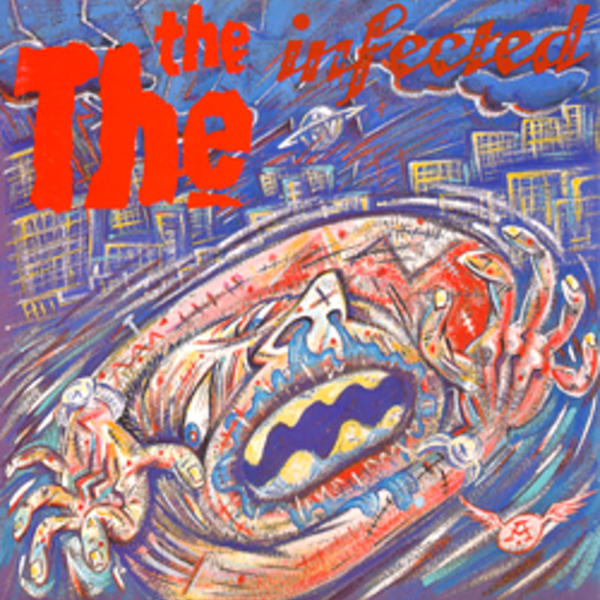
‘Heartland’ was the teaser single from The The’s third album, Infected, released in the same year to massive acclaim. Infected only contained eight songs but every single one was a thing of beauty. No fillers on this baby.

On ‘Sweet Bird of Truth’, another single, albeit not a chart botherer, Johnson took on the troubles of the Middle East and specifically America’s military encroachment there. It begins with a mock radio conversation between a pilot and radio control in which the use of napalm is requested and approved.

The album took Johnson to another level. He’d released two early albums, one resolutely experimental and in his name alone; the other, Soul Mining, a classic of the early 80s, containing two exceptional singles, ‘This Is The Day’ and ‘Uncertain Smile’. Soul Mining was an odd collection for the time, rooted in post-punk but featuring synthesisers - the weapon of choice of the New Romantics - and contained touches of the nascent New York club scene. It was critically acclaimed for its uniqueness but sold little, however subsequent reissues have sold well, a testament to its timeless qualities.

 On Infected, Johnson was frustrated with the way the world was swinging behind neoliberalism and the betrayal of the working class, especially in the track ‘Angels of Deception’.

Jesus Wept, Jesus Christ/ I can't see for the tear gas and the dollar signs in my eyes/ Well, what's a man got left to fight for/ When he's bought his freedom/ By the look of this human jungle/ It ain't just the poor who'll be bleeding …”

Matt Johnson was the centre point for the band and the album, and drummer Dave Palmer was the only other regular musician to be part of the team. There are cameo appearances for Neneh Cherry (pre-‘Buffalo Stance’), Orange Juice’s Zeke Manyika, the Astarti String Orchestra, and arrangers Andrew Poppy and Anne Dudley. It also featured Louis Jardine on percussion, and there’s credits for all sorts of people such as producer Warne Livesey and various engineers, but Johnson’s name is all over this.

To promote Infected, Johnson made a video for each track which cost about £350,000, a then unheard of amount for an act that hadn’t been active for over three years, had a cult following and were on an indie label, Some Bizarre. The film followed the track listing so it began with ‘Heartland’ which was shot at Greenwich Power Station in London. A chunk of the cost was due to the crew going into the Peruvian jungle to film, Johnson clearly not wanting to do things by halves. The indigenous people that the crew used as guides introduced Johnson and co to the hallucinogenic concoctions used in their tribal rituals, with predictable results. Johnson admitted that while he was completely out of it for the filming he was bitten by a monkey, cut a stranger with a knife in a bizarre blood brother ritual, and grappled with a snake. The opening scene of the title track has Johnson strapped to a chair on board a boat sailing down a river in the jungle.

‘Out of the Blue’ was partly shot in a New York brothel with police protecting the crew from the dealers inhabiting a neighbouring crack house. During the filming of ‘Twilight of a Champion’, Johnson placed a gun with live bullets in his mouth. Just for the hell of it.

Infected: The Movie was given a bona fide premiere, in London, and was aired twice on Channel 4 and later on MTV. A video was issued at the time but it is yet to be released on DVD. Both the album and the film received rave reviews from the then influential music press, with Melody Maker’s reviewer stating: “Kicking concepts of democratic creativity in the kidneys, Johnson has justifiably come out with a one-man vision of terrifying proportions” while the glossy Q magazine described the album as "grim stuff, with the lyrical tension well-matched by the music”, and picturing it as a collision between Soft Cell and Tom Waits. Which is uncanny as there is a strong Waits influence on Infected – particularly the vocal technique on ‘Sweet Bird of Truth’ – and Waits was touted and approached to be the record’s producer. 

The weekly Record Mirror felt that “What becomes clear, however, is that we are dealing with something special ... Infected might not be a particularly optimistic record, but it is rather a good one.”

As well as numerous appearances in the end-of-year album lists, Infected made Q’s 100 Greatest British Albums, 14 years after its release. The CD version accompanying the LP included three 12-inch remixes, but the 2002 remastered reissue didn’t even bother including those. It’s probably overdue a deluxe super special eight-edition release with free postcards.

The effect of such an ambitious project as Infected took its toll on the protagonist and he took a couple of years off. When he returned to the studio it was with a band, and the line-up included former Smiths guitarist Johnny Marr, James Eller from Julian Cope’s backing band and Palmer. This was certainly a marked deviation from the previous album. Less fancy instrumentation, more back-to-basics rock and pop. And again, eight tracks all stretching as far as Johnson could spin them in terms of the clock. Even the artwork was more in line with the move toward minimalism, a generally white cover with Johnson’s face jutting out. Could’ve been a Pet Shop Boys album if you didn’t look closely enough.

 Mind Bomb was still an excellent work and the title wasn’t too far off the mark. It was at times slow and required patience, but that fortitude would bear great fruit for the listener. ‘The Beat(en) Generation’ was a full-on pop song that made the Top 20 in Britain. Not that it was ever a radio-friendly fluffy DJ pleaser as the lyrics of the first few lines will attest.

When you cast your eyes upon the skylines/ Of this once proud nation/ Can you sense the fear and the hatred/ Growing in the hearts of its population/ And youth, oh youth, are being seduced/ By the greedy hands of politics and half truths.”

It may have been released in 1989 but those lyrics apply now in a country bitterly divided economically, socially and geographically.

While it wasn’t as loved by the critics as its predecessor, Mind Bomb remains one of the finest albums to carry The The’s name, with one writer observing that it was: "slow, expansive, looming into inexorable life with a rage that smouldered rather than flamed.”

Four years later The The were back, for the album Dusk, with the same line-up of Johnson, Marr, Eller and Palmer with various guest appearances, though no one with the profile of Sinead O’Connor who guested on one track from Mind Bomb.

It was something of a retreat in terms of Johnson’s usual ambitions; the lyrics were more apolitical and the arrangements more restrained. The singer sounded less heretical, shifting from the politics of the world to the politics of the individual, for example on ‘Lonely Planet’s chorus: “If you can't change the world, change yourself.”

There’s a sexual element to the album, and it’s hardly concealed: the single ‘Dogs of Lust’ hardly needs much explaining, but here’s a teaser: “When you're lustful/ When you're lonely/ And the heat is rising slowly.”

There’s love and desire all over the album but also a snippet of the subject matters so beloved of albums of yore. Back we go to ‘Lonely Planet’ and the closing line of the extended second chorus which, after numerous intonations of that call to change yourself, turns around to state: “And if you can't change yourself then change your world.”

The band was ditched for 1995’s Hanky Panky, a nod to the artist providing all 11 tracks – Hank Williams, writer of country and western standards such as ‘Your Cheatin’ Heart’, ‘I Saw The Light’ and ‘Honky Tonkin’, all of which are covered by Johnson and his backing band of people with names like Reverend Brian McLeod and Gentleman Jim Fitting. That it was better received in the United States than the UK reveals the nature of the songs. But it was one for the devoted only. 

In the time since, The The has barely been heard. There’ve been occasional releases, such as the low-key bluesy Naked Self album from 2000 and a pair of new tracks for a compilation album 45 RPM: The Singles of The The. Then, for 14 long years, barely a peep, nothing much more than obscure soundtracks, download-only singles and a couple of one-off singles for Record Store Day. Late last year came The Comeback Special: Live at the Royal Albert Hall.

Whether the “comeback” is another one-off or a tangible return to the album-tour-acoustic radio session circuit remains to be seen. The brilliant ‘We Can’t Stop What’s Coming’ for Record Store Day 2017 suggests The The are still very capable of writing and recording excellent songs. But if there’s no new material I can still wallow in four fine albums of individuality and class.

Sunday, March 20, 2022

(This is not a) Classic Album Review: The Clash - Cut The Crap (1985)

Craig Stephen continues his extensive overview of The Clash and its wider musical legacy (see multiple posts about “solo” Joe Strummer and The Clash elsewhere on the blog):

And this is not a typical album review. You kind of can’t with something so universally despised by critics, dismissed by Clash fans, and even rejected by its creator. Cut the Crap truly was a disaster of epic proportions, a stinker extraordinaire that as a Clash fan myself I’ve only ever given one or two spins as the headaches proved too much.

Instead, this is the story behind the making of the worst punk record. The personality clashes, the sackings, the accelerated decline of the world’s best rock band of the time and the incredible mistakes propelled by egos and insecurity.

The decline of the Clash began, perhaps, in late 1982 when drummer Topper Headon, by then a caricature of a human being due to his Colombian-scale consumption of heroin, was sacked. A year later the band’s main songwriter Mick Jones was gone too. The two musicians in the band had left. And manager Bernie Rhodes, who could be credited with the band’s early success but also with sowing division, was now back at the helm. Joe Strummer turned to Rhodes’ ruthless situationist streak to cut out all the superfluous, superficial, middle class BS.

Pete Howard was first in, replacing Headon’s replacement Terry Chimes, while Jones was still in the band. Howard would soon take a call from a wired Strummer telling him he’d “sacked the stoned cunt” and demanding to know if he was on Jones’ or Strummer’s side. Howard, clearly knowing where the power lay, affirmed he was pro-Joe. Nick Sheppard, once the guitarist with pseudo punk band The Cortinas, was roped in first, followed by Gregory White whose name wasn’t rock’n’roll enough for the band so became Vince – after Vince Taylor. They were both replacements for Mick Jones.

The trigger for the album which was initially called Out of Control was the 1984 tour that featured several new tracks. These gigs signalled a return to punk rock, or Rebel Rock as it would be dubbed by the band. There would be no dub tracks, no soul-fun workouts, no kids singing … it would be all about the music, and they’d only play with Les Pauls.

The Clash were now a band but not a unit. Strummer and Paul Simonon the only other surviving member, were the new Clash; Howard, Sheppard and White were self-professed guns for hire, taking a weekly wage. And in time even Strummer and Simonon would become secondary to Rhodes’ inflated sense of worth.

A mini tour of California in January 1984 played to smaller venues than the stadiums that they had the year before, and was generally regarded as successful. While the classic Clash songbook prevailed, there was space for new songs like ‘Sex Mad War’, ‘Three Card Trick’ and ‘This is England’. A particularly impressive track, ‘In The Pouring Rain’ (it’s on the Future is Unwritten soundtrack), was aired at some gigs during 1984 but wasn’t included on the eventual album, presumably because it just didn’t fit.

With the return of a punk sound came the unwanted return of gobbing. Which at a Brixton Academy gig in March 1984 so incensed Strummer he threatened to kill someone. And wasn’t joking about it.

Strummer was sporting a Mohican – not quite à la The Exploited - and there was a militaristic ambience about this new act, including calling the new members recruits who were part of a platoon, rather than a band. There were dictums left, right, and centre and Howard equated it to being in a religious cult like the Moonies.

On a 10-day tour of Italy in the autumn of 1984 in aid of the Italian Communist Party, Strummer was absent from rehearsals and there was a single soundcheck, in which they hashed through ‘Be Bop A Lula’ before heading to the pub. Strummer was reportedly drinking two or three bottles of brandy a day.

It was a difficult time for Strummer after hearing that his mother and been diagnosed with terminal cancer, on top of his father dying at the beginning of the year. This led to the postponement of the recording of the appropriately titled Out of Control. With Strummer looking after his ailing mother, Rhodes took “complete control” and that was where it all began to go wrong. The recording of the album involved session musicians with actual members sidelined. Rhodes tinkered with it to his delight … to inevitable results.

Meantime, the band did a busking tour of the north of England in May 1985, stalking Welsh rockers The Alarm from gig to gig just to wind them up. The end came at a festival in Athens, Greece, sharing a bill with The Cure, The Stranglers, Depeche Mode and Culture Club, in July 1985.

 There was still a single and album to release, and due to a legal agreement the record label couldn’t avoid its duties even though they probably would have been keen to just ditch it and hope it went away. Which is what Strummer felt as he had left for Spain before ‘This Is England’ had been released as a single in September 1985. In Granada, Strummer produced an album for punk band 091 and worked with Spanish popstars Radio Futura. He even bought a Dodge car to drive around and eventually dump, and film-maker Nick Hall was so intrigued as to what happened with it he made an entire documentary around it, called I Need A Dodge. The film was of course a bit more about a mere car owned by a rock star: it told the tale of why Strummer went to Spain and what he did there.

Cut the Crap was released in November 1985 and as predicted by everyone was without exception derided. It was a messy, punk’n’hip hop ramble with incoherent, childlike lyrics and inane chants like We Are The Clash. None of it was coherent, none of it was pleasant listening, and the electronic drums were unbearable… And it really wasn’t punk rock. Only ‘This is England’, which was a brutal take-down of Thatcherism, greed and war, and ‘North and South’ escaped some of the savaging.

Strummer told his bandmates he was going to pen a hand-written admission of guilt in 1930s Soviet-style lettering saying he made the wrong decision. It was intended to go in all the still influential music weeklies such as NME, Sounds and Melody Maker, as well as The Guardian and wherever else. It never did appear.

It is easy to consider that this was a disastrous period for Strummer, Simonon and The Clash legacy, which was certainly tarnished by the misadventure but initially the band seemed to be doing something right. They were playing some good gigs and festivals, and the new songs didn’t sound like the lumpy, degenerate, half-baked monstrosities that they would become in Rhodes’ hands. The return to basics project after stadium tours and hob-nobbing with Michael Jackson’s manager and film stars was the right decision to make at the time. It was the execution that failed. It was tainted by Rhodes’ control freakery, the impact of family issues and bad decisions. Dealt with professionally, Cut the Crap or Out of Control as it more likely would have been called if Rhodes hadn’t had so much power, could well have been a decent album, made by people that actually wanted to make it work. One day someone will release the original demos.

'This Is England' ...