Showing posts with label 1970s. Show all posts

Tuesday, October 16, 2018

Classic Album Review: OST - Saturday Night Fever (1977)

Often primarily thought of as a Bee Gees album, the Saturday Night Fever OST is right up there as one of the most important soundtrack releases of the Seventies (if not beyond). 

Important, not only because it revived – in no uncertain terms – the flagging career of one of the best vocal groups ever heard around these parts, and not only because it includes three of the decade’s biggest-selling singles in ‘Night Fever’, ‘Stayin’ Alive’, and ‘How Deep Is Your Love’, but important because it was the album that finally moved the disco genre out of a few select and exclusive New York clubs to transport it firmly into the (global) mainstream. And let’s face it, despite John Travolta’s best dance moves, the movie itself was always unlikely to achieve such a feat on its own. In fact, seldom can any soundtrack have sold so many movie tickets.


The three aforementioned singles are obvious highlights, and the Gibb brothers culled a couple of tracks from earlier albums – such as ‘Jive Talkin’ off Main Course (1975), and ‘You Should Be Dancing’ off Children Of The World (1976) – to completely overshadow the best of the rest and effectively claim the album as one of their own. 

Other disco-era luminaries like Kool & The Gang, KC & The Sunshine Band, Tavares, Yvonne Elliman, and The Trammps all feature here, with varying degrees of quality control. 

For all of that, listening to the album in its entirety without resorting to the skip button can be extremely hard work indeed. Mainly on account of some of the symphonic tat sprinkled liberally throughout – the David Shire stuff and the like, cheesing us out in much the same way watching an old episode of the Love Boat would. But hey, it is a soundtrack, and those instrumental interludes are surely right there in the movie, so that is what we get. 

However, none of the negative points can detract from the fact that Saturday Night Fever remains a landmark release, even today, more than 40 years later. Not so much critically, but certainly commercially, and as much as I’ve tried to shake them, many of my own high school memories remain inextricably linked with this album, and that of the Grease OST a year or so later. 

Yeah, I know, I know … but there’s not much I can do about it now is there?

Sunday, January 28, 2018

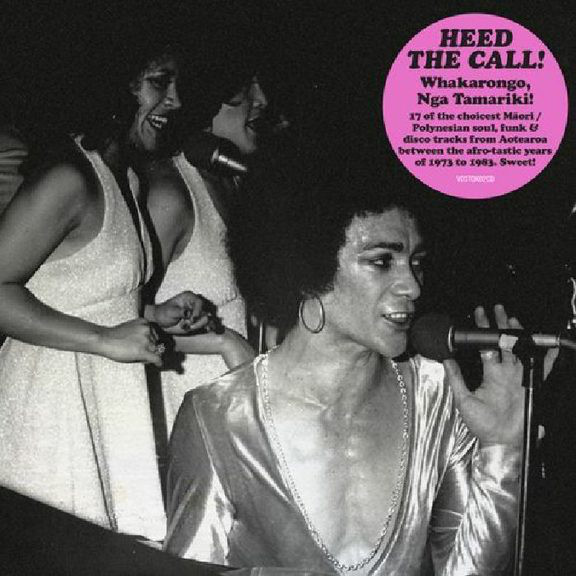
Album Review: Various - Heed The Call! Whakarongo, Nga Tamariki (2017)

Growing up in New Zealand as a young child in the 1970s, my memories of local music are pretty limited, but it always felt as though the decade could be split into two clear and very distinctive halves.

In the first half of the decade I can recall television shows such as Happen Inn and New Faces, and it seemed to me that most of the music being produced here was either very saccharine, or mostly derivative of what was happening on the pop charts internationally. In fact, many of the more high profile homegrown artists - Bunny Walters, Craig Scott, Ray Woolf, Suzanne, et al - were covering or copying exactly what was happening overseas, and it was simply being repackaged for the local market by the major record companies. There were exceptions to this “rule”, naturally.
 
By the second half of the decade, the local pub-rock circuit had started to offer us a number of bands with fiercely original material; the likes of Dragon, Hello Sailor, Th’ Dudes, and Mi-Sex. Right at the end of the decade, the arrival of punk and new wave - see Suburban Reptiles, Spelling Mistakes, the Scavengers, plus others - ensured the game was changing for the better.

My point being … there never seemed to be a lot else beyond those categories. There was nothing in the middle. It was either the covers and crooners of the earliest vintage, or the edgy rockers of later years. And of course, there was the island that was early Split Enz. I can’t ever recall - beyond a couple of Mark Williams hits - there being much in the way of locally-produced disco, soul, or funk. Sure, that stuff was all over the charts in the mid-to-late 1970s, mostly within the “singles” realm, but not a lot of it came from these shores.

At least that was my perception, and if we didn’t see locally-produced disco and funk music charting on any regular basis, that doesn’t necessarily mean it wasn’t being made. It just wasn’t being produced by the majors or distributed in any vast quantity. And if it wasn’t on the charts, that doesn’t mean it wasn’t being played in one or two of the more progressive nightclubs of the era. Not that I’d know, really … I was just as likely eating peanut butter sandwiches out of a plastic Partridge Family lunchbox at the time.

Which is where Heed the Call! (Whakarongo, Nga Tamariki) comes in. A brand new compilation album (released in December 2017) that showcases “17 Prime Soul, Funk and Disco Cuts” specifically from the Aotearoa of my childhood and early teenage years. Not that we called it Aotearoa back then either. It was still plain old New Zealand, mostly white, colonial, and largely rural …

It’s a terrific collection, lovingly compiled by the history-savvy Alan Perrott and John Baker, with my version being the CD (sadly, not vinyl), one that I had to order after the limited initial production run sold out in a matter of days. I don’t think anybody could have realistically anticipated the level of demand for this album. I certainly hadn’t.

One of the album’s highlights arrives right at the very start, with ‘Voodoo Lady’, a Dalvanius and The Fascinations tune that has so much fluoro disco bling oozing from it, you’ll probably need to wear a pair of dark glasses just to listen to it. Preferably a Bootsy-esque gold-framed pair.

Following on from that scene-setter, we’re introduced to Collision, with a James Brown-defying funktastic ‘You Can Dance’. Truth is though, we’re already familiar with these guys; Dalvanius having used the core of this band on the opener, under the Fascinations moniker.

After the opening double whammy, the listening experience becomes a knee-buckling trip deep into the heart of what was quite clearly a vibrant, yet mostly underground scene. A journey that doesn’t really let up until we reach the breathy closing moments of the album finale, ‘Total Man’, by er, The Totals. Which is quite possibly that band’s only release.

Other highlights include a couple of Mark Williams’ tunes, ‘Disco Lady’ and ‘House For Sale’, something relatively rare from the bold and brassy 1860 Band, ‘That's The Kind Of Love I've Got For You’, plus Herb McQuay’s ‘Night People’.

Of the more commercially established artists to feature, Prince Tui Teka provides the title track, Tina Cross offers ‘You Can Do It’, and Golden Harvest is on hand with that always familiar Kiwi yacht-rock classic ‘I Need Your Love’, which is one of the few chart-bothering tracks included. Larry Morris shows up, after a spell in the clink, with ‘Who Do We Think We're Fooling’, while Ticket, a band I’ve always more readily associated with the rock genre, feature with ‘Mr Music’.

At the other end of the spectrum, there’s work here from a few artists that I know very little about; the likes of the Johnny Rocco Band, (the) Inbetweens, Sonia & Skee, and the aforementioned Totals. Where the bloody hell have I been? I knew of the wholesome and religious Pink Family, who offer ‘Don't Give Your Life Away’, but I’d never actually heard their music.

Speaking of family, blood links might well be a theme; aside from the Pinks, there’s the Yandall Sisters (Adele, Mary, and Pauline) with ‘Sweet Inspiration’, and brotherly connections within Golden Harvest (the Kaukaus) and Collision (the Morgans). And of course, whanau was at the heart of, and often involved with, just about everything Dalvanius Prime and Prince Tui Teka ever did …

Heed The Call! is a fascinating compilation, and for the most part, a great listen. It’s been a long time coming, but it’s well worth the wait. Sure there’s some material that hasn’t aged all that well, and there’s a few sizable slabs of cheddar to be consumed, plus there’s a few covers or non-originals, but it’s a disco album, pulling the bulk of its content from the decade that taste forgot … so there’s your context right there.

Tuesday, November 14, 2017

Book Review: Goneville, a memoir, by Nick Bollinger

Goneville: "it's a place you could almost find on a map, but not quite" ...

In Nick Bollinger's preface for Goneville, the author describes the two New Zealands he grew up in – the one where males worshipped rugby and beer, and a rather more free-spirited bohemian one, where art and music was at the centre of everything. No prizes for guessing which version Bollinger found himself more comfortable in. In fact, Bollinger embraced the latter with such ease, he'd eventually go on to become not only an accomplished musician, but something of a highly influential tastemaker in his role as an arts critic, columnist, and music reviewer for the NZ Listener, and more recently, with Radio NZ.
 
Goneville, nowhere near Wanganui
Goneville works on a couple of different levels. Firstly, it’s Bollinger's memoir, his account of growing up in Wellington during the late 1960s and early 1970s. Secondly, it’s a detailed – if not quite complete – history of the capital’s music scene throughout the 1970s and into the 1980s, as seen through the eyes of a man who was very much at the heart of that particular scene. There’s also a natural crossover into all things social and political, and it provides a genuine snapshot of a world – or of a fledgling nation – that we’ve, for better or for worse, long since left behind.

Things jump around a little bit to begin with, but much of the early part of the book deals with Bollinger's childhood – with stories about growing up in 1960s Wellington, attending Onslow College, discovering music, and an acknowledgement of the hugely positive role his free-thinking, academic father (who died while Bollinger was still in his teens) had in shaping his own worldview.

From there we move into the core of the book, covering off Bollinger’s formative musical experiences; sneaking into gigs whilst still underage, playing wild-west-type gigs with school friends in the Hutt Valley, and being inspired by bands like Mammal, Blerta, Space Waltz, and early Split Enz (Split Ends), to name just a few. 

During his time at university, Bollinger was recruited as the bass player for Rick Bryant’s blues and soul-based collective, Rough Justice, and much of the book deals with his weed-ravaged experiences on the road, something of a hand-to-mouth existence, travelling in what might loosely be described as a “hippy bus”, as the band traversed the nether regions of New Zealand’s live music circuit.

Bryant features heavily throughout, along with local promoter-come-Dragon manager Graeme Nesbitt, plus there’s a fair bit about the late great Bruno Lawrence. Bollinger writes passionately and at length about each man. He clearly reserves a special affection for Bryant in particular, and the much-travelled rocker is the key protagonist in several of the more humorous anecdotes on offer.  

“He (Bryant, whilst driving the bus) starts telling me about the soul singer Joe Tex. This leads into an analysis of Tolstoy and winds up with the history of the New Zealand labour movement. It feels as though I have stayed at university, although it's hard to say what paper I have enrolled in.”

Onetime Lion Breweries promoter Richard Holden also features prominently, and there’s real insight into just how difficult it was for local bands to find the right balance between being able to earn a living, and fulfilling a wider ambition to produce original work. 

Richard Holden, on bands looking for work in brewery-owned establishments: “There has been some good original music but a lot of original rubbish. They will have to realise that we're not in the musical genius business. We're in the entertainment business.”

There’s also some interesting stuff around the breweries' attempts to control or monopolise nightlife and the live music circuit, with nepotism and licensing restrictions making it near impossible for venues like Wellington's Last Resort and Charley Gray's Auckland club, Island of Real (just two examples of many), to become fully licensed. Bands and promoters were forced to play a game imposed upon them by the beer barons if they wanted any level of exposure – beyond, by dint of some miracle, landing a “hit record”.
 
Rough Justice, 1978, Bollinger - bottom right
Later in the book, Bollinger deals with the demise of Rough Justice and writes extensively on just how much the landscape had changed by 1980, due in part to the arrival of punk on these shores. Near the conclusion, coinciding roughly with Bollinger travelling overseas to expand his musical horizons, he looks at the hugely divisive Springbok rugby tour of 1981, and his own involvement with the protest movement.
 
In some respects, Bollinger completes a full circle by the end. The counter-culture that took him under its wing in the early-to-mid 1970s had, according to all other accounts, supposedly died by the early 1980s. Yet in the form of punk and the protest movement, here it was again, reinventing or manifesting itself in a remarkably similar way.

Writing about the ultra-conservative Robert Muldoon gaining a third term in office as Prime Minister in 1981: “He (Muldoon) often talked about ‘the ordinary bloke’, a notional person on whose behalf he was fighting. The ordinary bloke seemed to be a New Zealand male who just wanted to be able to do a day’s work, go home, drink beer, and watch rugby. Anyone with progressive views on education, environment, or equality, was the Prime Minister’s natural enemy.”

Which is pretty much where we came in.

There’s a generous helping of black and white photos scattered throughout the book, all meticulously documented in the closing pages, multiple sources (of quotes and other content) are noted and acknowledged in great detail, and as you’d expect from someone of Bollinger’s pedigree, there’s even an extensive “selected discography” referencing the work of many of the bands covered in the book.

It’s an important book. Not just for fans of the Wellington music scene of yester-year, but for anyone keen on the social history of New Zealand. You simply won’t find anyone else more qualified to write about this stuff. Recommended.

Sunday, July 30, 2017

Magazines of my time Part 2: The 1970s … Shoot! and Tiger

I must have been about nine years old when I signed up for my first magazine subscription. It was 1973, or perhaps 1974, a standing order for Shoot! magazine, a British football weekly. Once a week, I’d race down to collect the magazine from the local newsagent at the Awapuni shopping centre, which was a five minute bike ride from my home in the sprawling metropolis of Palmerston North … four minutes, if traffic was kind.

It was all very exciting. I came to love the smell of newsprint, there was a cardboard folder behind the counter with my actual name on it, and I think the cost of the magazine was around 35 cents local currency, which was about half my usual weekly “pocket money” (or allowance). Although the ship freighted magazines arrived some three months after publication in the UK, I’d pore over each new issue as though it contained all the hidden secrets of the universe.

It might as well have. Football was more or less my whole world at that age. My Lanarkshire-born immigrant father played it at a high local level, representing Hawkes Bay, Manawatu, and the NZ Combined Services team (he was in the police) at various times throughout the 1960s and 1970s. I trained most evenings myself, and my weekends were consumed by round ball activity – Saturday mornings for the school or (later) club teams, Saturday afternoons watching Dad's games, which often involved travelling to different North Island towns, and by 1976, my Sundays were taken over by my own representative/Manawatu age group team commitments.
 
If I was really lucky I'd manage to catch the LWT-produced Big Match on television once a week. The main drawback being that this hour-long highlights package of games from the English top flight of a week earlier, had an often inconvenient Sunday lunch broadcast slot. This was, of course, in the days prior to the VCR, or the scarcely imaginable option of saving a TV programme to something called a hard drive.

As for local newspapers covering British football ... forget it. The Wellington-based broadsheet, the Evening Post, offered weekly league tables, printed on a Monday, but any coverage in Palmy's Evening Standard was a rarity, and very much a bonus if it happened at all. So in this tiny isolated rugby-obsessed corner of the globe, Shoot! magazine was a godsend, my weekly bible, and my only way of keeping up with all the news on the global game. It was an escape into another, hugely exciting, world.

Once a year, in late July or early August, at the start of every new football season, Shoot! had a removable cardboard league ladder feature, where each division in England and Scotland had its own set of slots, and each team had its own tab which could then be inserted, removed, and reinserted on a weekly basis as the teams jockeyed for position, up and down the various tables as the season progressed. Not having regular access to the Evening Post, I’d try to keep my own tables up to date by listening to the early Sunday morning reading of the British football results on national radio (from games played overnight), calculating the weekend tables accordingly. But it was usually a forlorn task, as those pesky midweek games often went unreported, and in truth, I probably wasn’t as good at maths as I thought I was.
 
Shoot! also had a "star-studded" line-up of feature writers (or at least, ghost writers representing them) – the likes of Alan Ball, Gerry Francis, and Kevin Keegan being the most memorable from that mid-1970s period in terms of the English game. But as a fan of Glasgow Celtic, I had a special relationship with the game north of the border, and I was always drawn to what the “tartan talk” columnists had to say – the likes of Danny McGrain and Kenny Dalglish were, as Celtic players of the era, particular favourites at the time.

Other features in Shoot! included ‘Football Funnies’, which included a short comic strip called Nobby, ‘Ask The Expert’, which offered £1 for every letter published, and ‘You Are The Ref’, where the reader is presented with a rule book conundrum to resolve, and a chance to play the role of the “bastard in the black”.

I especially enjoyed the ‘Club Spotlight’ sections, usually two per issue, which included a team photo of the featured club(s) and short player bios. And the ‘Focus On’ section was always good read, where one top player was asked a series of questions from the professional to the personal, but in a very digestible/snapshot format.

I was supposed to be saving up for a “racing bike” (to get me to the shops faster, right?), but usually, if I had any spare money leftover, I’d more than likely spend it on a comic called Tiger. Tiger was also a football-centric UK-based comic, the original home for the famous Roy of the Rovers strip, prior to Roy Race and his Melchester Rovers club becoming popular enough to demand an entire comic of their very own.
 
Alongside Roy of the Rovers, Tiger had strips like Billy’s Boots and Hot Shot Hamish, along with a Motor Racing/Formula One strip called Skid Solo, and a wrestling one featuring a giant American Indian dude called Johnny Cougar. Tiger merged with a rival comic called Scorcher, before disappearing completely in the wake of Roy Race’s rebranding.

I occasionally flirted with a more highbrow monthly, the illustrious World Soccer (magazine), which I sourced from second-hand bookshops. Or I found myself the lucky recipient of used copies that Dad had somehow found for me. It’s funny, because although Dad often frowned upon me spending so much time reading about football when I “should be outside practicing”, he did tend to support and feed my obsession.

World Soccer was a much more challenging read however, with a lot more emphasis placed on the international game, and Shoot! was my main poison of choice throughout the mid-to-late Seventies.

It was all rather fascinating stuff for a pre-teen come pre-pubescent teenager living on the other side of the world to where all the action was (clearly!) taking place, but things were about to change, and by 1978 or 1979, I started to develop a healthy (or unhealthy) interest in music and pop culture, one that stays with me to this very day.

The origins of this newly discovered horizon, or soon-to-be obsession, can perhaps be traced back to an older sister, who also had a couple of magazine subscriptions of the same era – I’m fairly certain her sub was for a girl’s mag called Diana, or it may have been Jackie magazine. Each of those publications had pull-out posters, of (then) teen idols like David Cassidy and Donny Osmond, through to more serious artists like David Bowie and um, Gary Glitter … but I’ll cover some of this off in the next post as we journey into a far less innocent time and place …

Thursday, July 27, 2017

Magazines of my time Part 1: Introduction

My name’s Michael, and I’m a recovering collect-aholic. For much of my life, I’ve been obsessed with collecting music, books, and magazines.

In recent years, while music and books still remain very much at the forefront of this personal form of OCD, I’ve been relieved of the need to collect magazines. But for a while, peaking perhaps in the late 1980s, magazines were the most important thing of all. Mostly magazines of the music and pop culture variety, but also magazines relating to sport – football, cricket, boxing (specifically The Ring) … even the odd bloodstock glossy relating to the thoroughbred industry (Blood Horse rules ok!).

The recent demise of NZ Musician magazine – in its printed/magazine format – was at least understandable, but also a little disturbing for someone with my affliction, and it got me thinking about all of the great magazines that have come and gone throughout my lifetime. There’s been a few.
 
So I’ve decided to dedicate a series of blogposts to the genre, a handful of posts about the magazines, incorporating music “papers” and the odd comic, that have been important to me across the past four decades or so. Little bursts of nostalgia, with some context and detail around why each publication meant something to me.

Thanks to the way we now consume news, information, and infotainment, magazines will never again have the influence, or carry the gravitas they once bore. These days, there is less need – or desire – for tangible copy. Everything is available in an instant, on a hand-held device, no less. All the news and information we’ll ever need can now be accessed within a few seconds, and be discarded just as quickly. And that’s fine too.

When I was growing up, during the 1970s and 1980s, it was inconceivable that such an option could ever exist, that technology could open up so many possibilities, and I’m certainly not about to dismiss that level of accessibility in any “oooh, it were way better in my day, lad” kind of way.
 
But I do feel a little sad for my children, in that they’ll never experience the thrill of a weekly magazine subscription. Not for them, the rush of excitement as they walk into the newsagent and spot the new issue of something they’ve been looking forward to, sitting up there on the rack, in pristine condition, in all of its colourful glory. It’s quite probable they’ll never really understand the catharsis that can come with sitting down to casually flick through the latest issue of a magazine they’ve been forced to wait a few weeks for.

One of the goals behind everythingsgonegreen is document some of this stuff from the past, purely for posterity, or else it’ll be allowed to fall between the cracks. When my children can post online, for all of the world to see, from now until eternity, what they’re about to eat for dinner, then surely it’s up to my generation to record some of the pre-internet tidbits relevant to our own otherwise undocumented grassroots existence … and clearly, my former OCD-level need to collect, has now been surpassed by my self-indulgent need to document the trivial. If it’s not recorded, or written about, it surely didn’t happen, right?

I’ll break the series up into several parts … part 2 covering the 1970s, part 3 will look at the first half of the 1980s, part 4 will tick off the second half of that glorious decade, part 5 will look at the 1990s and beyond, leading into the slow steady demise of the printed glossy in the ever less functional world of everythingsgonegreen …

Thursday, September 22, 2016

Classic Album Review: Various - F**K Art Let's Danse / 28 Classic & Rare Tracks (2007)

I've been thinking quite a bit this week about the 40th anniversary of the infamous Punk Festival held at London’s 100 club. About how that momentous event is often considered a defining or pivotal moment in wider pop culture or rock music history – heralding as it did, the arrival of an exciting new phenomenon. Or that’s how the story has been told, and it’s certainly the narrative we’ve been fed in one or two published articles this week. And then I recalled this album, one of the most treasured compilations in my possession, a comprehensive collection of tracks which serve to highlight the roots of the genre, and an album that throws a rather different light on the evolution of punk. I reviewed it for another site not long after its 2007 release:

If asked to come up with a list of bands or artists most influential in the rise of the UK’s late Seventies “punk” scene, the majority of self-respecting music historians would doubtlessly look first and foremost to the USA and its late Sixties/early Seventies “underground” scene. Indeed, any quick perusal of Jon Savage’s seminal book ‘England’s Dreaming’ (a history of the Sex Pistols and Punk) or Simon Reynolds’ ‘Rip It Up And Start Again’ (which covers the post-punk era) would reveal the massive debt owed by UK punk bands to their anti-establishment cousins from across the Atlantic.

It is a debt however, seldom fully acknowledged by compilers of punk collections; they’re more often than not very UK-centric, with mere lip service being paid to the influence and momentum provided by a wide variety of US-based bands – usually with the inclusion of an obvious track from The Ramones, and maybe something from um, Blondie. This is where F**k Art Let’s Danse differs from the large majority of the many so-called “punk” compilations … and as a 28-track, double CD compilation, it is all the better for not only acknowledging the transatlantic link, but actively celebrating it.

40 years ago this week ...

Take a look at this list of names: The 13th Floor Elevators, the New York Dolls, Iggy & The Stooges, Patti Smith, MC5, Jonathan Richman & The Modern Lovers, Suicide, Television, Pere Ubu, and the Dead Kennedys. Oh, and just for good measure, The Ramones.
 
That list represents a veritable Who’s Who of the Seventies US underground scene, and all of the above bands feature prominently on F**k Art Let’s Danse. Only the addition of material from the Velvet Underground and/or Talking Heads would have made it something close to definitive in terms of US contributions to the scene. In fact, the album digs deep and travels even further back in time to the decadent mid-Sixties with the inclusion of garage and psychedelic tracks from the likes of The Sonics, The Seeds, Fugs, and The Creation.

But, similarly, if you think F**k Art Let’s Danse is all about those damned yanks and the template they provided, then you’d be wrong. The UK is represented by the not insignificant likes of The Damned, X-Ray Spex, Sham 69, the UK Subs, The Slits, and The Adverts.
 
Hell, we even get a couple of notable “hit” singles from Ian Dury (‘Sex And Drugs …’) and The Only Ones (‘Another Girl Another Planet’) … neither track being particularly authentic “punk” but the inclusion on here of each nonetheless pays tribute to the role pub-rock played in the development of the genre, and both bands flirted with the fringes of the movement without becoming completely consumed by it.

It could be argued that the album is weakened for the fact that it doesn’t include anything at all by the Sex Pistols, The Clash, or early Buzzcocks, but you can find that stuff practically anywhere, or at the very least on one of the other many compilations on the market. Clearly, the compilers of this album were wholehearted in their commitment to avoiding the bleedin’ obvious, and in truth that is one of its best features.

Overall, F**k Art Let’s Danse is a superb collection, and worthwhile alone for the sheer variety on offer. Punk is often viewed through ill-informed ignorant eyes as being a short-lived entirely British phenomenon; a scene that lasted three years max (between 1976 and say, 1979), but this collection begs to convince you otherwise.

CD1 Highlights: X-Ray Spex – ‘Identity’, Dead Kennedys – ‘Too Drunk To F**k’, MC5 – ‘Kick Out The Jams’, Jonathan Richman & The Modern Lovers – ‘Roadrunner’, and Department S – ‘Is Vic There?’.

CD2 Highlights: The 13th Floor Elevators – ‘Slip Inside This House’, New York Dolls – ‘Looking For A Kiss’, Patti Smith – ‘Piss Factory’, Pere Ubu – ‘Heart Of Darkness’, and The Slits (live cover) – ‘I Heard It Through The Grapevine’.

Monday, August 29, 2016

The 1970s Revisited ...

There’s been a whole lotta love for the Seventies going on over at Pitchfork in recent weeks. That website is nothing if not methodical and comprehensive in its approach to these sorts of things. In pop culture terms, on a personal level, I’ve never really embraced the Seventies in quite the same way I have say, the Eighties, or subsequent decades. I’m not sure why that is … they say your school years are supposed to be the best and most memorable, but I seem to have blanked out large chunks for one reason or another. In a lot of respects, 1980 was always very much a ground zero point for yours truly – that year being the one my awareness of music and the arts was dramatically heightened by an extended period living in the UK (at age 16), and it was also the year I left high school. I think those things were catalysts for me realising that a much bigger world than the one I'd known, really did actually exist. And while I'd always been very aware of what was going on around me prior to that – the immediate post-Beatles world, glam, disco, punk, the arrival of colour television (things were slow moving in my house), diligently and systematically tape-recording the weekly top 10 "hits" off the radio, buying comics/magazines, the death of Elvis (!) etc – I suppose I’ve always been dismissive of the decade as a whole, finding it rather cringe-worthy when compared to the way more “cool” and “happening” Eighties. Many would argue the opposite applies, and Pitchfork’s coverage presents a rather compelling case in favour of that argument. I’ve found the recent coverage fascinating, so I thought I’d share some of Pitchfork’s work here:

Pitchfork’s 200 best songs of the 1970s

Pitchfork’s 25 best music videos of the 1970s

Punk, disco, and silly love songs – Remembering 1976

Music technology of the 1970s – a timeline